


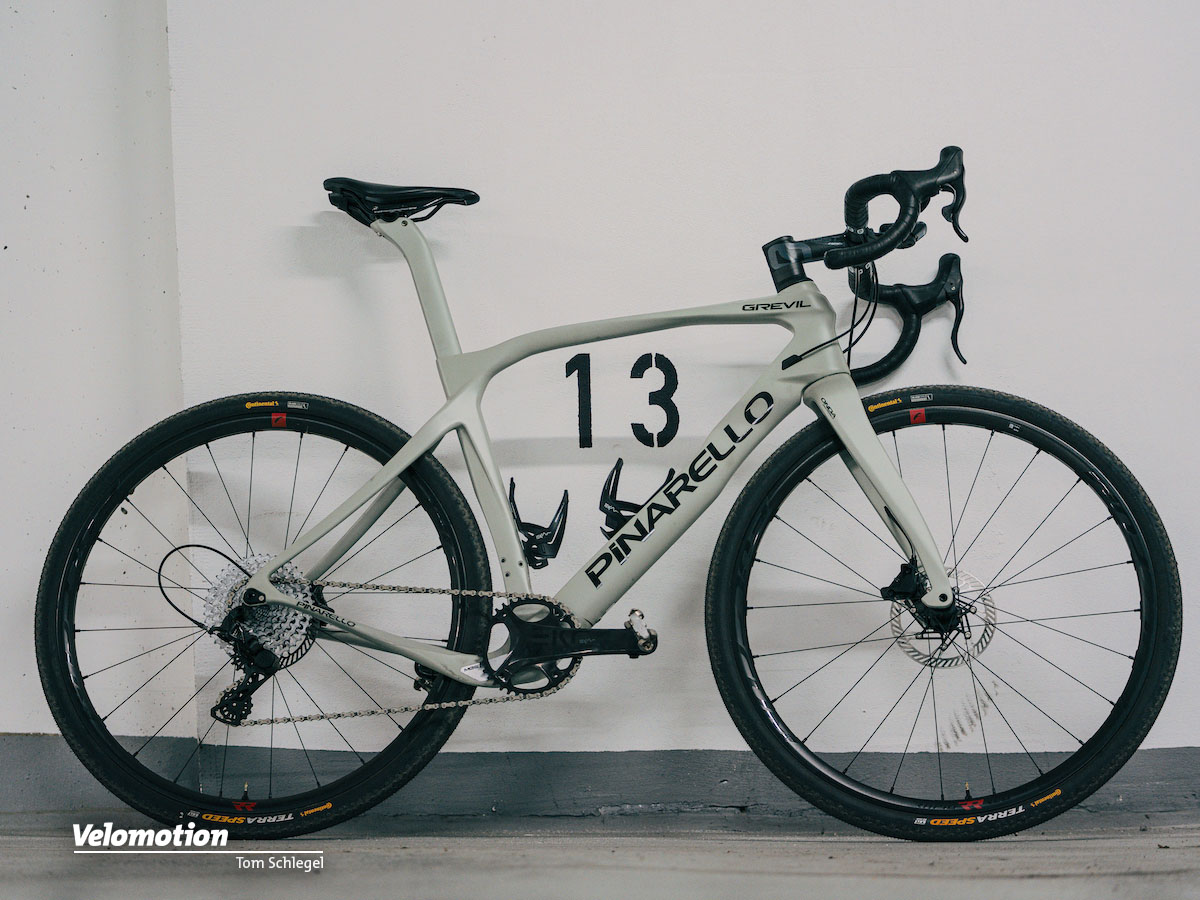

Test: Die erste eigens fürs Gravel-Bike bestimmte Komponenten-Gruppe Campagnolo Ekar verblüfft mit 1×13 Gängen und vielen kleinen und großen Überraschungen. Im Praxistest von Velomotion beweist die neue Schaltung perfekte Funktion und eine harmonische Abstufung, die viele Möglichkeiten bietet.
Als Campagnolo im März 2018 zur Neuheitenpräsentation lud, wurde im Vorfeld wild spekuliert. Gravel war damals ein heißes Thema, und schon kamen Hoffnungen auf, die Italiener würden sich endlich mit einer speziellen Gruppe ins Gelände wagen. Gezeigt wurde schließlich die neue 2×12-Rennradgruppe – ein Ritzel mehr, das die Gangsprünge enger werden ließ, na gut. Aufs Thema Offroad angesprochen, reagierte Juniorchef Davide Campagnolo damals verhalten – sieht man sich an, was sein Unternehmen am heutigen Tage veröffentlicht, kann man sich jedoch denken, dass die Sache bereits 2018 angeschoben worden war.
13-fach, ein Kettenblatt: Abkehr von der reinen Lehre
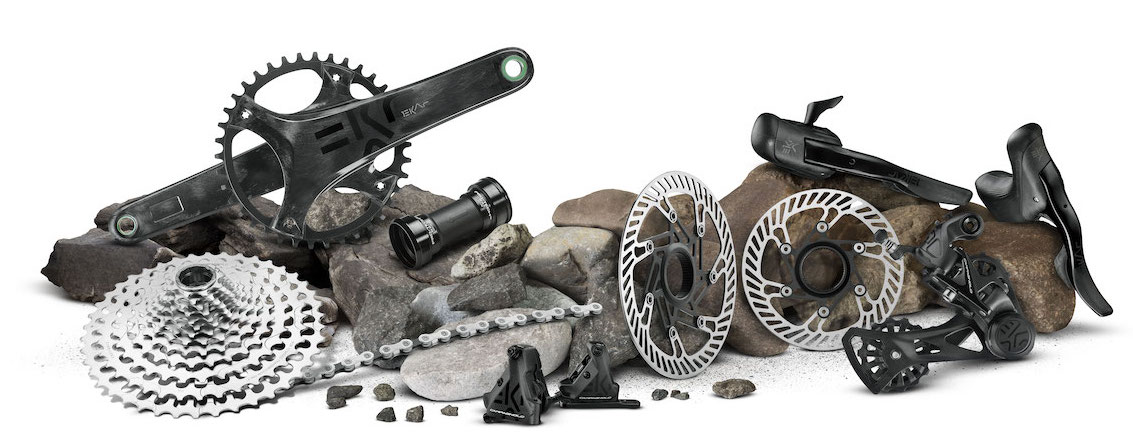
An die Mountainbike-Gruppen von Campagnolo kann sich heute kaum noch jemand erinnern – umso sensationeller ist es, dass die Traditionsfirma nun von der reinen Lehre abweicht und eine Gruppe präsentiert, die auf das noch recht junge Segment Gravel zugeschnitten ist. Ganz zu schweigen davon, was die neue Campagnolo Ekar kann: Als erste mechanische Schaltgruppe ist sie mit dreizehn Ritzeln ausgestattet, womit sie die entsprechende Konkurrenz von Sram und Shimano um gleich zwei Gänge überbietet. Und als Erster der großen Anbieter kommt Campagnolo mit einem Abschlussritzel mit nur neun Zähnen heraus.
Campagnolo Ekar: Dreizehn Ritzel, drei Abstufungen
13-fach, und das kleinste Ritzel mit nur neun Zähnen. Das muss man erst mal sacken lassen; vorab sei jedoch gesagt, dass die Kette durchaus geschmeidig über das Mini-Ritzel läuft. Und auch der Sprung vom Zehner aufs Neuner und zurück ist bei flüssiger Tretfrequenz nicht übertrieben groß. Überhaupt liegt hierin, was die Gruppe gerade fürs Gravelbike und darüber hinaus interessant macht: Die Campagnolo Ekar hat bewusst auf MTB-mäßige Kuchenteller verzichtet und stellt mit 9-36, 9-42 und 10-44 drei insgesamt recht eng abgestufte Kassetten vor.
Das kompakteste Zahnkranzpaket der Campagnolo Ekar nennt sich „Endurance“ und sieht im Detail so aus:
9-10-11-12-13-14-16-18-20-23-27-31-36
Fünf Einersprünge im schnellen Bereich also – und das ist schon mal einer mehr, als alle Elffach-Rennradkassetten von Shimano außer 11-25 und 12-25 bieten. Bereits der kleinste Kranz der Ekar bietet einen Übersetzungsumfang von 400 %; kombiniert mit einem 38er Kettenblatt, ergibt sich ein Schnellgang oberhalb von 4:1 und ein nahezu 1:1 übersetzter Berggang. Dies ist eine Kassette, die wie geschaffen scheint für zügiges Tempo und durchaus auch am Cyclocrosser erste Wahl wäre, wo konventionelle Gravel-Kränze zu grob abgestuft sind – oder vielleicht sogar am Endurance-Rennrad auf der Straße?
Weiter geht’s mit „Gravel Race“ = 9-42:
9-10-11-12-13-14-16-18-21-25-30-36-42
Dies ist die Kassette am Testrad, wiederum im oberen Bereich eng abgestuft und ab dem 18er breiter aufgestellt – ein Kranz, der eigentlich auf jedem Terrain funktioniert, wo man schneller als ca. 7 km/h fährt. Mit 38er Blatt kann man bei diesem Tempo nämlich noch recht flüssig treten.
Nicht wirklich breiter abgestuft, aber etwas kürzer übersetzt ist „Gravel Adventure“ mit 10-44:
10-11-12-13-14-15-17-19-22-26-32-38-44
Dem größten Kranz fehlt ein Schnellgang, dafür bietet er am Berg etwas mehr Spielraum. Wieder fallen sechs Ritzel in Einer-Abstufung auf; die Berggänge sind kaum anders abgestuft als beim 9-42er Kranz. Kombiniert mit einem 40er Kettenblatt, liegt der längste Gang wieder bei 4:1, dazu kommt ein mit 0,91 merklich „untersetzter“ Berggang.
Zu diesen drei Ritzelpaketen bietet Campagnolo vier Kettenräder mit 38, 40, 42 und 44 Zähnen an, wobei das größte für „E-Road und E-Gravel“ empfohlen wird. Am Testrad war das kleinste Kettenblatt montiert; Gänge fehlten uns freilich weder bergauf noch bergab. Was zu der Frage führt: Wie fährt (bzw. schaltet) sich die Campagnolo Ekar eigentlich?
Pinarello Grevil: Das Offroad-Aerobike
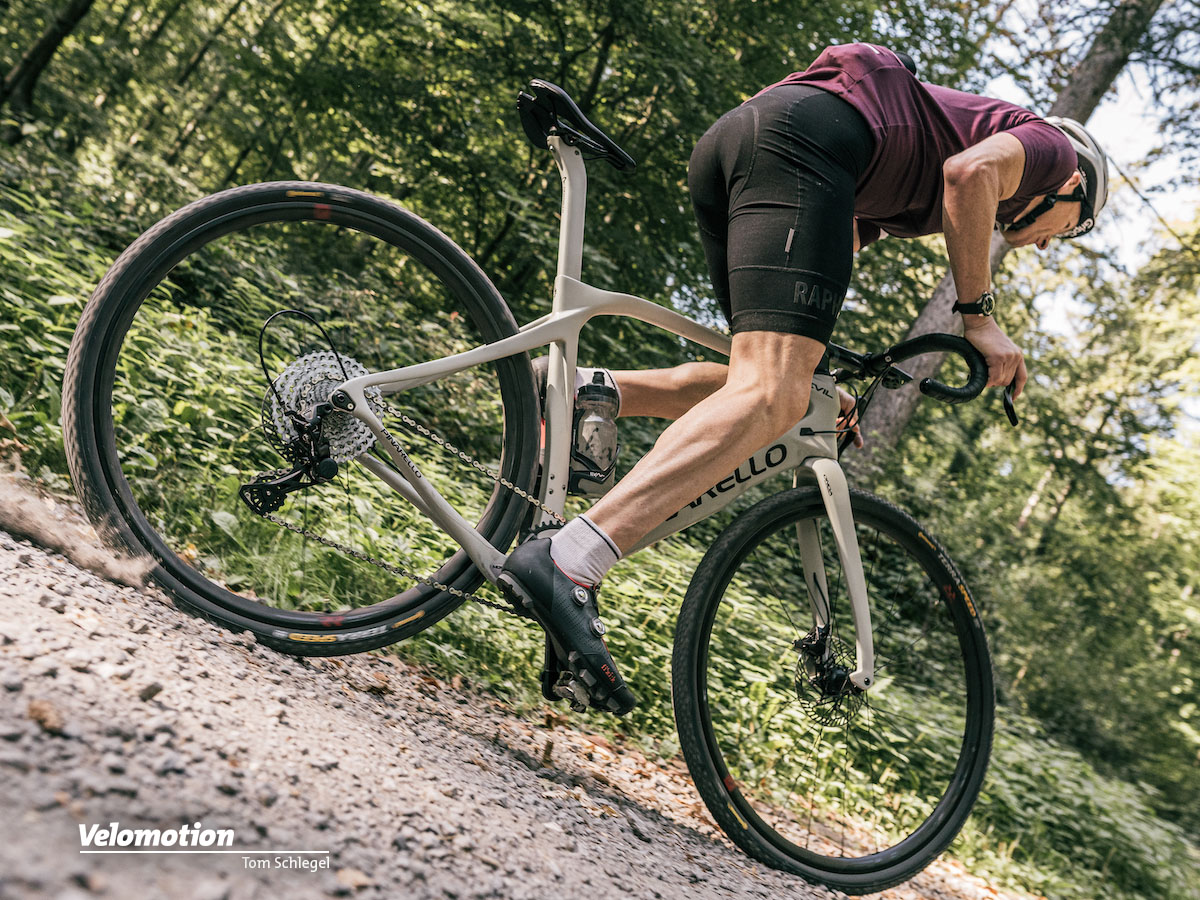
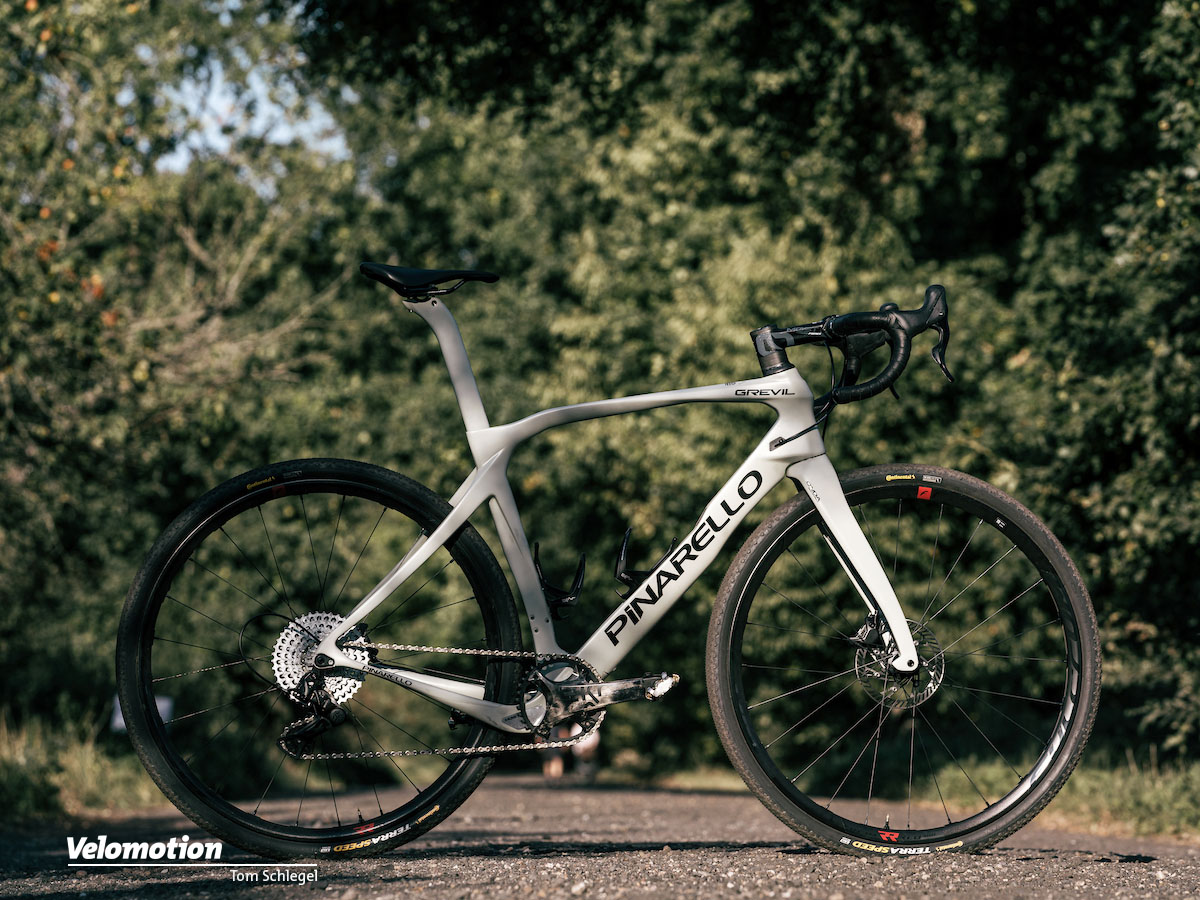
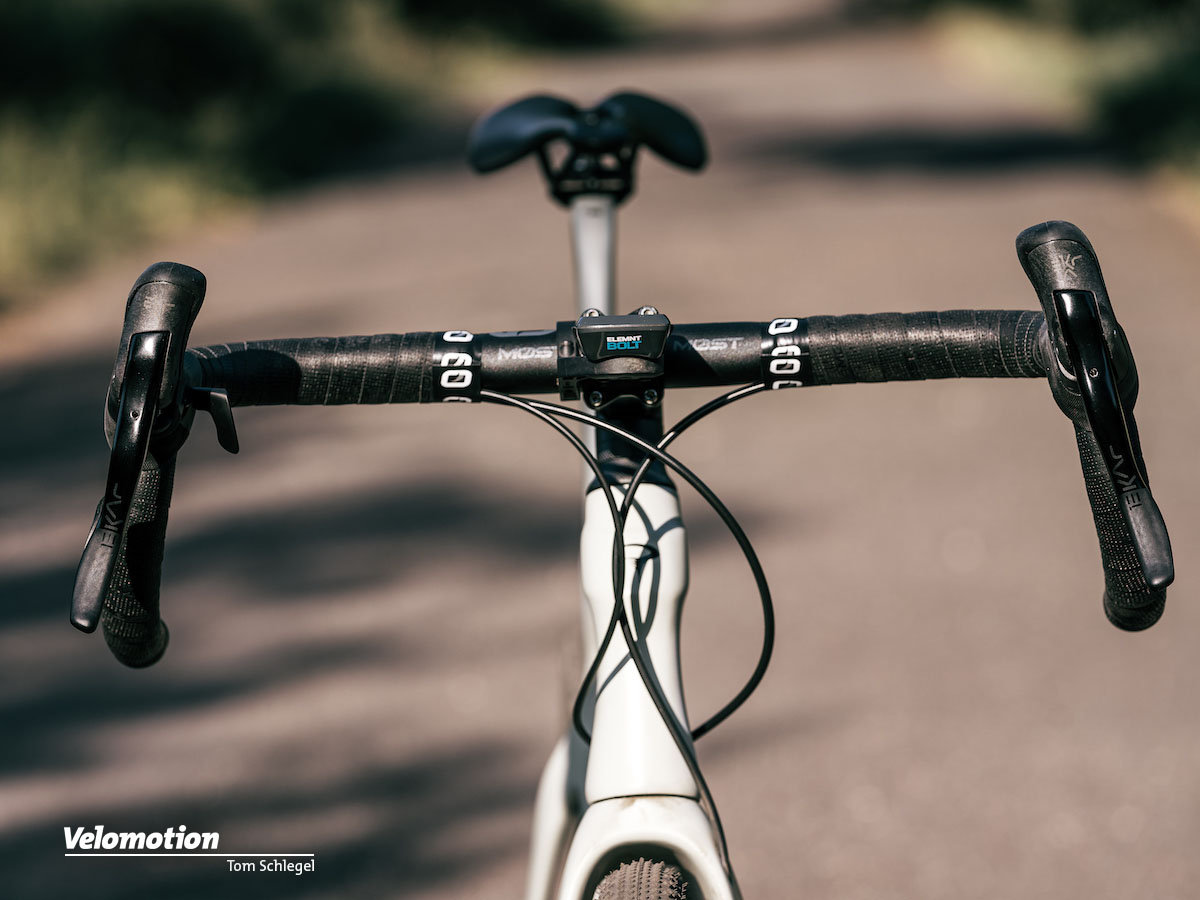
Campagnolo stellte Velomotion ein Pinarello Grevil zur Verfügung, das in Sachen Fahrerhaltung und genereller Anmutung in die Kategorie „Gravel Race“ gehört: Auch dank des langen Vorbaus sitzt man recht gestreckt und mit merklicher Überhöhung; das Rad ist steif und handlich, dazu komplett im Aero-Look gehalten. Wäre nicht der breite, stark ausgestellte Lenker, würde man sich wie auf dem Rennrad fühlen. Die Campagnolo-Hebel fühlen sich vertraut an mit schlankem Griffkörper und geschwungenen Bremshebeln; neu ist allerdings die Daumentaste: Sie ist bei der Ekar bogenförmig nach unten gezogen, womit Campagnolo auf die immer wieder mal geäußerte Kritik eingeht, die Taste sei vom Unterlenker aus schwer zu erreichen. Das ist sie nun nicht mehr, und die neue Form sollte unserer Meinung nach auch auf die Straßen-Gruppen aus Vicenza übertragen werden.
Besser geht’s in Einerschritten
Auch die Funktion der Taste ist etwas anders. Sie schaltet nur in Einerschritten, anders als bei den höherwertigen Campagnolo-Straßengruppen; doch was wie ein Rückschritt erscheint, ist gerade im Gelände ziemlich sinnvoll: Auch wenn es ruppig zugeht, ist Verschalten ausgeschlossen. Die Taste kann saftig runtergedrückt werden, und „klack“ liegt der schwerere Gang auf. Der hinterm Bremshebel positionierte Schalthebel will etwas feinfühliger bedient werden: Im Bereich der kleinen Ritzel kann er bis zu vier Gänge auf einmal wechseln, und da der Hebelweg ziemlich kurz ist, passiert es anfangs durchaus mal, dass man einen Gang überspringt. Unter Last zu schalten geht aus diesem Grund auch einfacher, wenn man größere Gänge wählt; im Wiegetritt bergauf fünf Zähne zu überbrücken, kann schon mal von hörbarem Krachen begleitet sein. Liegt die Kette einmal auf, läuft der Antrieb freilich extrem geschmeidig – und zwar auch auf den kleinsten Ritzeln. Den engen Umschlingungswinkel der Kette negativ zu spüren, muss man definitiv nicht befürchten.
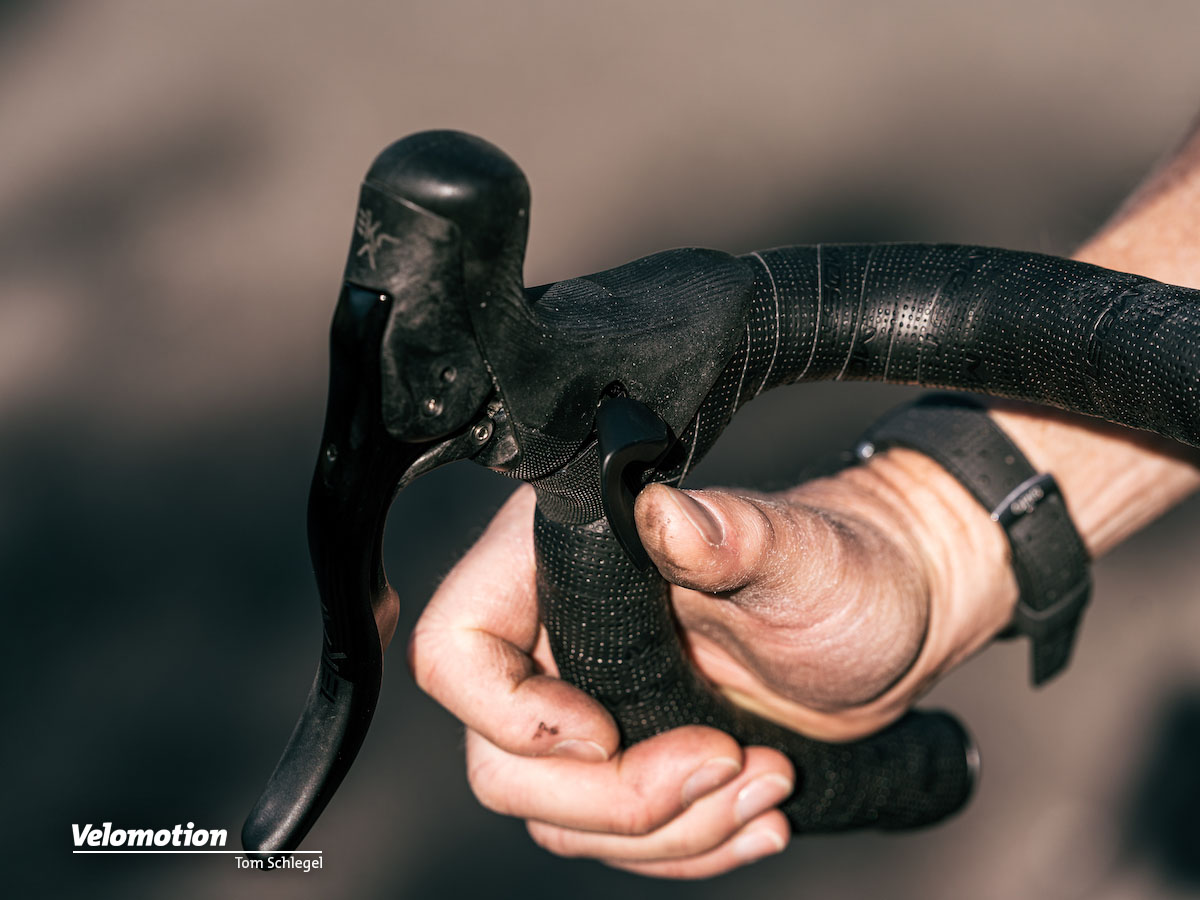

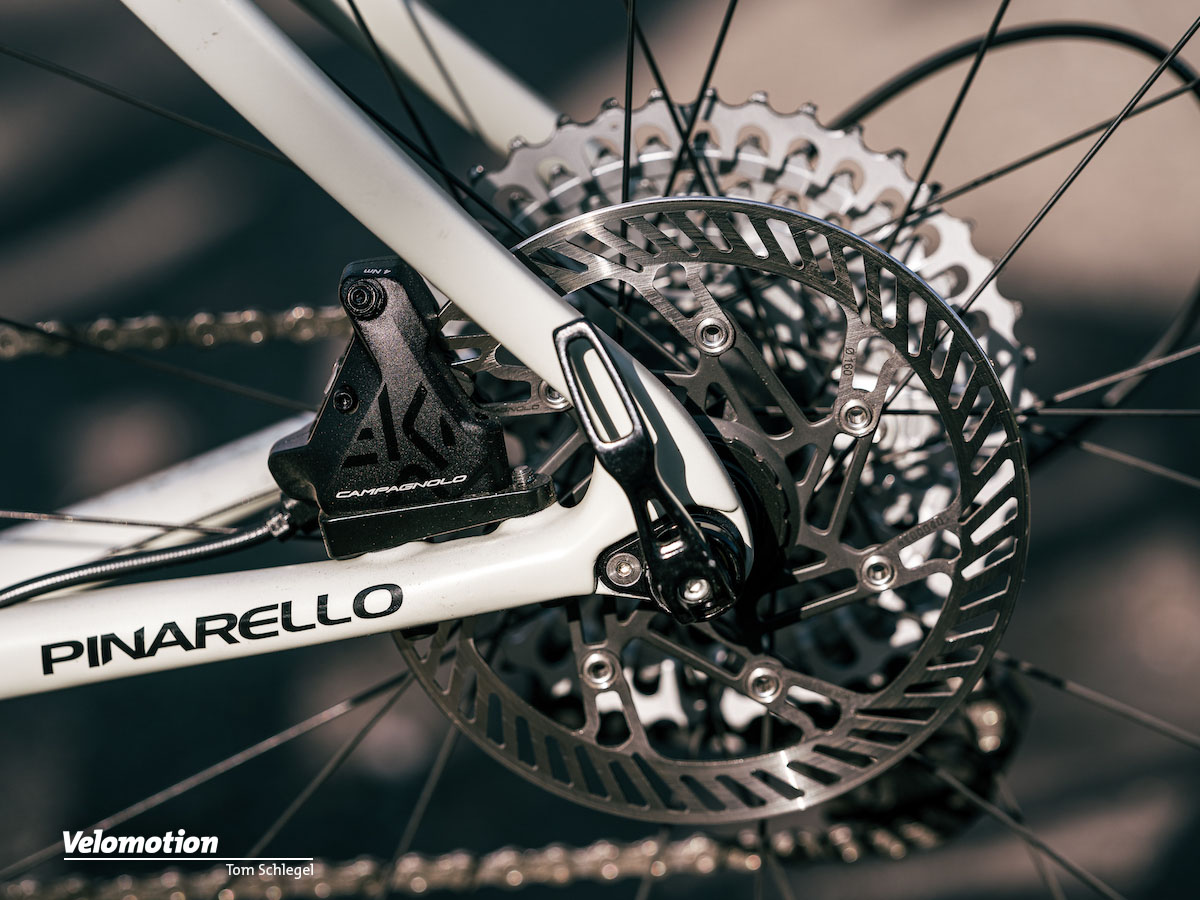
Wer Campagnolo gewohnt ist, hat mit dem Ergopower (hier erstmals im Singular) keine Probleme, und wer sonst andere Systeme fährt, kommt schnell damit klar. Auch an die einst zusammen mit Magura entwickelten Scheibenbremsen muss man sich nicht gewöhnen: Sie sind nicht übertrieben bissig, sodass man auch auf rutschigem Untergrund sehr sicher anbremsen kann; packt man etwas kräftiger zu, kann man bis an die Blockiergrenze verzögern. Die geschwungenen Bremshebel liegen gut zur Hand; per Inbus kann man sie einen knappen Zentimeter näher an den Lenker heranholen.
Harmonisch abgestuft
Also in die Pedale geklickt und los. Beim Anfahren liegt die Kette irgendwo in der Mitte des Ritzelpakets, vielleicht auf dem 18er – bei so vielen Gängen verliert man leicht den Überblick. Macht aber nichts, denn ziemlich schnell fällt auf, dass nichts fehlt. Mit 38×16 kurbelt man bei knapp 30 km/h mit einer 90er Kadenz dahin, der Sprung zum 14er entspricht in etwa dem zwischen 50/19 und 50/17. Ab hier kann man wie gewohnt hochschalten, ohne dass die Gangsprünge ungewohnt groß ausfallen. In der Gegenrichtung ist der Campa-Kranz wie herkömmliche Gravel-Kassetten abgestuft – keine unangenehmen Überraschungen also. Klar, fünf bis sechs Zähne sind ein großer Unterschied, doch diese Gänge werden bei einem Tempo geschaltet, bei dem es ohnehin nicht mehr auf die optimale Frequenz ankommt. Dafür kommt man mit 38/42 auch extreme Steigungen hoch, woran natürlich auch das Pinarello Grevil „schuld“ ist: Das windschnittige Rad wiegt ohne Pedale gerade mal 8,7 Kilo, ist für ein Gravelbike also ziemlich leicht. Die bereits tubeless montierten Conti-Reifen beißen sich mit geringem Luftdruck ordentlich im lockeren Untergrund fest, auf Asphalt rollen sie dabei dank zurückgenommenen Profils und „Black Chili“-Gummimischung ausgesprochen leichtfüßig. Crosser und Straßenfahrer müssen sich einzig an den recht stark ausgestellten Lenker gewöhnen, der aus Prinzip irgendwie dazugehört, in der Kategorie „Speed Gravel“ aber eigentlich nicht sein muss.
Angesichts ihrer sehr guten Funktion werden sich viele Nutzer nicht mehr unbedingt fragen, wie Campagnolo die breite Kassette mit den kleinen Ritzeln eigentlich realisiert hat. Wir natürlich schon, zumal klar ist: Einfach war das nicht.
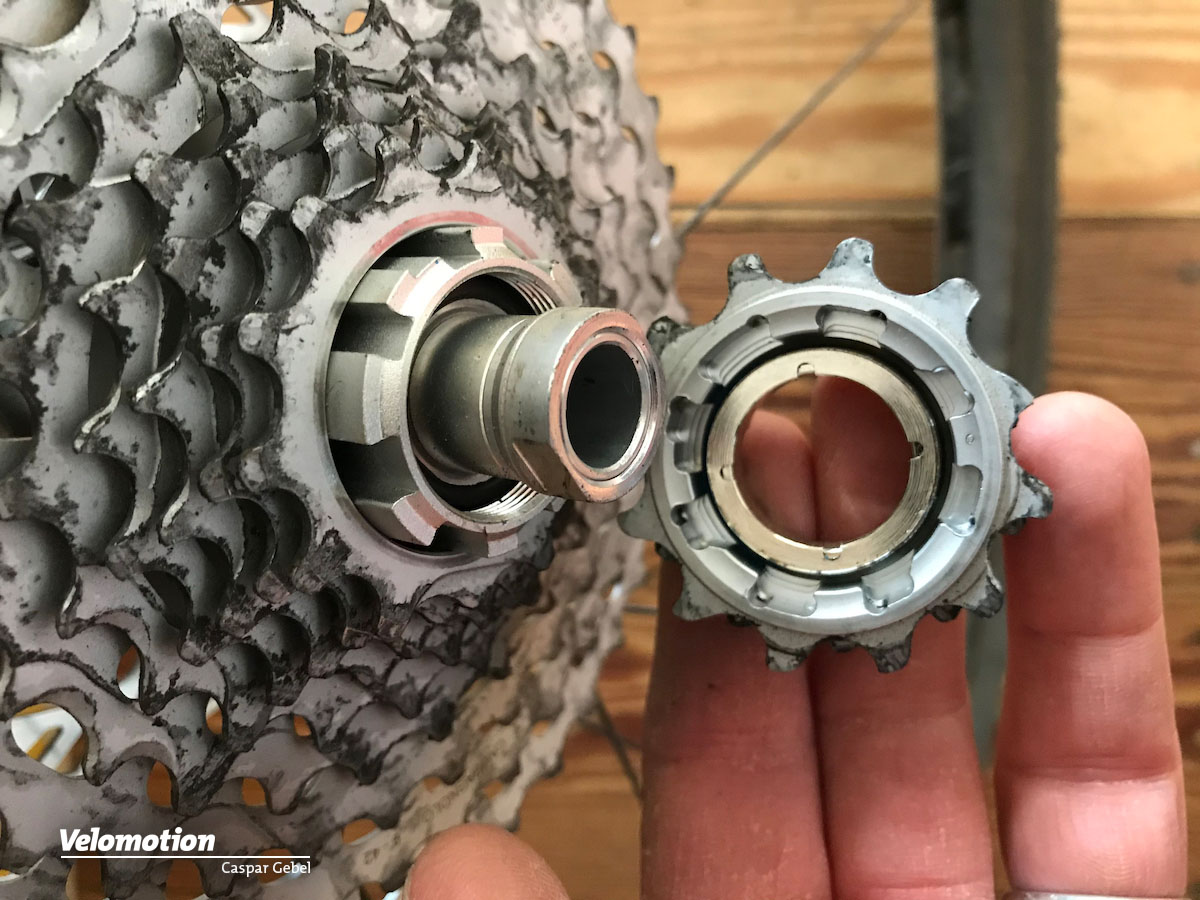
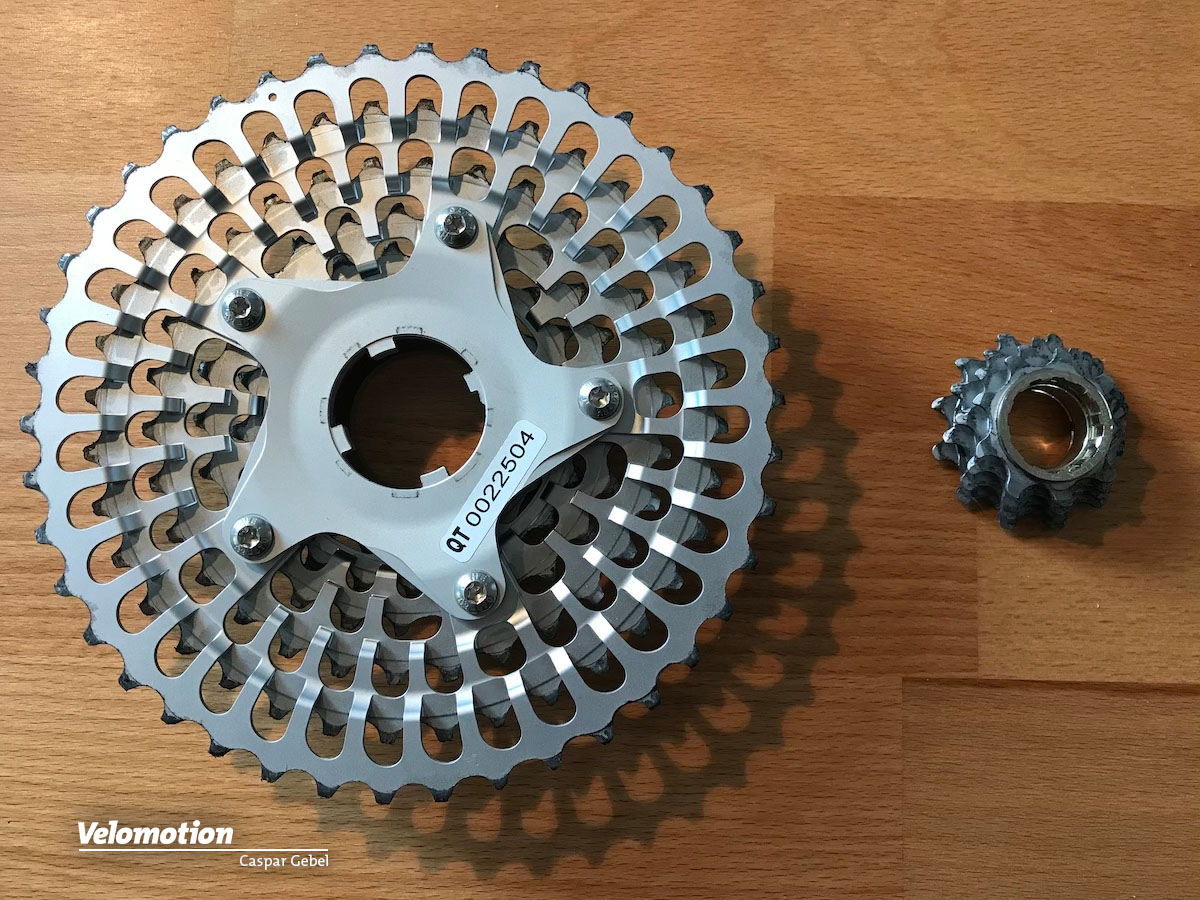
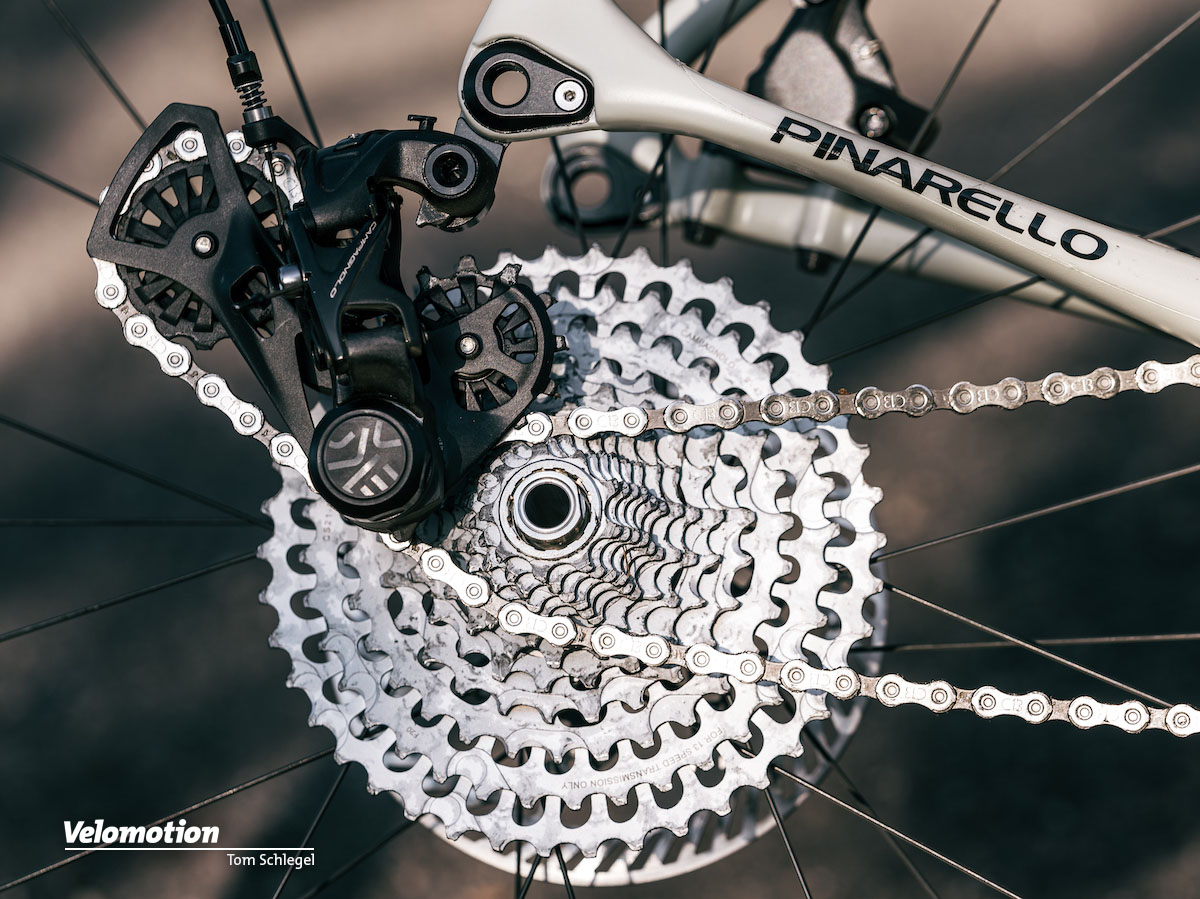
Los geht’s mit dem Freilaufkörper: Damit er Neuner- und Zehner-Ritzel aufnehmen kann, fällt er gut 4 mm kürzer aus als konventionelle Campa-Freiläufe; die zwei kleinsten Ritzel sind vor dem Freilaufkörper positioniert. Sie sind Teil eines Vierer-Ritzelblocks, in den der Verschlussring integriert ist und der nur zur Hälfte auf dem Freilauf sitzt. Dahinter befindet sich ein Neunerblock, der aus dem Vollen gefräst ist und an einen Träger aus Aluminium geschraubt wird. Die 10-44er Kassette ist etwas anders aufgebaut: Dreierblock mit separatem Verschlussring plus Zehner-Ritzelblock. Dreier- und Viererblock können als Ersatzteil nachbestellt werden; für den Fall, dass eines der kleinen Ritzel verschlissen ist, muss also nicht gleich die komplette Kassette ausgetauscht werden.

Die zum 13er Kranz passende Kette ist noch einmal schmaler geworden und misst nur noch 4,9 mm (11-fach: 5,5 mm; 12-fach: 5,15 mm). Sie wird per Kettennietstift geschlossen; ab Herbst wird auch ein Verschlussglied erhältlich sein – eine Neuheit bei Campagnolo.
Starkes Schaltwerk für große Ritzel
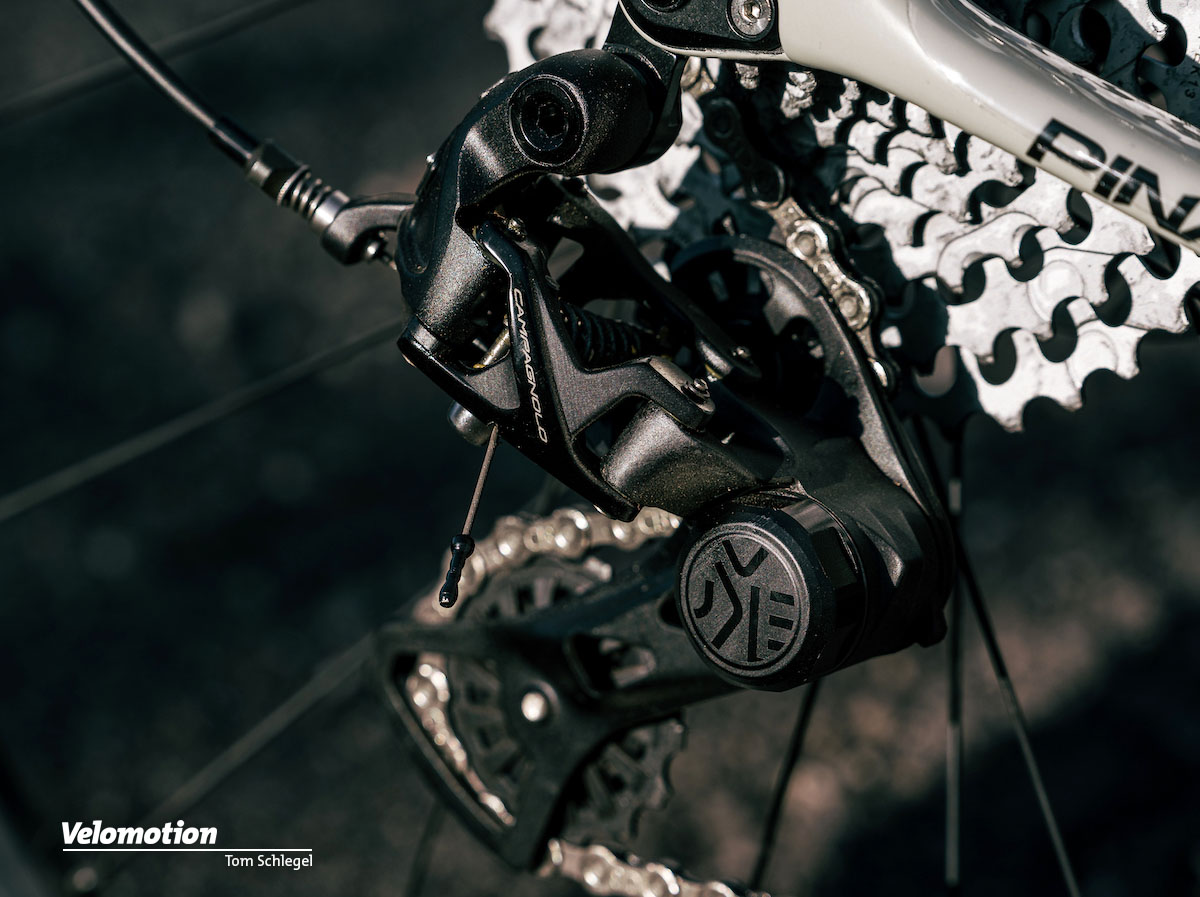
Neu konstruiert wurde auch das Schaltwerk, das nur in einer Länge angeboten wird (Schaltschwinge 78,5 mm) und Gravel-typisch etwas weniger zierlich ausfällt. Das untere Schaltröllchen hat zwei Zähne dazubekommen und nun ganze 14; wie bereits bei der 2×12 fallen die Beißerchen des oberen Rädchens länger aus, um die Kette sicherer zu führen. Das Schaltwerk verfügt über eine starke Feder, womit Kettenschlagen verhindert wird; für sicheren Sitz des Gliederstrangs sorgt auch das Narrow-wide-Profil der Zähne am Kettenblatt.
Wie bei Gravel-Schaltwerken üblich, ist auch der Campagnolo Ekar Wechsler mit einer Blockierfunktion ausgestattet, die den Laufradaus- bzw. Einbau erleichtern soll. Wird das Schaltwerk nach hinten gedreht, springt ein kleiner Knopf heraus und es wird in dieser Position arretiert. Die Feder der Schaltschwinge ist allerdings immer noch aktiv; damit der Laufradeinbau leicht fällt, muss man mit der Hand die Schaltschwinge etwas nach vorne drücken, um die Kette zu entspannen.

Ist die Campagnolo Ekar die leichteste Gravel-Gruppe?
Campagnolo war immer ein Synonym für Leichtbau (mal abgesehen von gewissen Teilen der späten 1980er), und den Werksangaben zufolge macht auch die Ekar keine Ausnahme. Das Gewicht der kompletten Gruppe wird mit 2.395 Gramm angegeben, wobei wir nicht wissen, in welcher Konfiguration; dagegen wiegt die Shimano GRX 800 1×11 in Italien knapp 2.780 Gramm, die Sram Force 1×11 2.470 Gramm und die Sram Force AXS 1×12 2.627 Gramm. Wie fair hier gewogen wurde, wollen wir nicht beurteilen – dass man mit der Ekar ein leichtes Gravelbike bauen kann, beweist jedenfalls schon unser Testrad.

Drei neue Laufradsätze
Da der spezielle 1×13-Freilaufkörper nicht ohne weiteres auf aktuelle Laufräder passt, bietet Campagnolo zur Ekar gleich drei Radsätze an: einen Campagnolo Shamal mit Carbonfelgen (v. 35 mm tief/h. 40 mm), der 1.585 Gramm wiegen soll, dazu zwei Fulcrum-Radsätze mit Alu-Felgen, die auch in 650B verfügbar sind. Der Rapid Red 300, der am Testrad verbaut ist, wiegt in 28 Zoll 1.690 Gramm und kommt mit innen 24 mm breiten Felgen; komplett mit Kranz und Bereifung wiegt unser Radsatz genau 3.500 Gramm, was ein wirklich guter Wert ist. Der Rapid Red 900 mit 22 mm Innenweite soll in 28 Zoll 1.950 Gramm wiegen. Alle Laufradsätze können tubeless gefahren werden. Mit einem Adapterring können auch ältere Ritzelpakete auf den 13-fach-Freilaufkörper montiert werden; ältere Campagnolo- oder Fulcrum-Hinterräder können zudem mit einem Umbausatz auf 13-fach aufgerüstet werden, der aus Achse, Freilaufkörper und Kleinteilen besteht.

Campagnolo steht weiterhin für Emotion und Präzision
Bei so vielen Details kommen die Emotionen freilich etwas zu kurz. Wer sich noch an seinen ersten Siebenfach-Schraubkranz erinnern kann und an Campagnolos ersten gerasterten Unterrohr-Schalthebel, ist fasziniert davon, dass tatsächlich 13 Ritzel auf eine Kassette passen – und dass alle geschmeidig funktionieren, Kettenschräglauf hin oder her. Außerdem: Bei aller Komplexität, die das 13. Ritzel erfordert, ist Campagnolo mit der Ekar erstmals eine Ver-Einfachung gelungen, die über das Gravel-Segment hinausweist – wie bereits angedeutet, hat der eng abgestufte 9-36er Kranz auch auf der Straße Potenzial. Um das Pinarello Grevil als Rennrad zu nutzen, braucht es letztlich nur andere Reifen für unbeschwertes Fahren, wogegen man beim Elffach-Gravelbike unweigerlich mit der Abstufung der Kassette hadert. Ohnehin kann man dem traditionsreichen Hersteller aus Italien ein gutes Händchen bescheinigen, wenn es um harmonisch abgestufte Übersetzungen geht.
Warum führt Campagnolo also ein derartiges Nischendasein auf dem deutschen Markt? Die Fahrradhersteller spezifizieren die Gruppen der Italiener nur selten – mangelnde Nachfrage, heißt es immer wieder. Dahinter steckt das Problem, dass Campagnolo immer stärker an Bekanntheit eingebüßt hat: Während die älteren Semester wie selbstverständlich mit dem edlen Glanz der Italo-Komponenten aufgewachsen sind, kennen Radsportler um die dreißig oft nur Shimano und dann vielleicht noch Sram. Das ist schade, denn Campagnolo hat mehr zu bieten als einen traditionsreichen Namen und ganz aktuell den jüngsten Tour-de-France-Sieger. Beispielsweise Komponenten, die sich bei Verschleiß und Defekten reparieren lassen, wozu das Unternehmen eigens eine Kundendienstwerkstatt in Leverkusen unterhält. Und natürlich Material, das eine emotionale Formensprache mit präziser Funktion vereint.
Zurück zur Ekar: Campagnolo bietet die komplette Gruppe, die ab sofort in den Handel kommt, für 1.725 Euro an – ein satter Betrag, angesichts des Funktionsvorsprungs, den die Gruppe bietet, aber durchaus akzeptabel. Ohnehin dürfte der Preis sich deutlich darunter einpendeln. Kompletträder um die 4.000 Euro sollten also möglich sein, wobei die Musterräder, die Campagnolo aufgebaut hat, eher luxuriös ausfallen. In jedem Fall hat die Ekar eine hervorgehobene Position im Gravel-Segment verdient – Velomotion jedenfalls hofft, dass Fahrradfirmen wie Radsportler die Möglichkeiten nutzen, die die neue Gruppe bietet.


Schreibe einen Kommentar