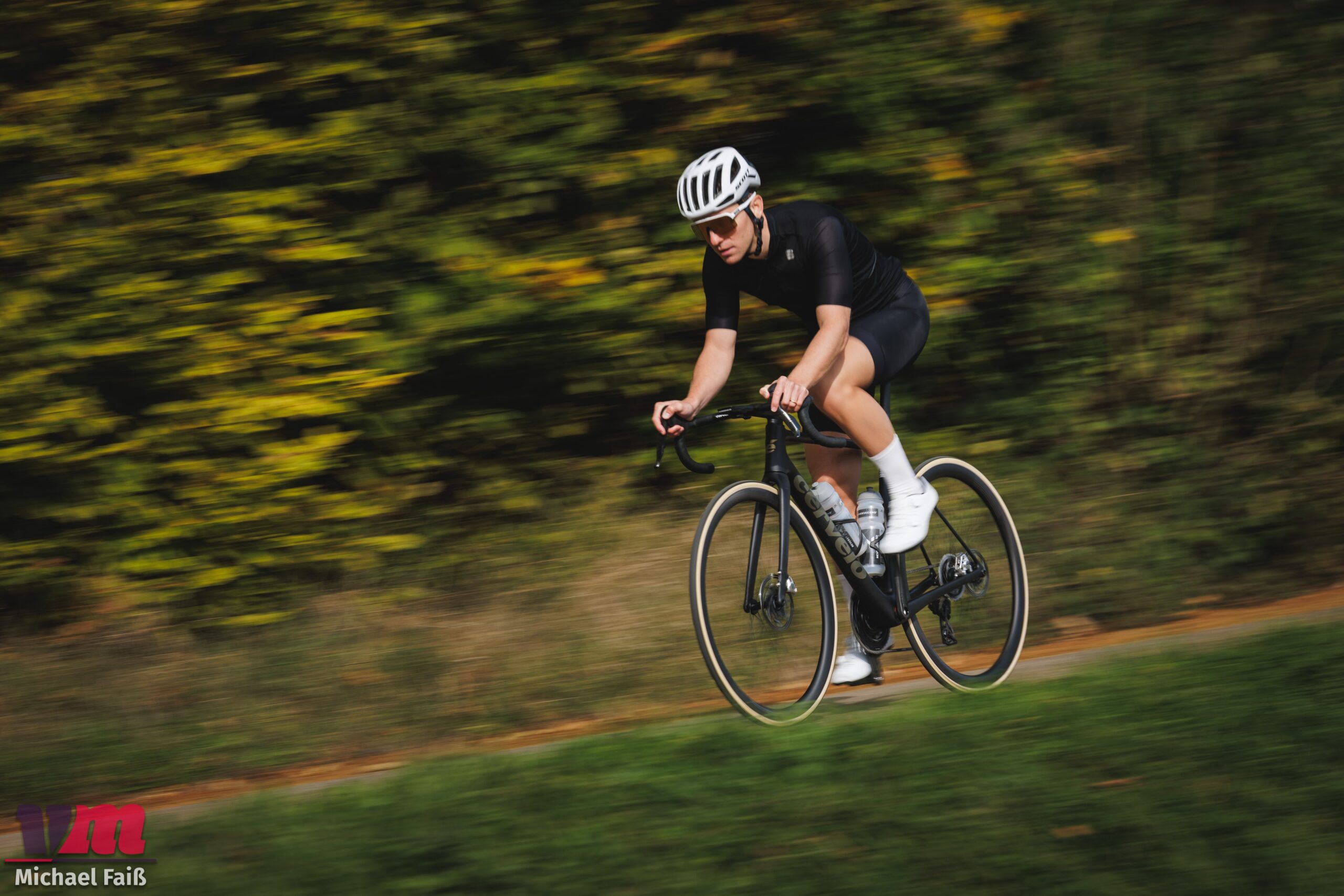
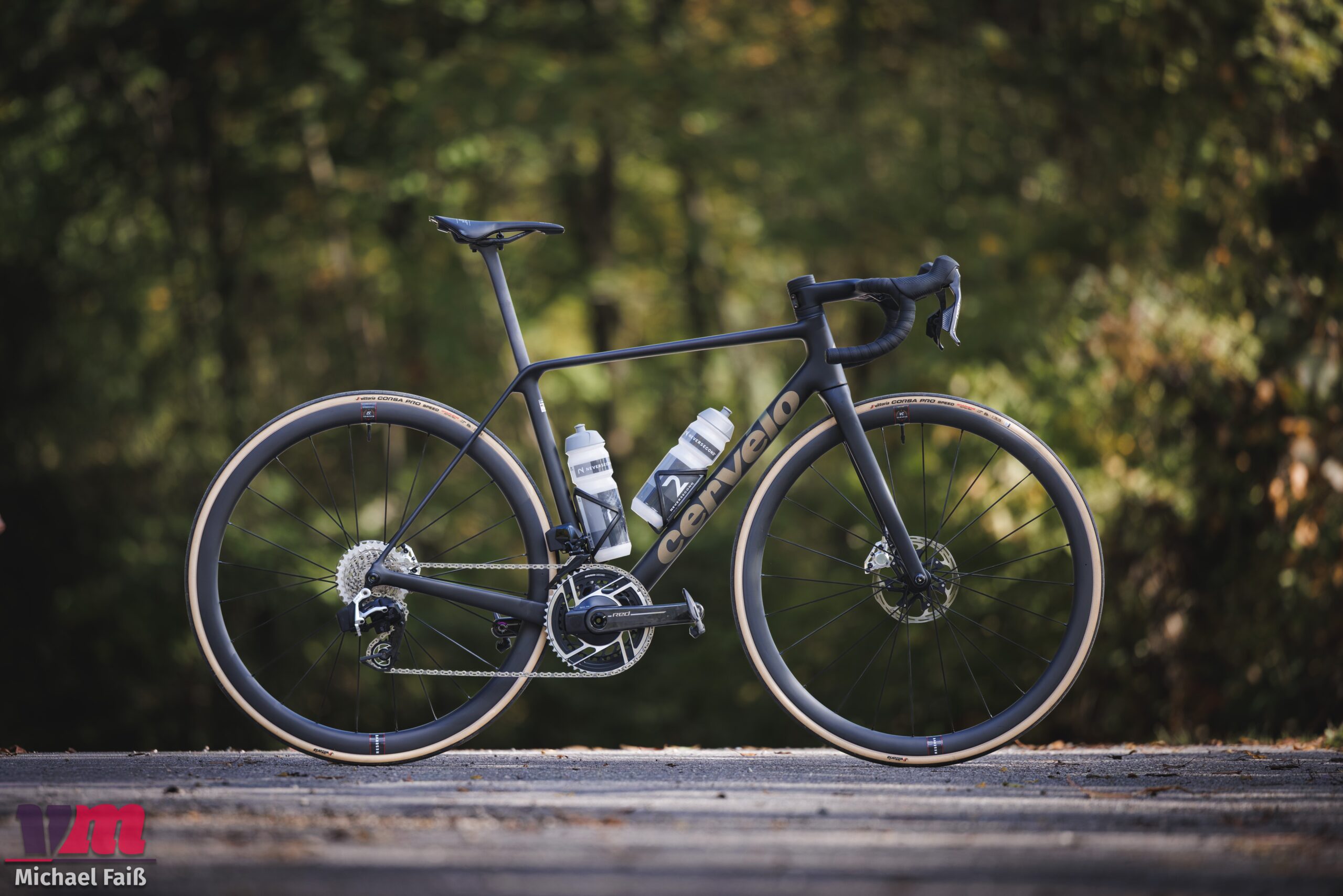
Test: Incredibly light – a road bike weighing just under six kilograms is a real head-turner – even in the premium price segment. The Cervélo R5 adds a sporty connection: Pauline Ferrand-Prévot won the 2025 Tour de France Femmes on this platform, and the professionals on the Visma-Lease a Bike men's team, including superstar Jonas Vingegaard, are frequently seen riding these machines. However, the pros have to keep the bike down to 6,8 kilograms for it to be eligible for competition. In the SRAM Red AXS configuration, Cervélo combines the lightweight carbon frame with an electronic double chainring drivetrain, power meter, and low-profile carbon wheels. This results in a well-rounded road bike concept, the suitability of which depends on fit and gearing as much as weight. We tested this lightweight racer over many kilometers and, above all, many meters of elevation gain.
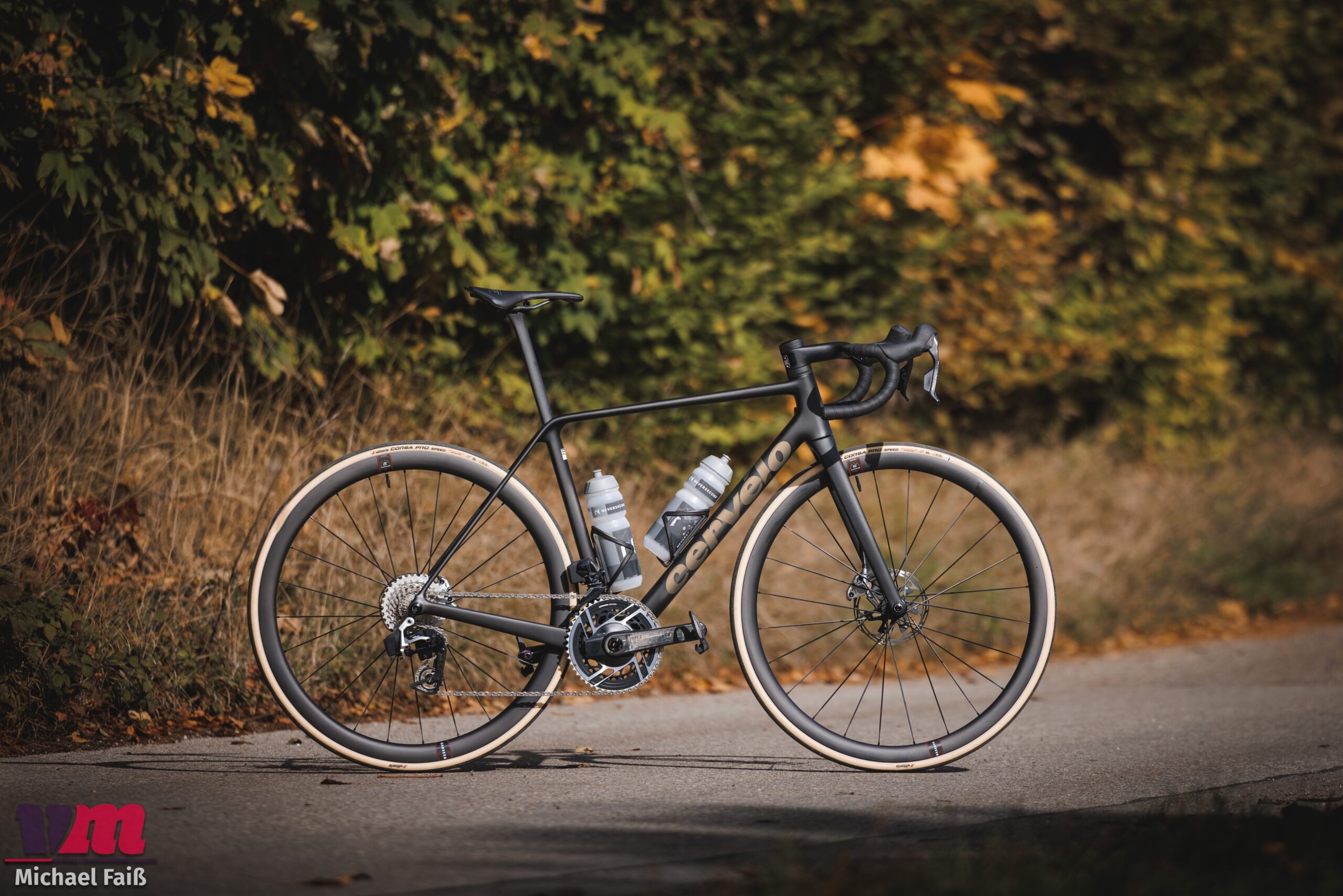
The Cervélo R5 and Team Visma | Lease a Bike
Within Cervélo's road bike lineup, the R5 represents the focus on lightweight construction and climbing. The close connection between its development and professional cycling is demonstrated by its use by Team Visma | Lease a Bike: the team uses both the R5 and the aerodynamically optimized S5. With the new R5 generation, Cervélo has aligned the frame geometry, crucial for riding position, with that of the S5. This facilitates switching between the two platforms.
The new R5's most prominent success story came at the 2025 Tour de France Femmes. Pauline Ferrand-Prévot first won the mountain finish at the Col de la Madeleine and then the final stage to Châtel. The Frenchwoman secured the overall victory with a 3:42 minute lead over Demi Vollering.
Cervélo R5 – Frame and weight: Lightweight construction throughout the entire bike
Cervélo states a frame weight of 651 grams in size 56 and a fork weight of 298 grams. The manufacturer specifies a weight of 5,97 kilograms for the complete bike in size 56; our test bike in size 54 even weighed in at 5,85 kilograms.
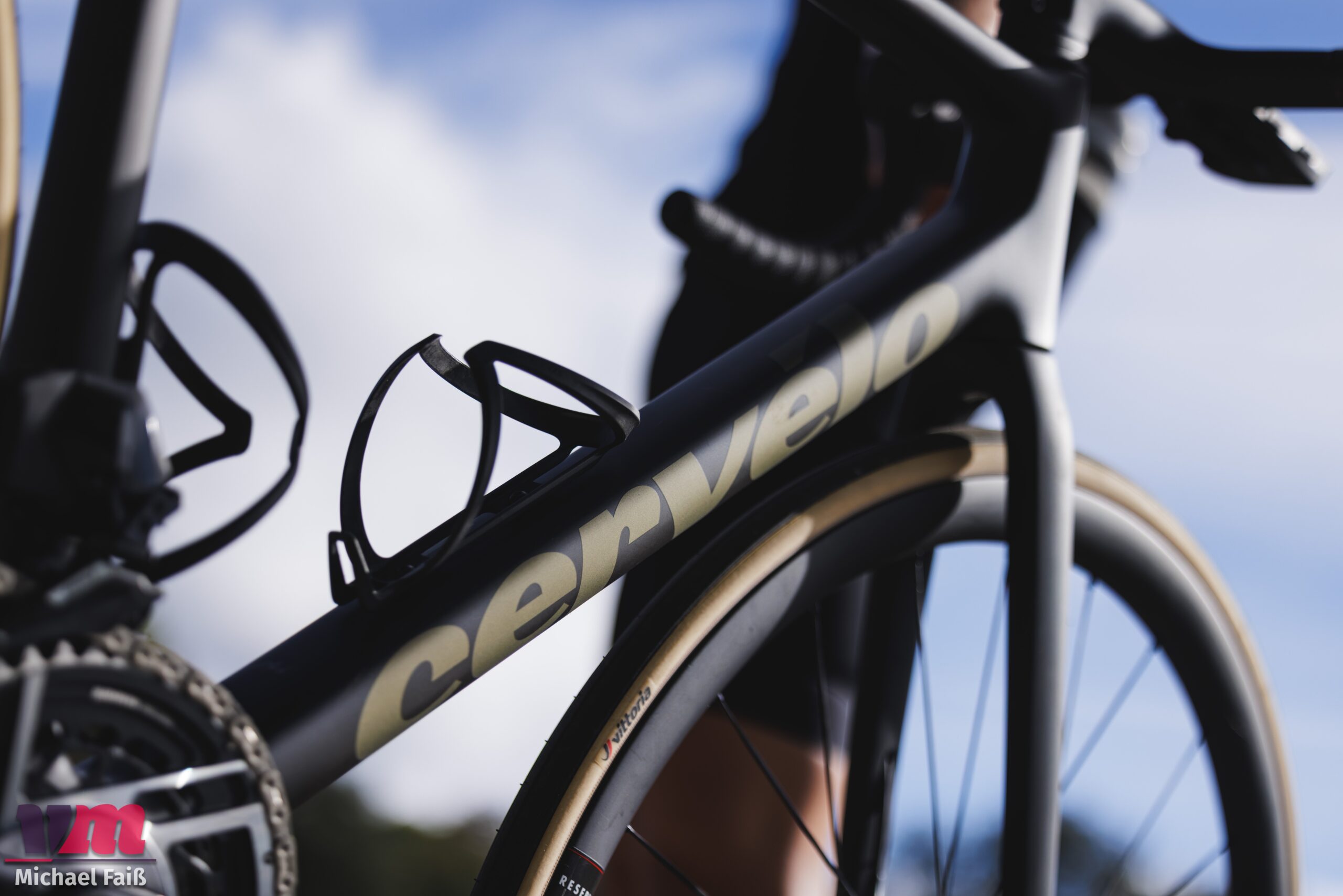
The development isn't limited to the frame. The components also contribute to the low overall weight. Regarding stiffness distribution, the manufacturer describes a stiffer bottom bracket area and a less stiff front end compared to its predecessor. This reflects the aim of specifically improving power transmission and riding comfort.
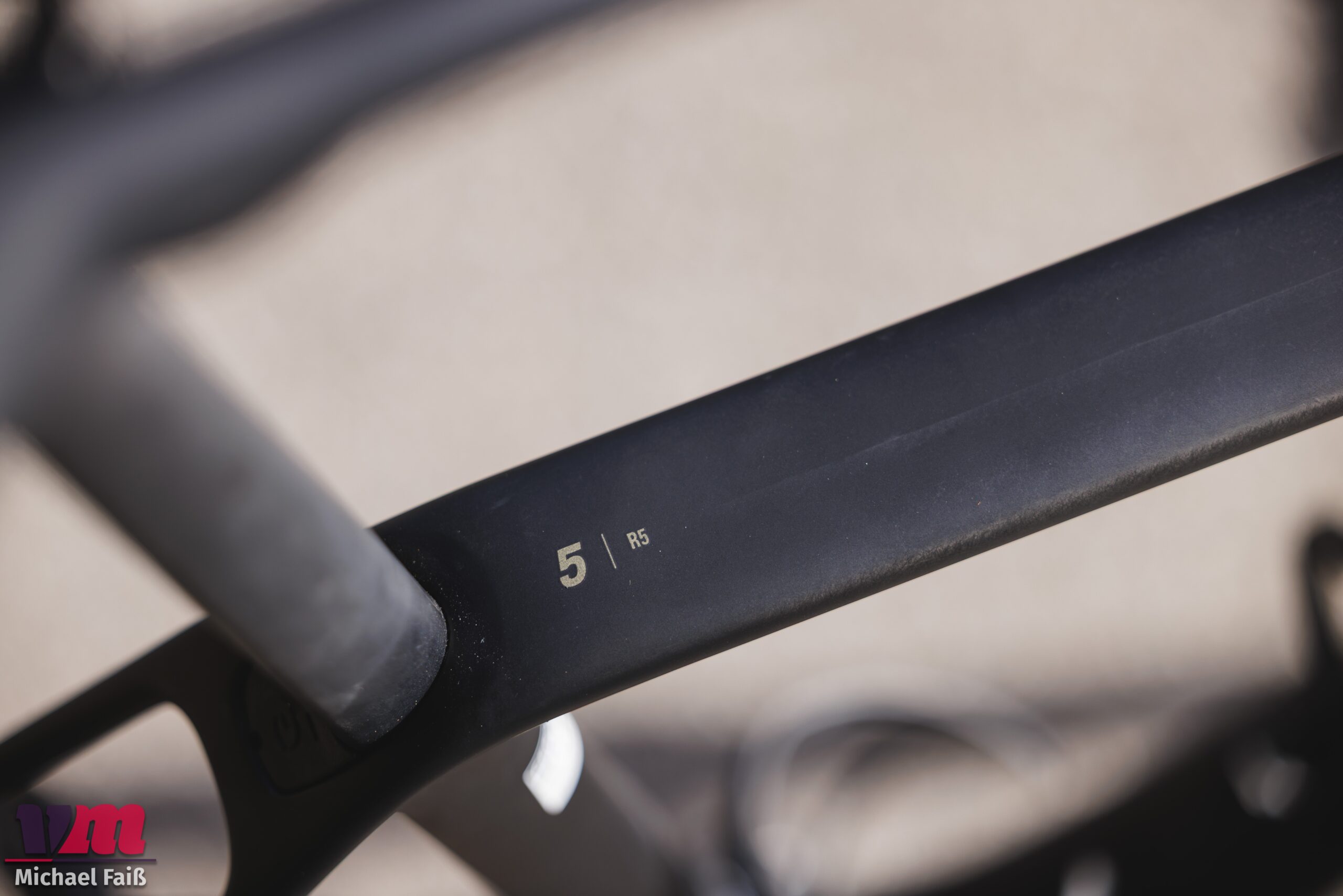
While the weight of a bike is certainly a factor to consider, it's important to put things into perspective: A weight reduction of one kilogram equates to roughly 1,2 percent on a system weight of 85 kilograms. This reduces the amount of power required to overcome gravity when climbing hills. On fast, flat stretches, however, air resistance, tires, and riding position become more significant. Therefore, a very light bike isn't automatically the fastest on every route – but it can often make life considerably easier.
Cervélo R5 – Geometry: Sporty demands on the fit
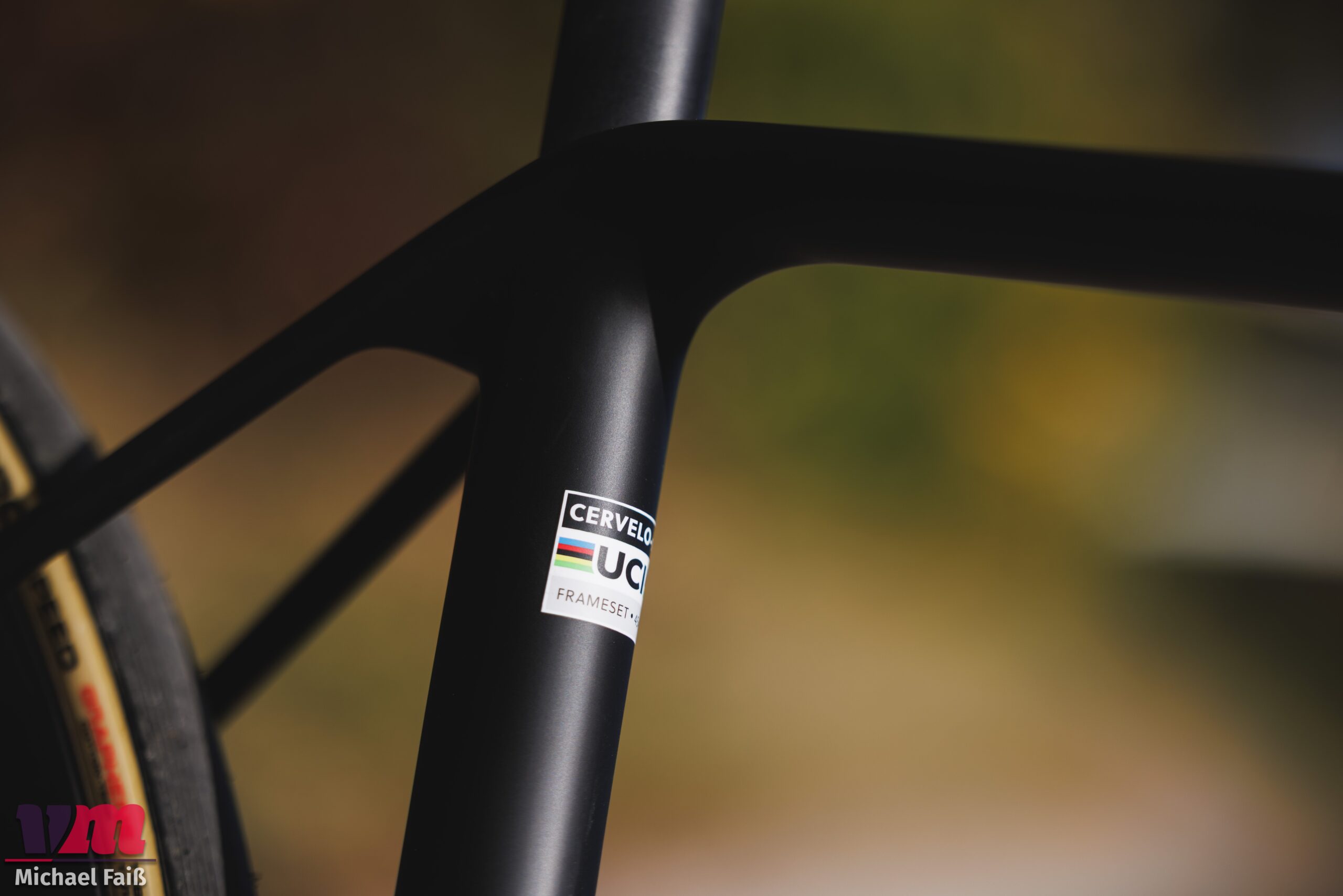
The geometry data underscores the sporty approach. Size 56 specifies a stack of 567,5 millimeters and a reach of 391,1 millimeters. The head tube angle is 73 degrees, and the wheelbase is just under 993 millimeters. Six frame sizes are offered, ranging from 48 to 61.
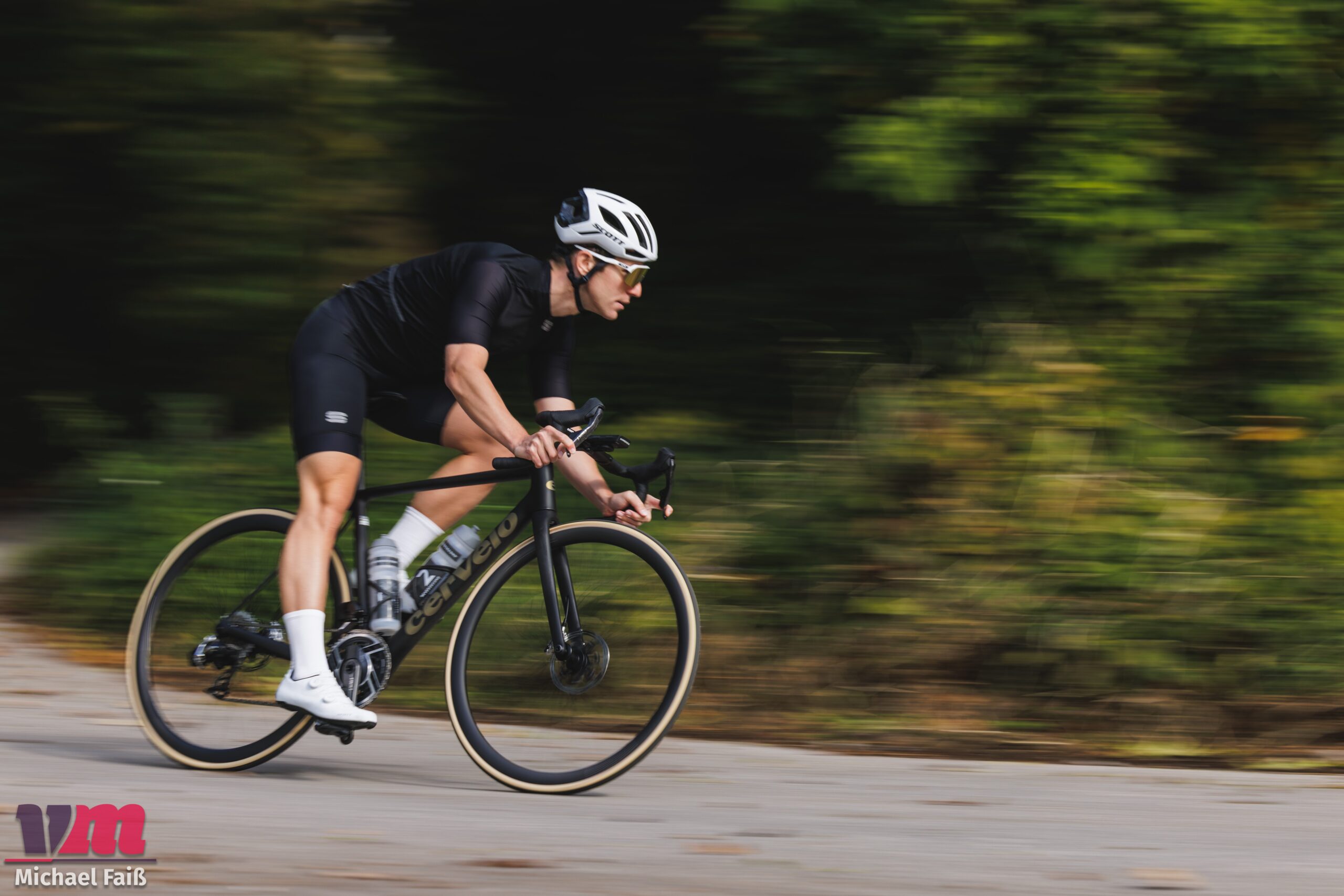
These figures alone don't fully describe the riding experience. However, they do demonstrate the importance of the correct cockpit and spacer configuration. Those who prefer a significantly more upright position should carefully check the achievable handlebar height before purchasing. A lightweight frame offers little benefit on a long mountain pass ride if the posture puts too much strain on the hands, neck, or back after two hours.
Downhill performance cannot be deduced from the weight specification alone. Factors such as tires, tire pressure, weight distribution, and individual riding position are crucial for this.
Integrated cockpit: Clean look, careful size selection
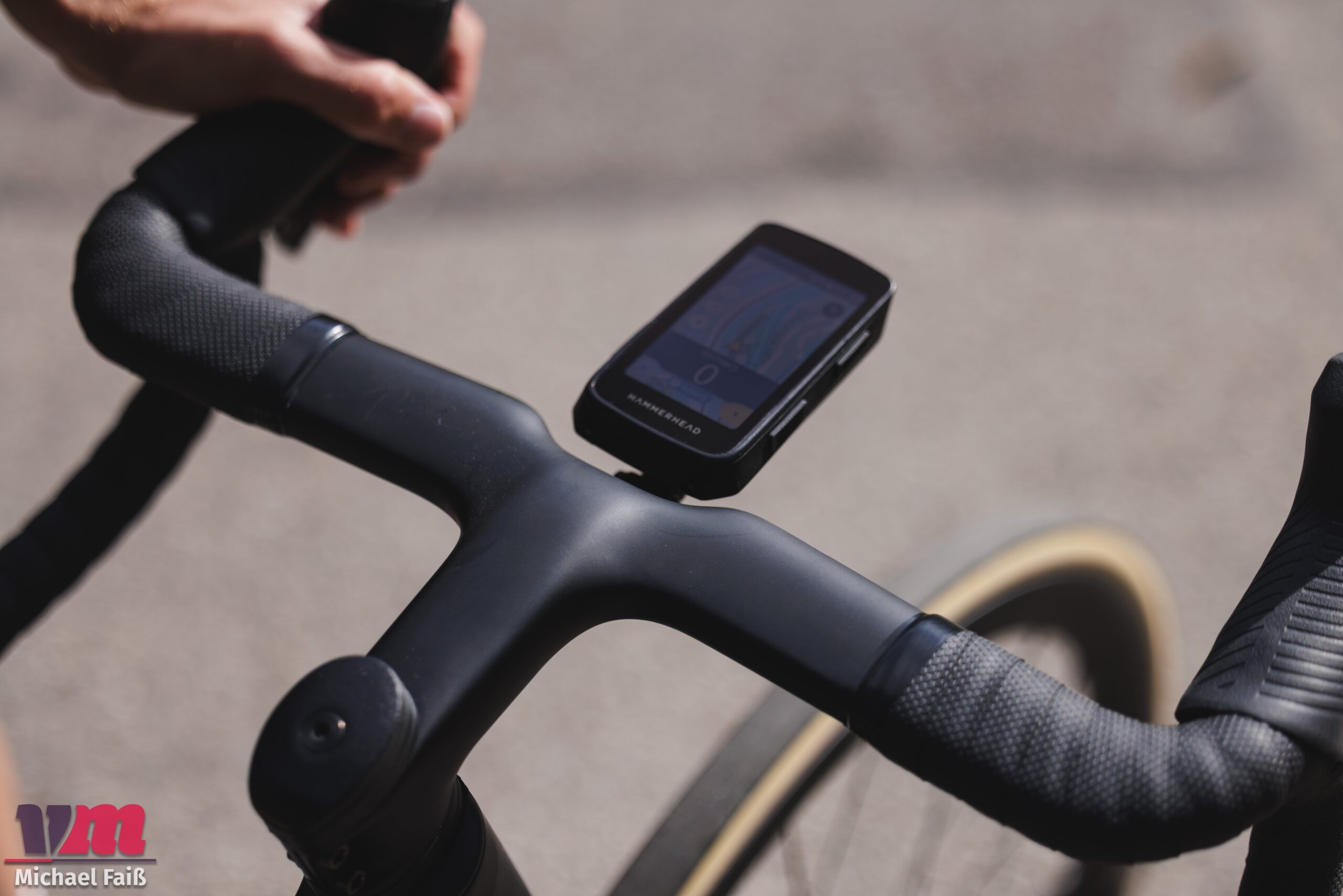
The one-piece HB18 carbon cockpit complements the R5's clean look. However, the permanently connected handlebar-stem unit requires precise selection of length and width. Unlike a two-piece system, the handlebar angle cannot be adjusted independently of the stem.
Cervélo offers a one-time cockpit exchange for eligible new purchases through authorized dealers. The application must be made within the first 60 days. According to the published terms and conditions, the replacement cockpit is free of charge; labor and any small parts required are excluded. The program simplifies the fitting process, but a prior position check is still recommended.
Integration comes with a practical downside: despite wireless shifting, hydraulic brake lines remain. Routing these through the cockpit and headset area can make modifications and certain maintenance tasks more complex. This should be factored into the running costs when considering a bike in this price range.
Cervélo R5 with SRAM Red AXS
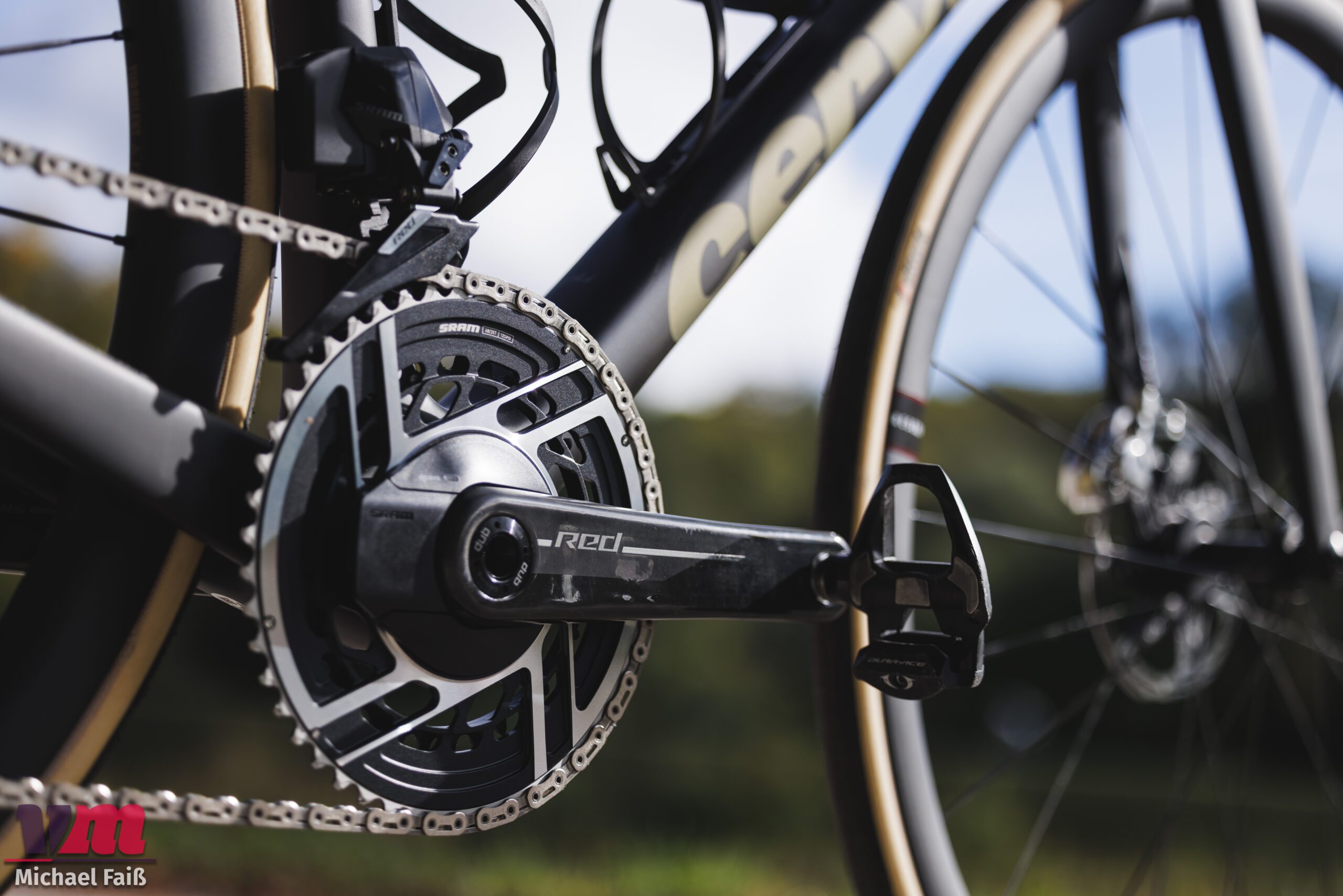
The bike in question uses the SRAM Red AXS E1 groupset with two chainrings and twelve sprockets. The shifting is wireless. In the standard configuration, the right lever shifts to a harder gear at the rear, the left to an easier gear; pressing both shift paddles simultaneously changes the chainring. AXS allows for customization of functions. A key component of this Red generation is the redesigned brake/shift levers. SRAM has modified the lever body and lever architecture, enabling independent adjustment of reach and bite point. Additional buttons on the lever bodies can perform shifting functions or control compatible ANT+ devices.
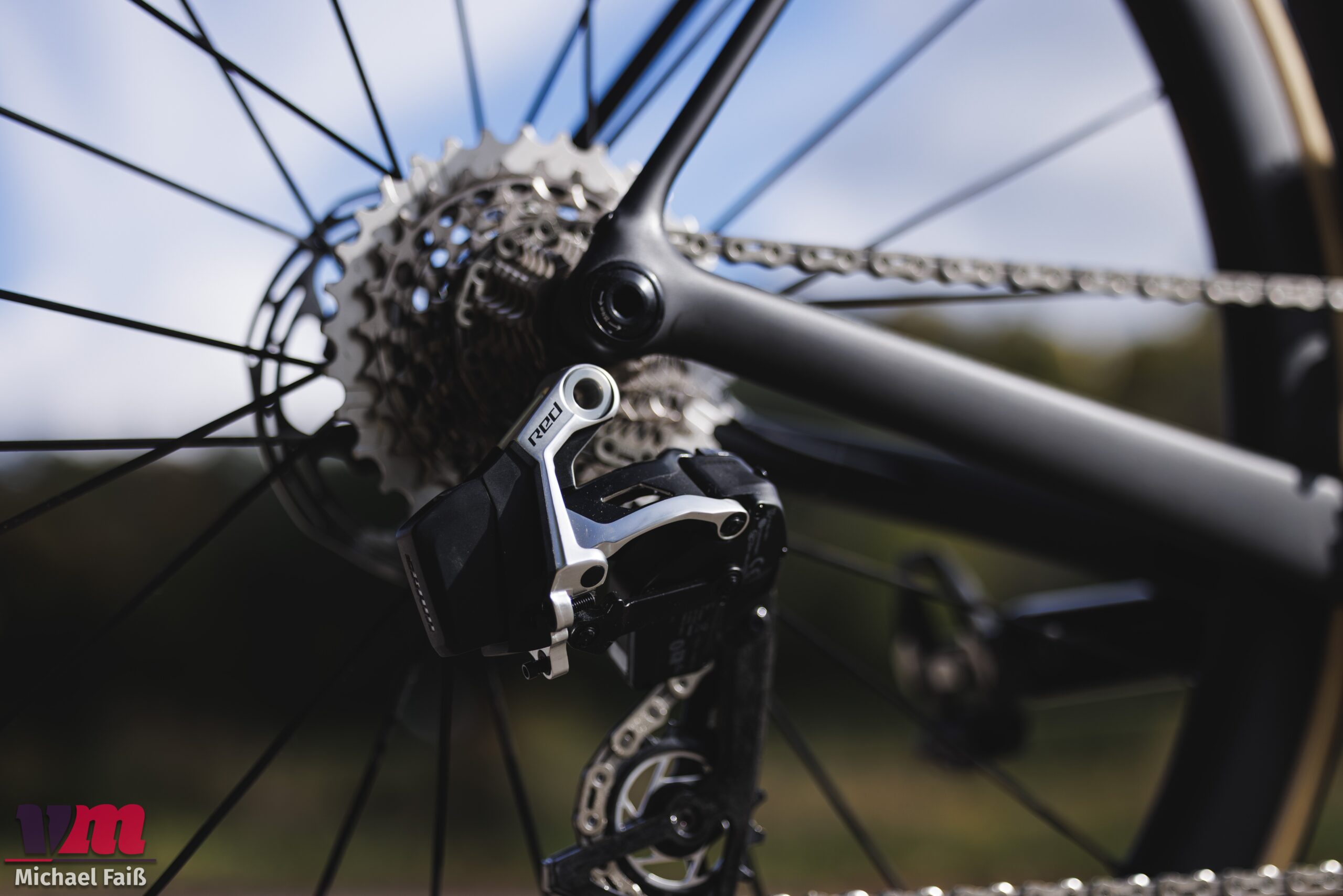
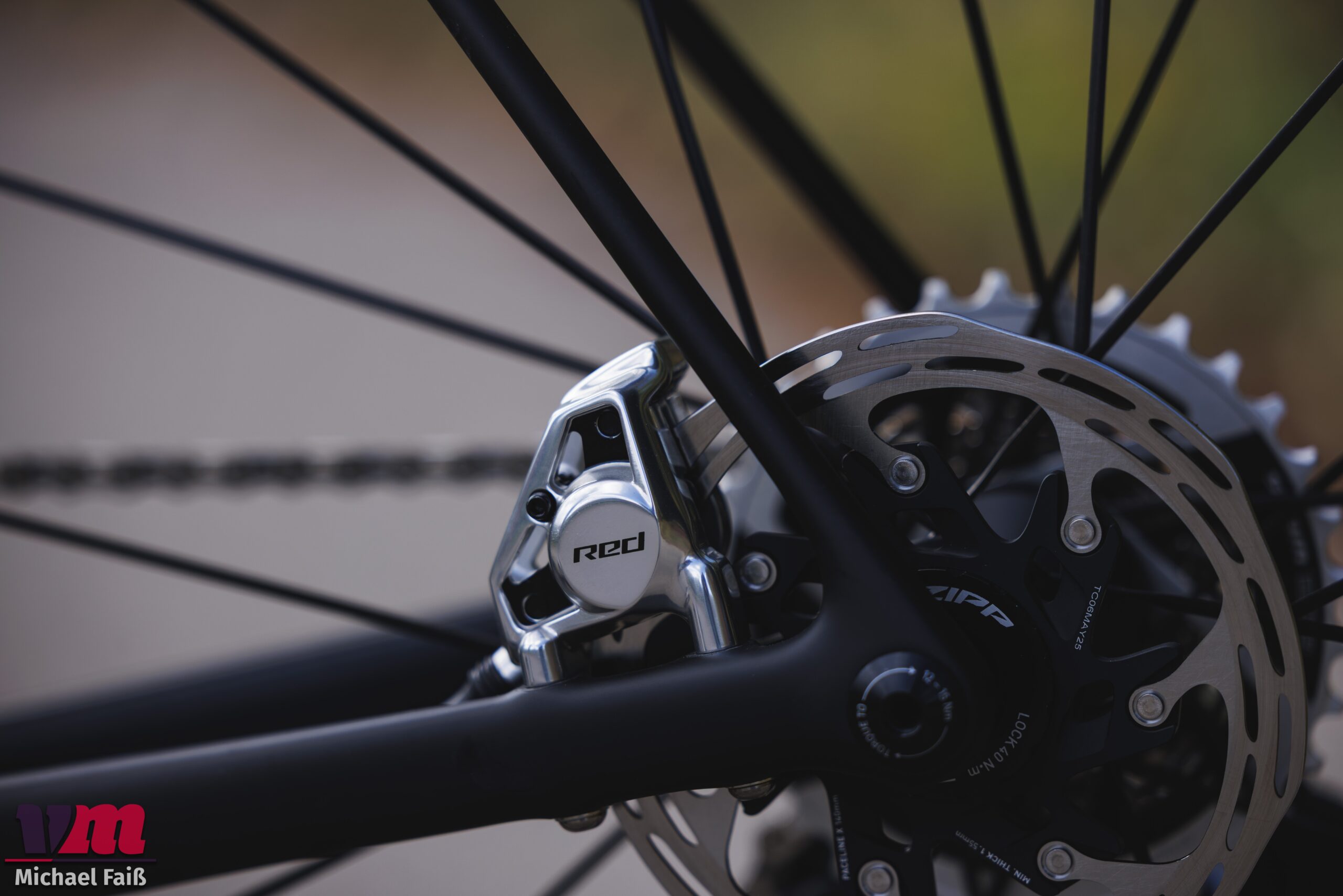
Especially for a bike intended for long climbs and descents, such details are relevant. Easily accessible levers and a suitable reach can be more important in everyday use than a further minor weight saving. The brake requires significantly less hand force compared to the previous generation; we were able to confirm this on our test rides, particularly on long descents.
The combination of a 48/35-tooth crankset and a 10-33 cassette initially seems plausible for a lightweight road bike. The large chainring, together with the ten-tooth sprocket, provides a gear ratio of 4,8. This is almost equivalent to a classic combination of 53 teeth at the front and eleven at the rear. Therefore, a 48-tooth chainring in this case does not result in a noticeably low top gear.
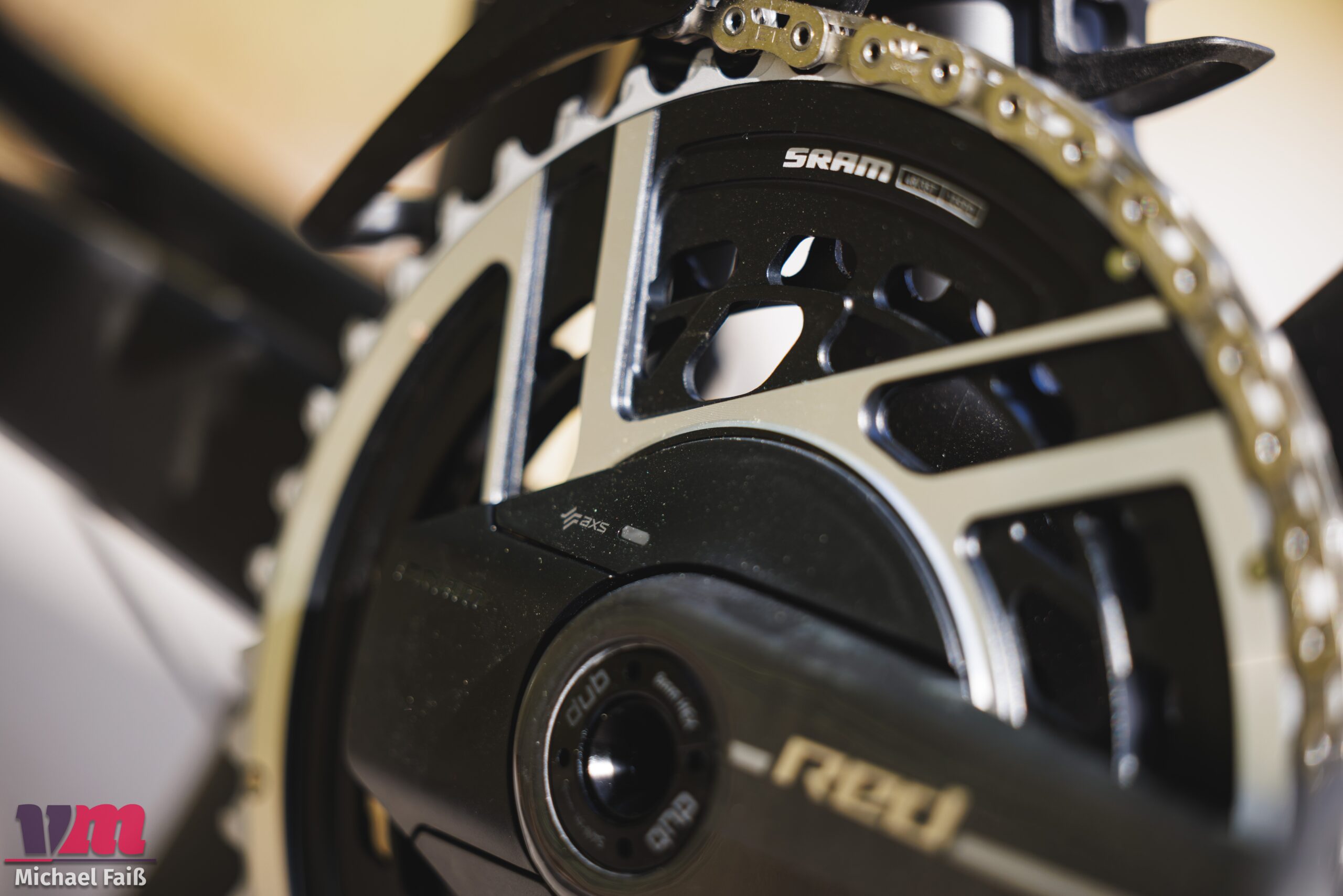
The other end of the spectrum is more critical. With a 35-tooth chainring in the front and a 33-tooth chainring in the rear, the lowest gear ratio is around 1,06. This might work for well-trained riders. However, anyone planning long double-digit climbs or a high cadence with moderate power output should test beforehand whether this gear ratio is sufficient for their chosen route.
According to SRAM, the installed Red AXS derailleur is compatible with cassettes up to 10-36. With such a cassette and the small chainring remaining unchanged, this would result in a slight reduction in gearing of approximately 0,97. This would be an obvious adjustment for many hill-oriented amateur cyclists. Chain length and adjustment must be appropriate for the specific setup.
Power meter: A useful component of top-of-the-line equipment
Power measurement is already integrated into the crankset in this configuration. SRAM specifies an accuracy of ±1,5 percent for the Red AXS power meter and also offers a left-right balance display. For its intended use, power measurement is a logical feature. It allows for more precise pacing on long climbs; during training, intervals and power comparisons become more reproducible. From the perspective of an ambitious rider, this represents a tangible functional benefit and, in our opinion, definitely appropriate for a bike in this price range. Thumbs up!
Wheels and tires: Consistent focus on competition
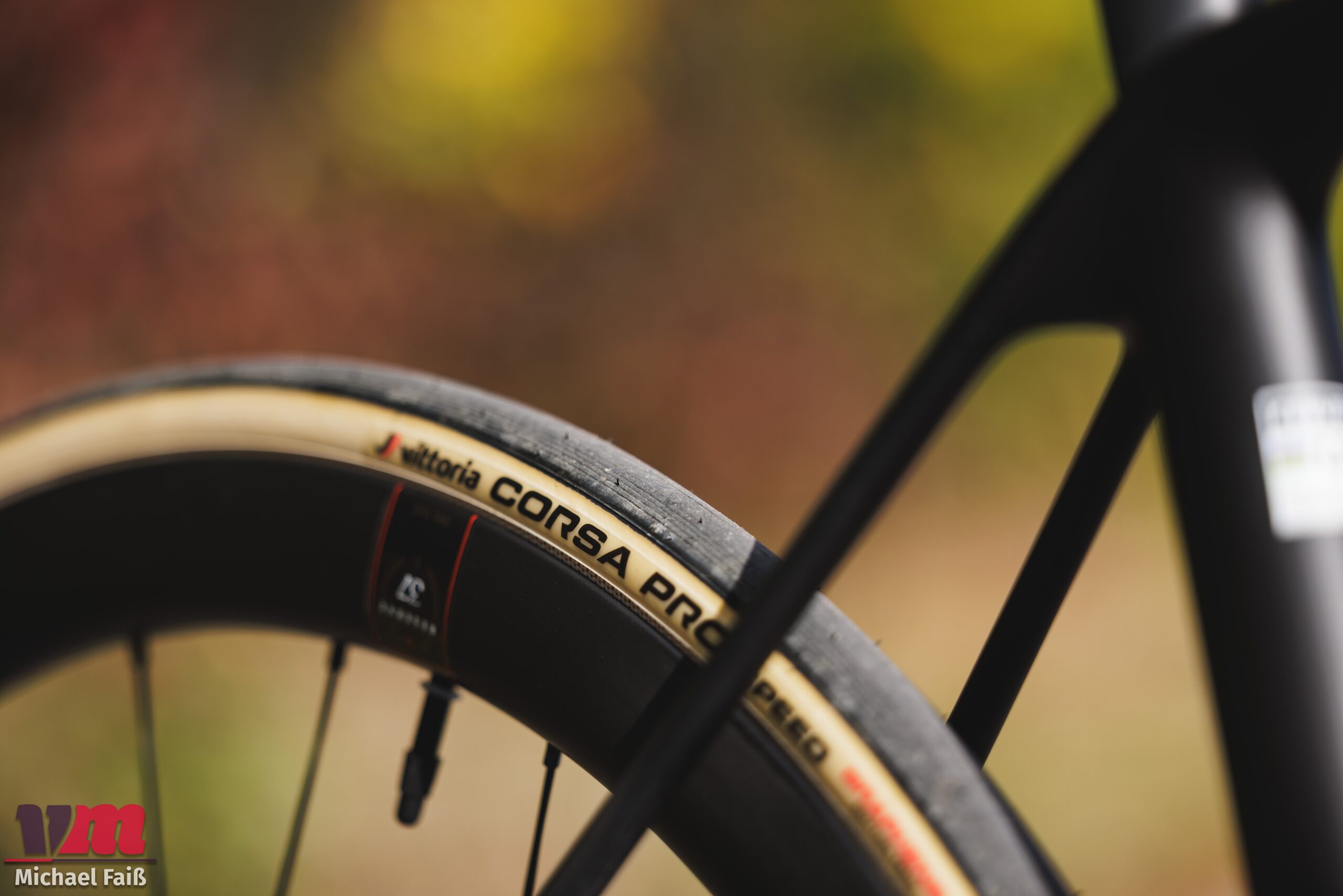
The setup under consideration includes Reserve 34/37 TA-SL carbon wheels with DT Swiss 180 hubs. With a rim depth of 34 millimeters at the front and 37 millimeters at the rear, the profile remains relatively shallow. This choice aligns with the focus on low weight. Those who primarily participate in fast, flat races should also consider whether a deeper rim profile would be better suited to their needs. In crosswinds, on fast descents, and of course, with significant elevation gain, a deeper rim is an ideal choice.
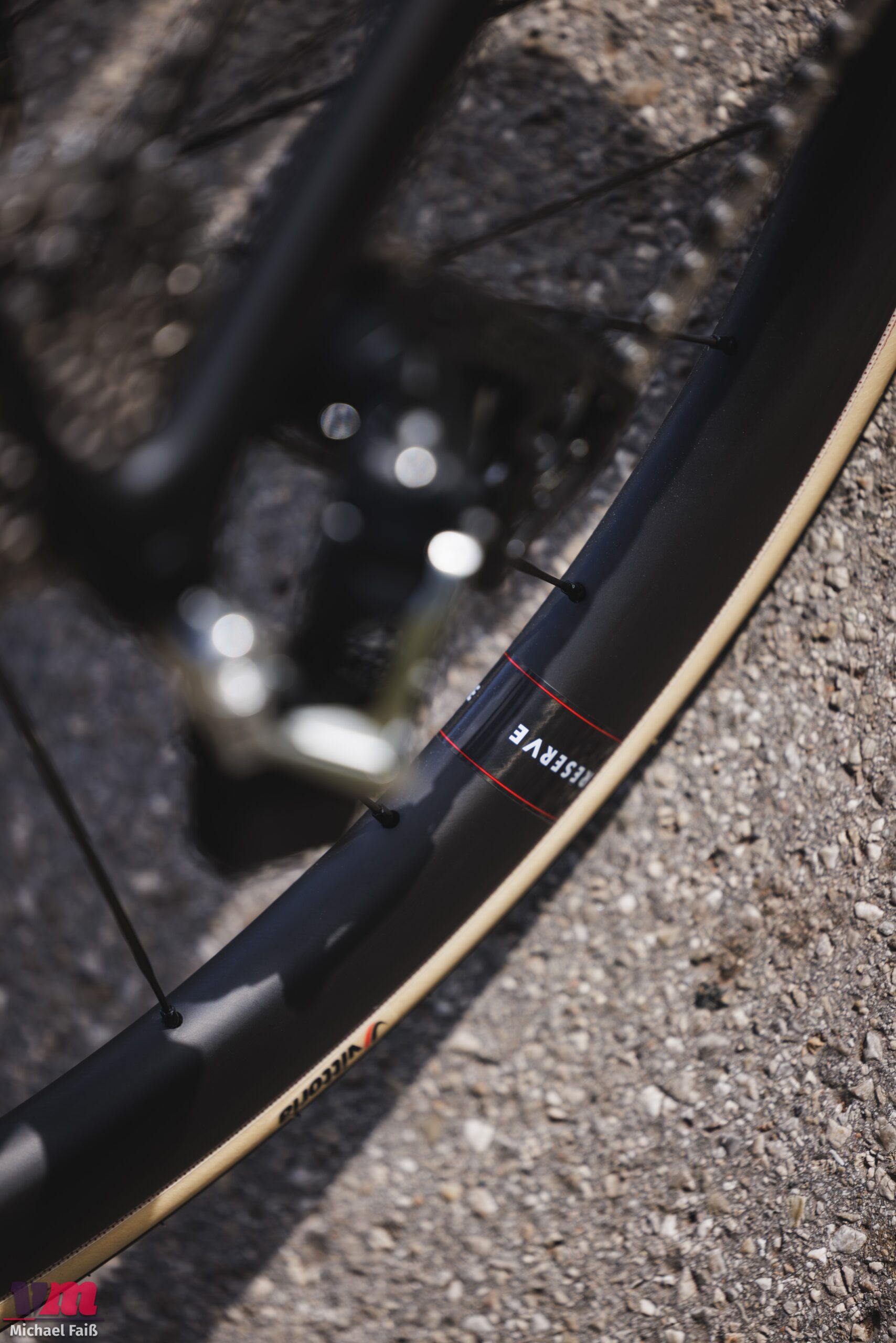
The tire choice is particularly consistent: Vittoria Corsa Pro Speed TLR tires, nominally 26 millimeters wide, are fitted. Vittoria explicitly positions this model for time trials and triathlons, emphasizing its low rolling resistance. The tires thus support the competitive focus of the complete bike build.
For regular training on varied roads, a slightly wider tire, better suited for everyday use and puncture protection, would be a sensible consideration. The frame offers some leeway: the installation manual specifies a maximum actual tire width of 34 millimeters with a minimum clearance of four millimeters to the frame and fork. The decisive factor is the mounted, inflated width; the number on the tire sidewall alone is insufficient for assessment.
Daily life and price: The specialization remains noticeable.
The low weight is just one special feature of the Cervélo R5, as it is a specialized road racing bike in every respect. Cervélo specifies a maximum total weight of 100 kilograms and a maximum rider weight of 88 kilograms. These specifications are a relevant factor in the buying decision, especially for such a lightweight bike. With 12...999 The R5 is a top contender in the Euro market, but justifies this price with top-notch equipment, workmanship and features.
Cervélo R5 – Features at a glance
| feature | Equipment / Specifications |
|---|---|
| Model | Cervélo R5, model year 2026 |
| Frame / Fork | Carbon; manufacturer's specification 651 / 298 g, size 56 |
| Weight reference | 5,97 kg in size 56 according to the manufacturer |
| switching group | SRAM Red AXS E1, 2×12 |
| Translation | 48/35 front, 10-33 rear |
| power measurement | Integrated SRAM Red AXS power meter |
| Wheels | Reserve 34/37 TA SL, DT Swiss 180 |
| Tires | Vittoria Corsa Pro Speed TLR, nominal 26 mm |
| Cockpit / Seatpost | Cervélo HB18 / SP33 Carbon |
| Tire clearance | Maximum 34 mm actual width |
| Researched dealer price | EUR 12.999 |
A racing bike for clear priorities
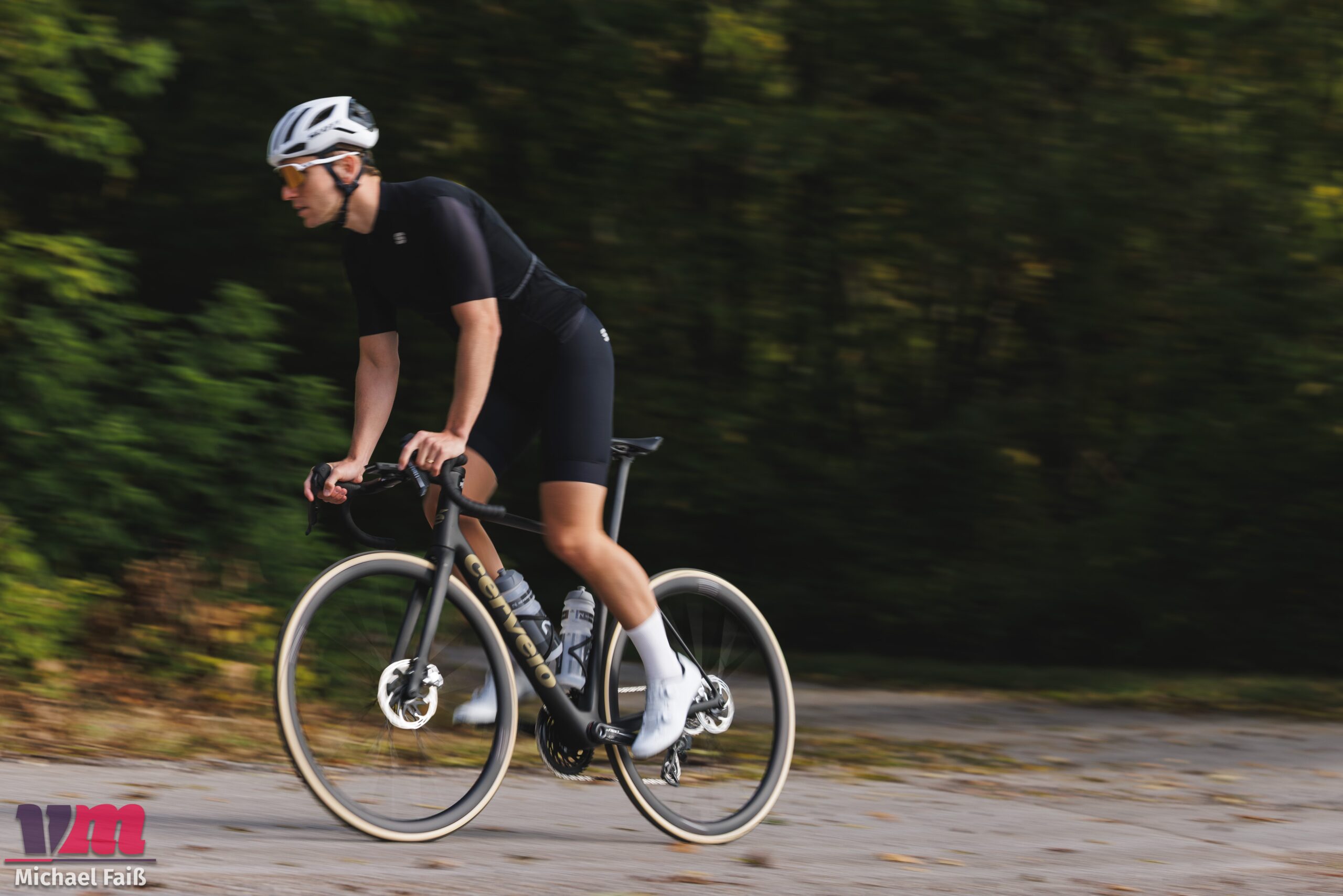
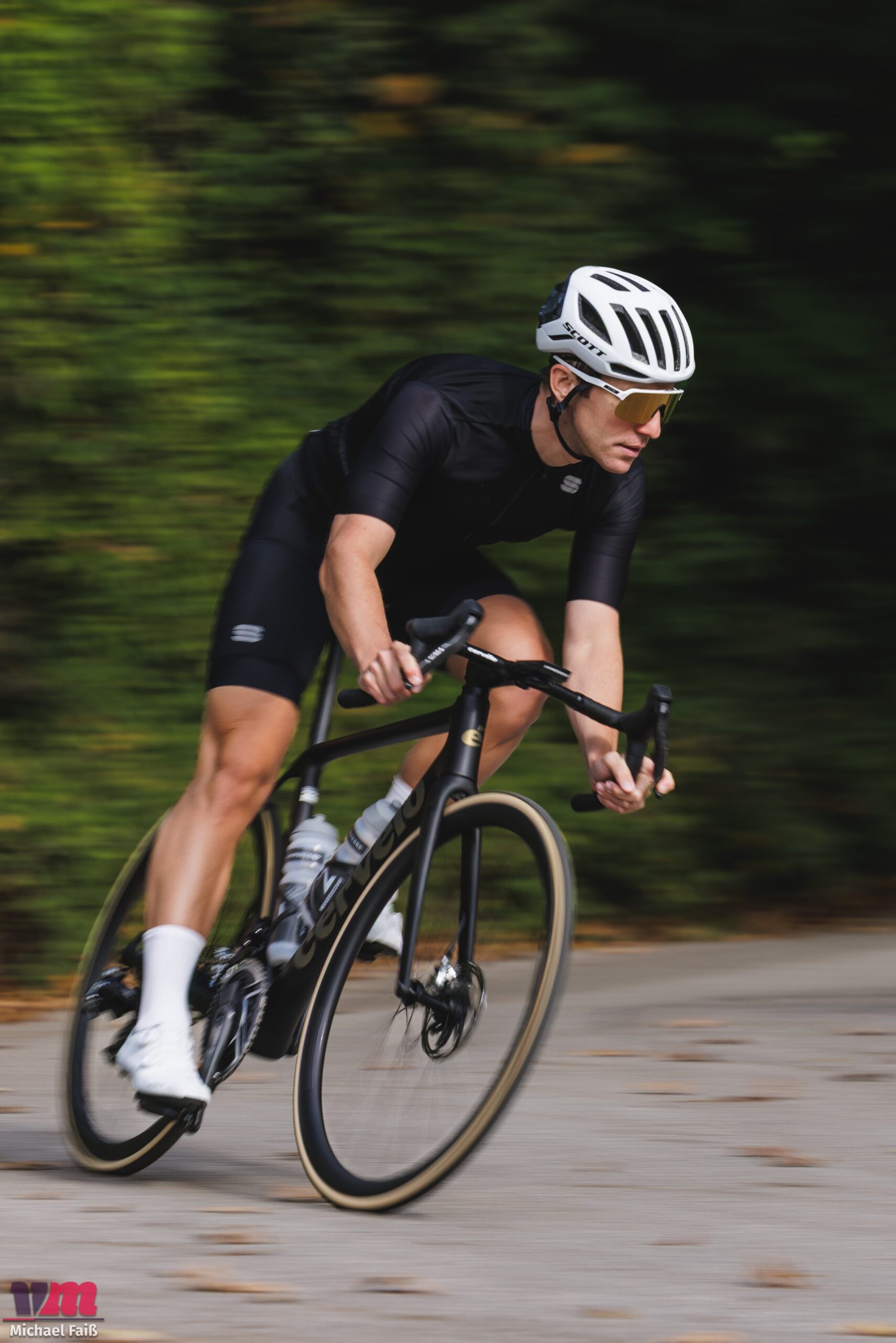
The Cervélo R5 with SRAM Red AXS is a meticulously engineered lightweight road bike. Its low weight is complemented by a sporty geometry, integrated components, and a high-quality shifting and braking system. Pauline Ferrand-Prévot's 2025 Tour de France victory provides compelling evidence of its suitability for top-level cycling.
For a recreational cyclist, however, other questions are crucial: Is the riding position comfortable even on long rides? Is the standard gearing sufficient for climbing hills? Are the racing-oriented tires suitable for the local roads? It is precisely here that it becomes clear that even a top-of-the-line bike still needs to be individually adjusted.
For those seeking a very lightweight road bike for hilly terrain and consciously choosing a sporty design, the R5 offers a technically sound solution. The high price and the somewhat limited adjustability of the integrated cockpit remain part of the overall picture. A final assessment of riding comfort, downhill performance, and long-term durability requires our own practical test; some of our impressions can be found here in our long-term review.
The Cervélo R5 in long-term testing
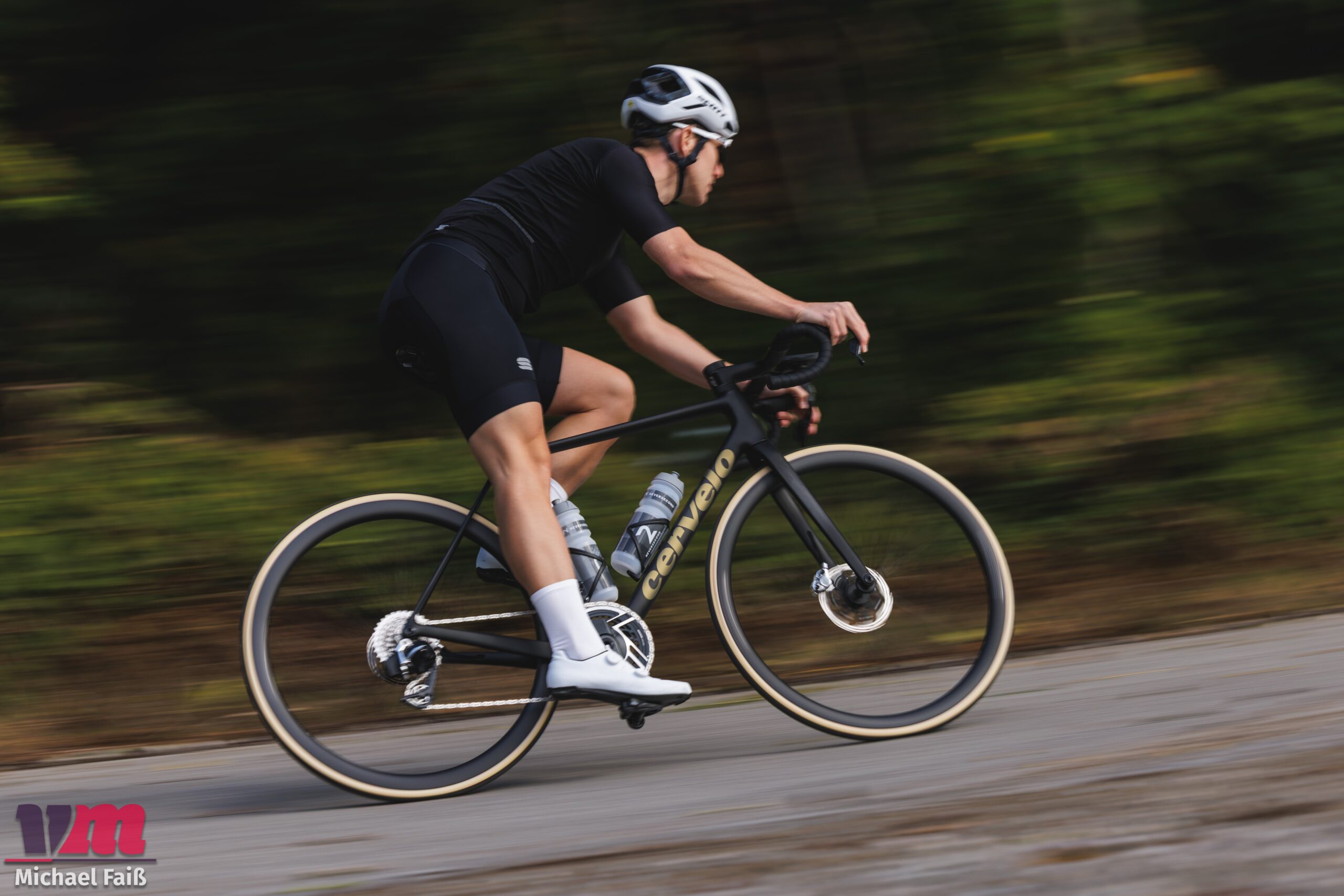
Throughout the summer, the Cervélo R5 has primarily stood out in my memory as a road bike that inspires a desire for challenging routes. I particularly appreciate the combination of low weight and sporty handling on longer rides with significant elevation gain. Whether accelerating out of a corner or during a quick burst of speed while standing, it conveys precisely the lightness I value in a good road bike. With my racing background, it's equally important to me that the riding position remains comfortable for extended periods. The R5 demands careful adjustment of the cockpit and saddle; I would definitely recommend taking the time to do this before purchasing. The SRAM Red AXS groupset suits the bike's character well, in my opinion. The shape of the lever bodies and the easily accessible brake levers are details that become increasingly important on long days. For extended tours with steep climbs, I would opt for a larger cassette. My personal conclusion after a summer of riding: The R5 appeals primarily to riders who are specifically looking for a lightweight, sporty road bike and are willing to tailor its components to their specific riding conditions. The high price remains a significant factor.