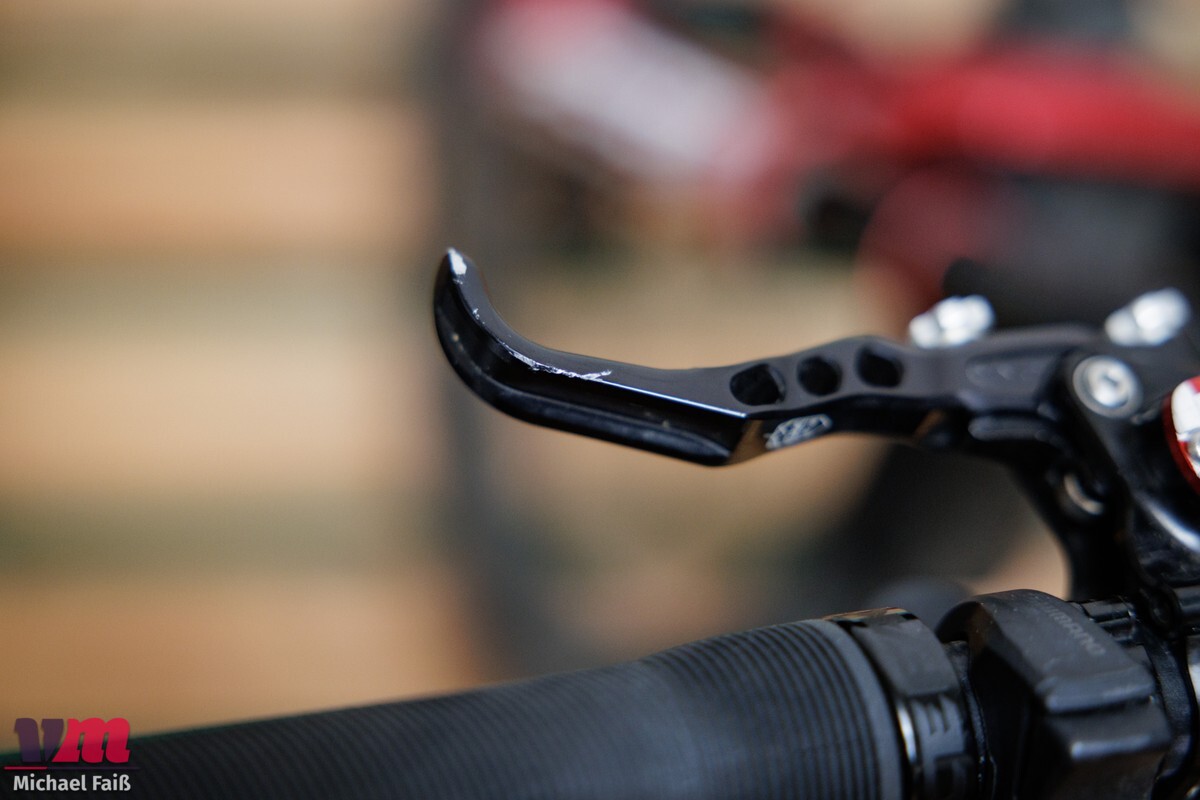
Test / Accessories: The Oak Components HT4 Brake Lever is a machined tuning brake lever for Hope Tech 4 master cylinders. What's special about it: Unlike many stock brakes, the primary focus here isn't on aesthetics, as Hope already offers machined levers. We installed the €120 pair on a Hope Tech4 V4 and rode with them for an extended period.
All information at a glance
- Milled tuning brake lever for the Hope Tech4
- Significantly more pronounced one-finger ergonomics than the original.
- Manufactured in Europe, large selection of anodized colors
- 120 euros per pair
Oak Components: Brake levers from Regensburg
Oak Components is a German company based in Regensburg that has been manufacturing, among other things, milled brake levers for various brake manufacturers for several years. It all started with Magura, followed by levers for SRAM and Shimano , as well as for TRP. More recently, they have also been producing levers for Hope brakes.
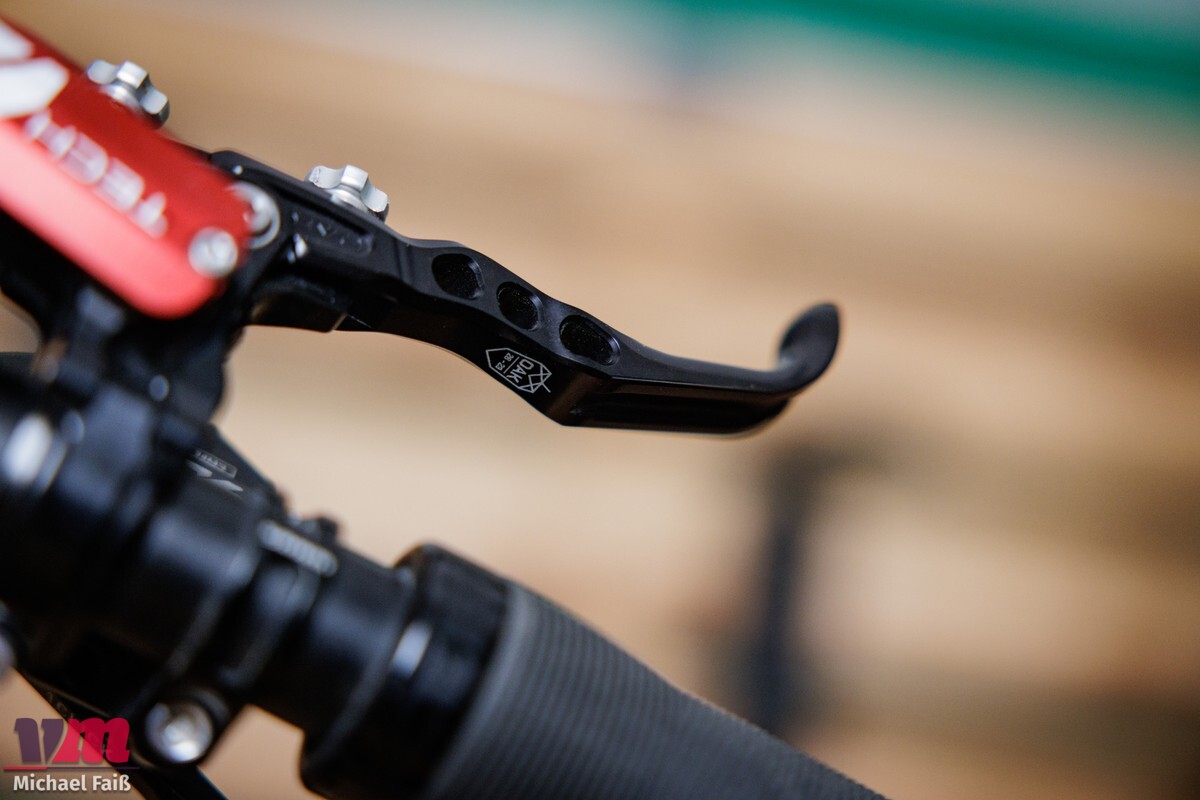
This seems a bit unusual at first glance. With mass-produced brakes from SRAM, Shimano, or Magura, the standard levers often appear quite basic – a machined lever is a significant visual upgrade, especially since it's available in many different anodized colors. Ergonomics are often a secondary consideration for many buyers. Hope is different: the British company uses its own machined levers, which are neither inferior in terms of workmanship nor visually unappealing. From an aesthetic point of view, the two levers are therefore very similar – although we find the Oak Components lever considerably more appealing.
Compatibility: Oak Components HT4 Brake Lever fits the Hope Tech4
Compatibility is key: The Oak Components HT4 brake lever is only compatible with Tech4 master cylinders, not with the newer Evo master cylinders. Those using the current Evo generation will need to look elsewhere – Hope itself offers several improved levers for this series.
The levers are fully milled and, according to the manufacturer, produced in Europe. The workmanship is very clean – there's nothing to criticize here. As is typical for Oak Components, various anodized colors are available, which is appealing to anyone who wants to color-coordinate their bike.
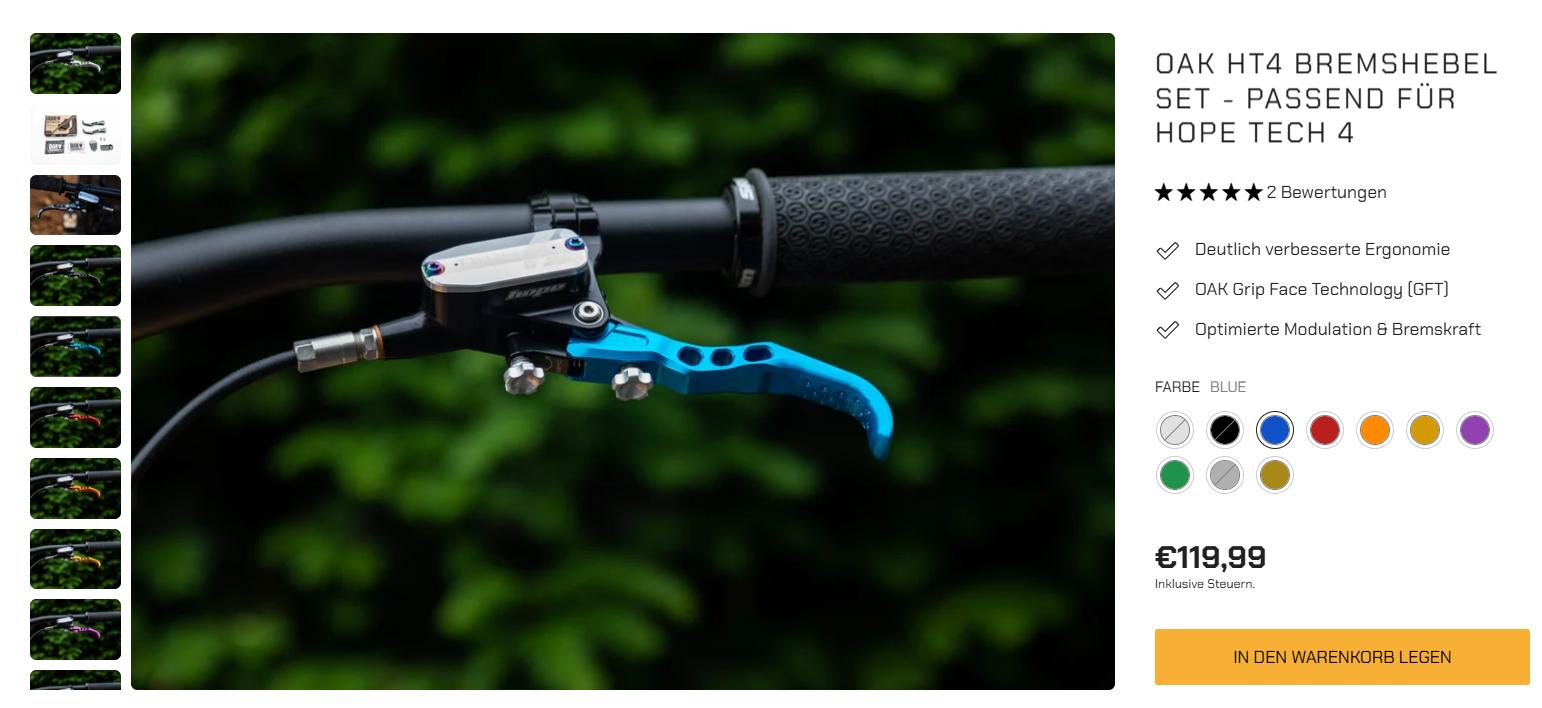
Oak Components HT4 Brake Lever
- Compatibility Hope Tech4
- Production Fully CNC milled
- Production Europe (manufacturer's information)
- Colors various anodized colors
- Delivery Set of two levers
- oakcomponents.de
- Price (pair) EUR 119,99
Price and classification
120 euros for a pair of brake levers is a lot of money – that shouldn't be forgotten, despite the appeal of the milled look. Furthermore, the Hope Tech4 isn't a cheap brake to begin with, so the upgraded lever is adding to an already expensive product.
Assembly: simple, with one small exception
The conversion is generally straightforward and simpler than with Magura or Shimano brakes, which we've also tried in the past. Hope brake master cylinders are very modular; basically, you only need to remove and then reinsert one screw.
What really drove us crazy, though, was the screw for the lever reach adjustment, which had to be transferred from the Hope lever to the Oak lever. It has a circlip that we only managed to remove with a great deal of patience. Whether this was user error or just generally fiddly, we can't say for sure – eventually it works, but it's still a test of patience.
Oak Components HT4 Brake Lever in the test
What's immediately noticeable on the first ride: The ergonomics are fundamentally different from the Hope lever. The stock Tech4 lever is comparatively long and flat, almost resembling a two-finger lever – although it isn't actually one, its design leans in that direction, which we don't consider optimal.
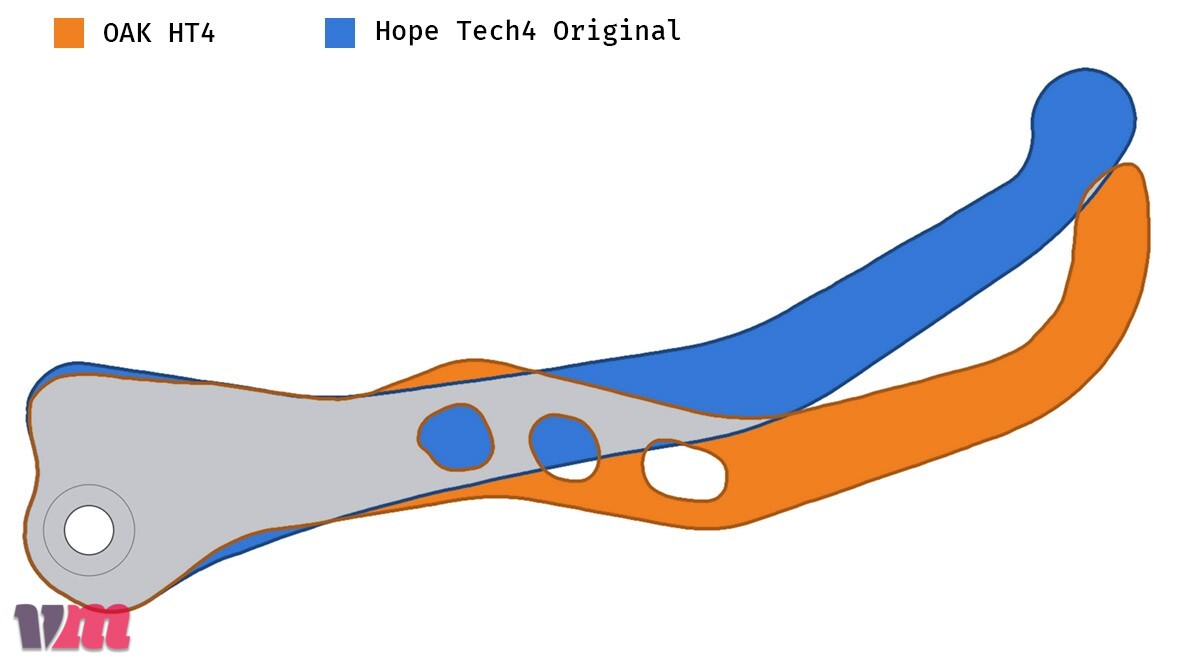
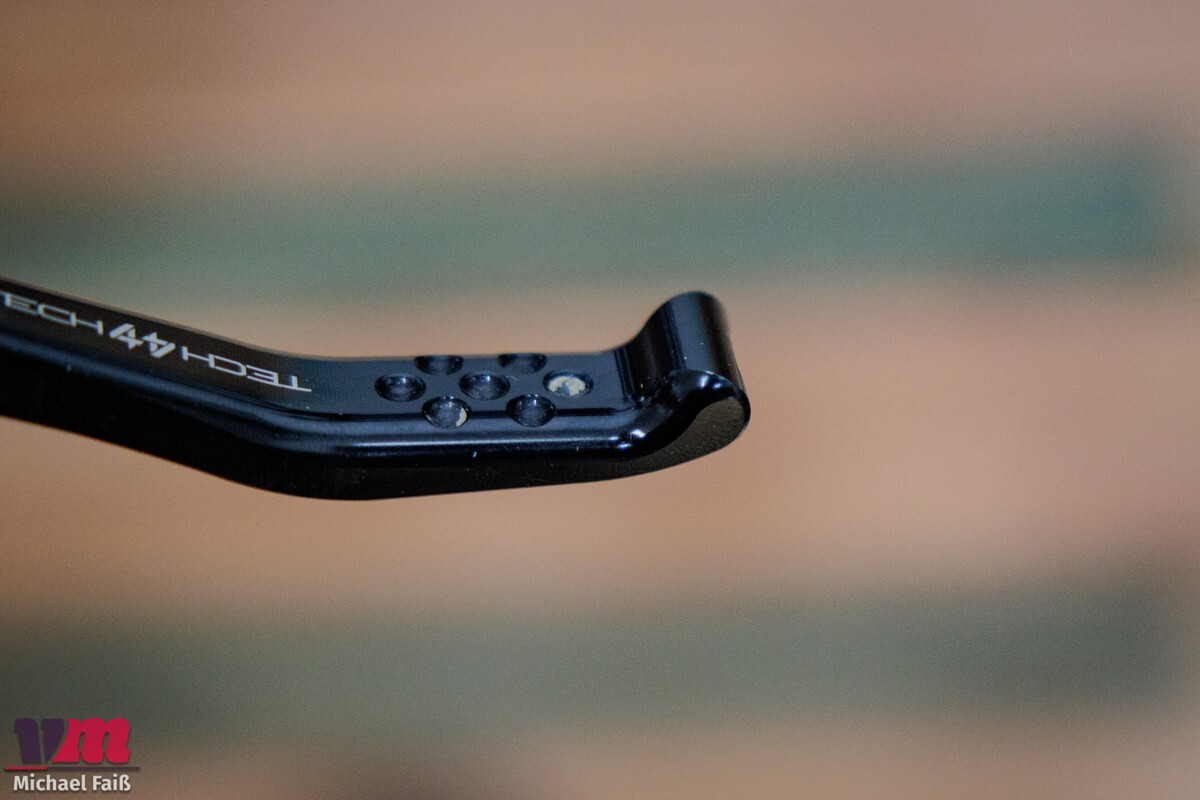
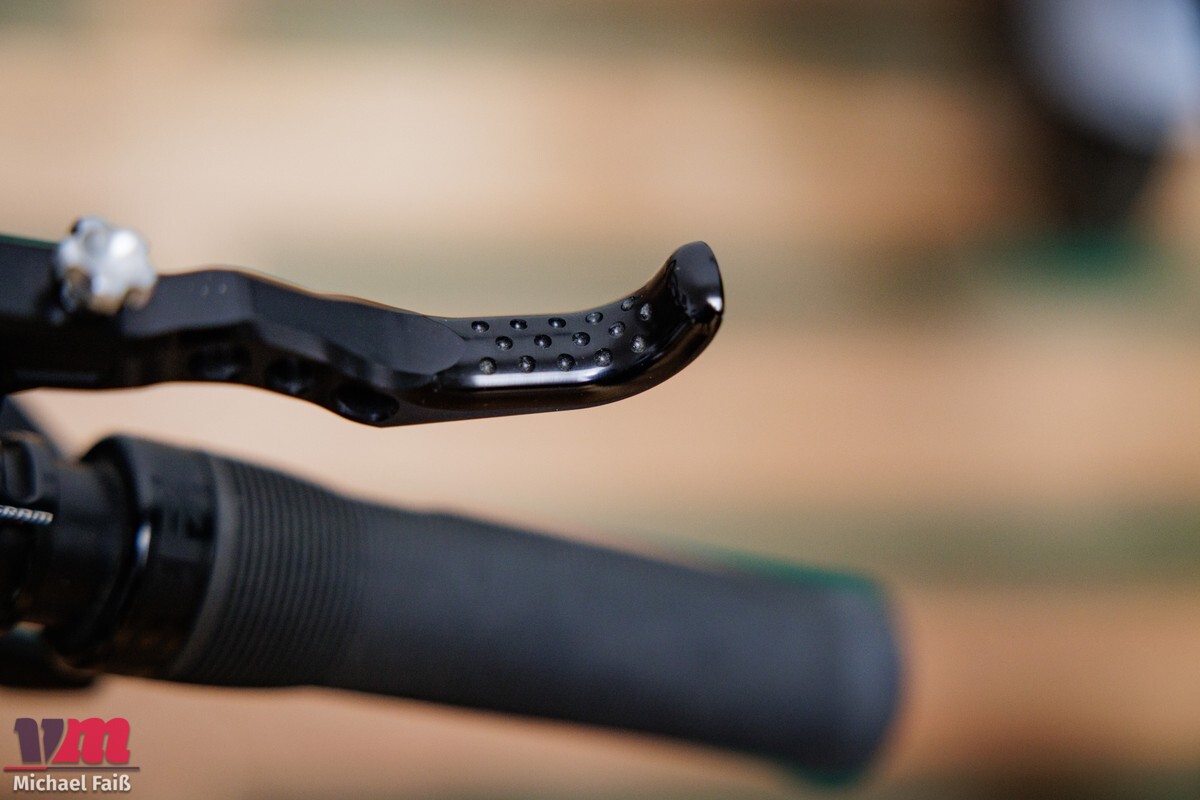
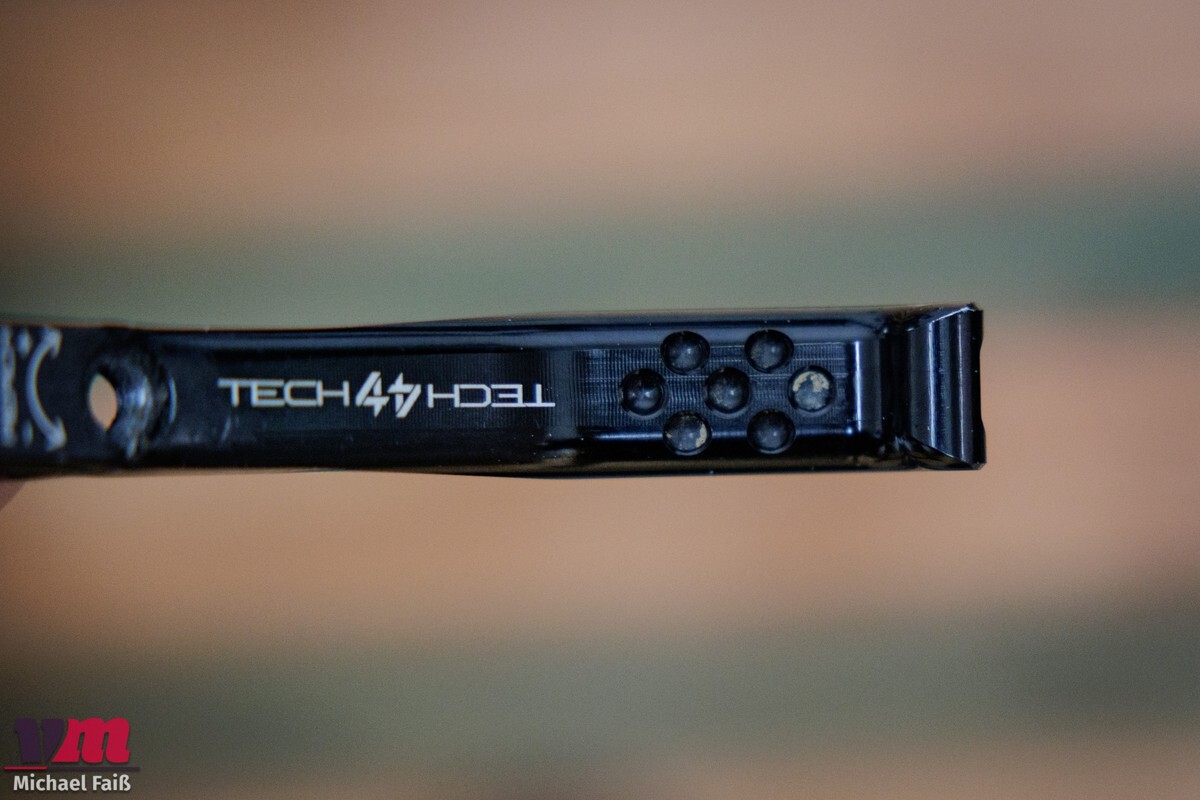
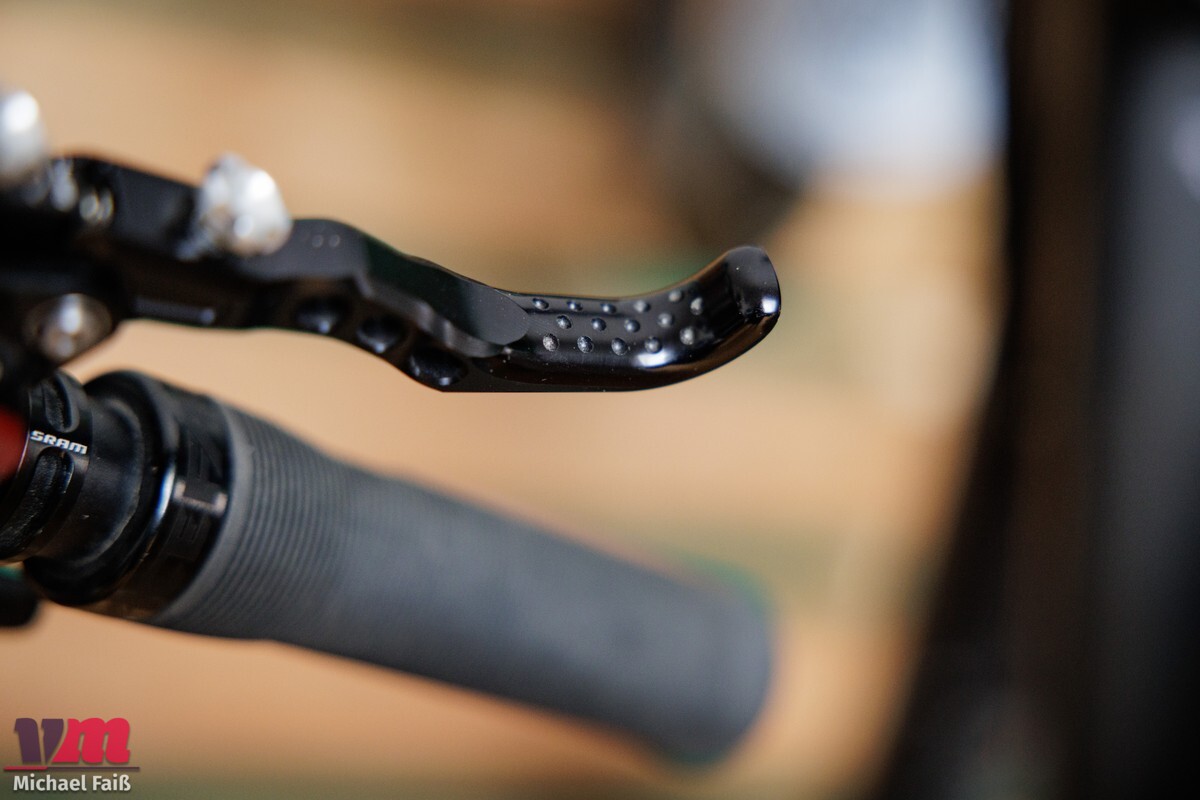
The Oak lever, on the other hand, is a clear one-finger lever. The biggest difference lies at the end of the lever: there, the Oak is significantly more curved, offering a smaller area for the finger. The finger finds its position immediately, practically falling into the groove, and is secured by the gentle curve, preventing slippage. However, this comes at the cost of less play compared to the Hope lever – those who like to vary their grip will need to adjust.
Another positive aspect is the significantly softer design of the lever towards the outer edge. For us, this is precisely one of the original's weaknesses: if you grip it relatively far out, the almost sharp-edged nub at the outer end of the lever can be quite uncomfortable. The Oak lever is also more rounded where the finger rests, while the Hope lever is very flat in this area. This might sound like a minor detail, but in practice it represents a noticeable improvement in comfort and ergonomics. The Hope lever isn't bad, but the Oak is the more comfortable option.
Improved adjustment range without disadvantages in the leverage ratio
Furthermore, Oak Components, in our opinion, utilizes the adjustment options of the Tech4 master cylinder better than Hope itself. While pressure point and reach adjustments are available, the Hope lever can be rotated so far away from the handlebar from the factory that even we, with size 12 gloves, can barely reach the end of the lever. It's beyond us who actually rides in this position.
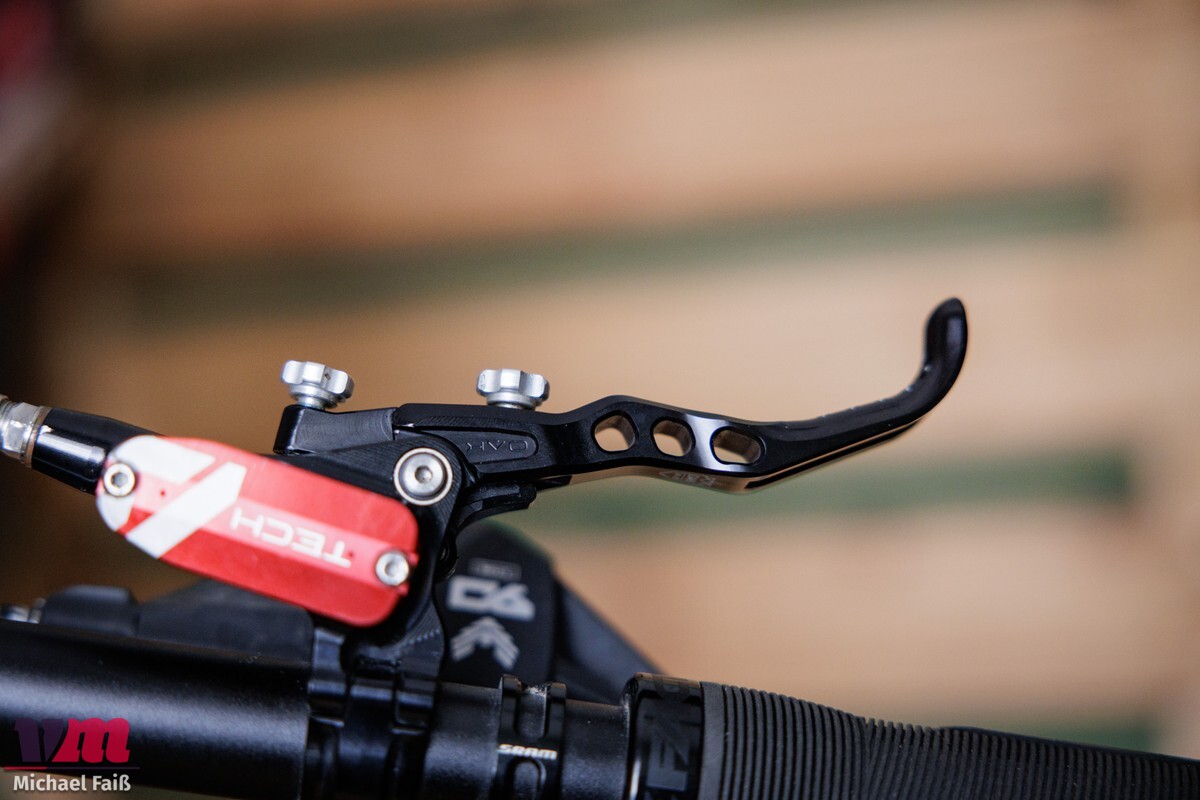
Oak takes a different approach: The lever can be positioned closer to the handlebar if desired, without significantly compromising the leverage ratio – it remains roughly the same length. The bottom line is that the braking power remains good, while the usable adjustment range increases. We found our ideal position immediately and were very happy with it throughout the entire test period. Frankly, we wouldn't want to go back to the original Hope lever.
Stability in the crash test
One important side note: We've already put the Oak levers through their paces on the ground. They picked up a scratch or two, but otherwise, they're fine. The original Hope levers, on the other hand, tend to bend. While they're relatively easy to bend back, depending on the angle of impact, this can unintentionally alter the ergonomics, requiring readjustment with pliers. For us, this gives the Oak levers the edge in terms of durability.