


Zycle ZBike Infinity Review: This standalone smart bike promises the feel of a road bike without the need to mount your own bicycle on a trainer. With a freewheel, electronic shifting, five adjustable crank lengths, and precise power measurement, the ZBike Infinity aims to impress discerning cyclists. We tested the indoor bike, which costs just under €2.200, over several training sessions. The results showed that the concept has a lot to offer, even if there's still a little room for improvement in the details.
Zycle ZBike Infinity: A smart bike for ambitious athletes
Anyone who trains regularly on a stationary trainer knows the advantages and disadvantages of a classic setup: Your own road bike offers a familiar riding position and real shifters, but first has to be mounted on the smart trainer. Depending on the setup, there's also wear and tear, noise, and the question of whether the bike is needed for indoor or outdoor use.
Support Velomotion if you're thinking of buying a smart bike!
If you want to buy a ZBike Infinity from Zycle – or any other smart bike – online, please use this link.
By doing so, you support Velomotion and we remain free to read.
This will not put you at a disadvantage.
Standalone smart bikes promise greater convenience. Once set up, they're ready for the next workout at any time. The Spanish company Zycle takes a particularly sporty approach with its ZBike Infinity. Instead of a typical fitness bike cockpit, it features drop handlebars with electronic shifters, adjustable gearing, and a Q-factor modeled after those found on racing bikes. It also incorporates a freewheel system designed to provide the most natural riding feel possible. Unlike some indoor bikes, the cranks don't have to constantly rotate with the flywheel. We put this concept to the test in an intensive training session to see if it works in practice.
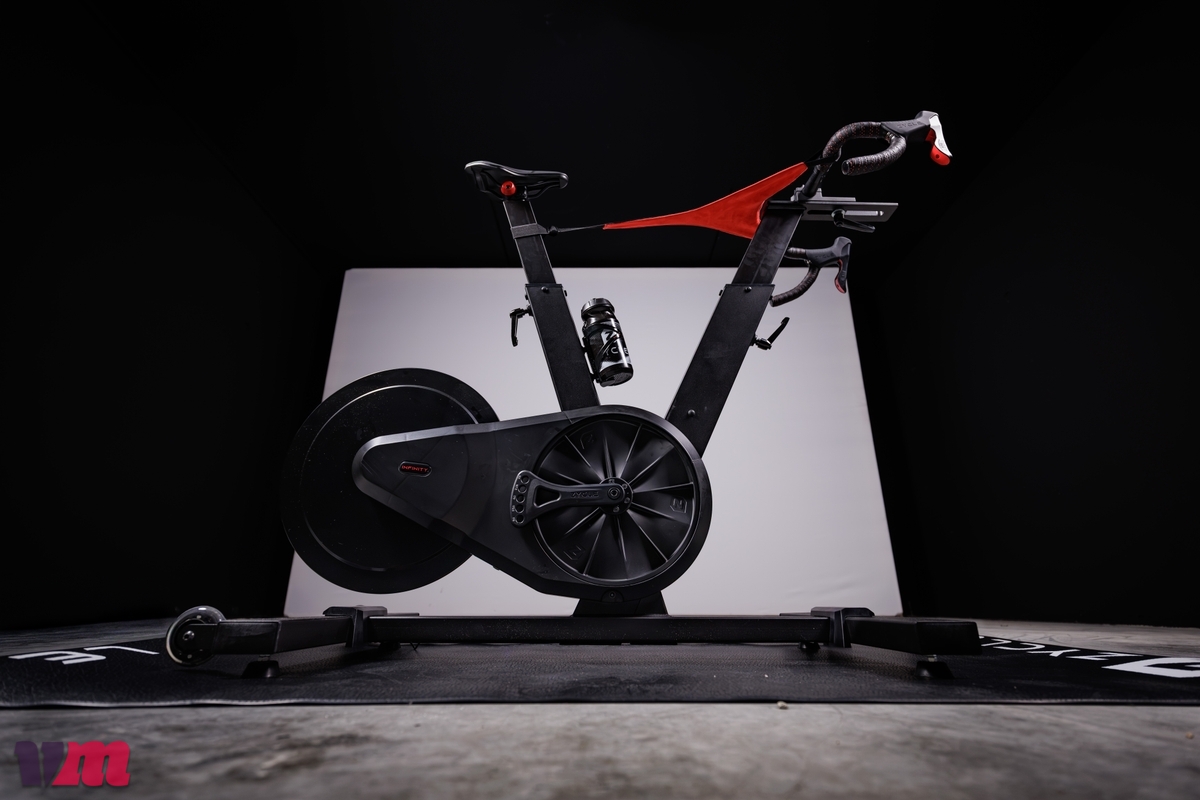
The key data of the Zycle ZBike Infinity at a glance:
| Price | EUR 2.199 |
| Weight | Approx. 40 kg |
| Resistance | Magnetically controlled |
| Maximum Performance | 2.000 watts |
| Maximum simulated slope | 20% |
| power measurement | Manufacturer's specification: less than 1% deviation |
| Virtual circuit | Up to 24 gears |
| Crank arm lengths | 165/167,5/170/172,5/175 mm |
| Q factor | 152 mm |
| Handlebar clamp | 31,8 mm |
| connectivity | Bluetooth, ANT+, USB |
| Drive | Poly-V-Riemen |
| freewheel | Available |
| Dimensions (L × W × H) | 144x61x86 cm |
| Pedals | Not included |
Our test rider: road cyclist and cross-country skier
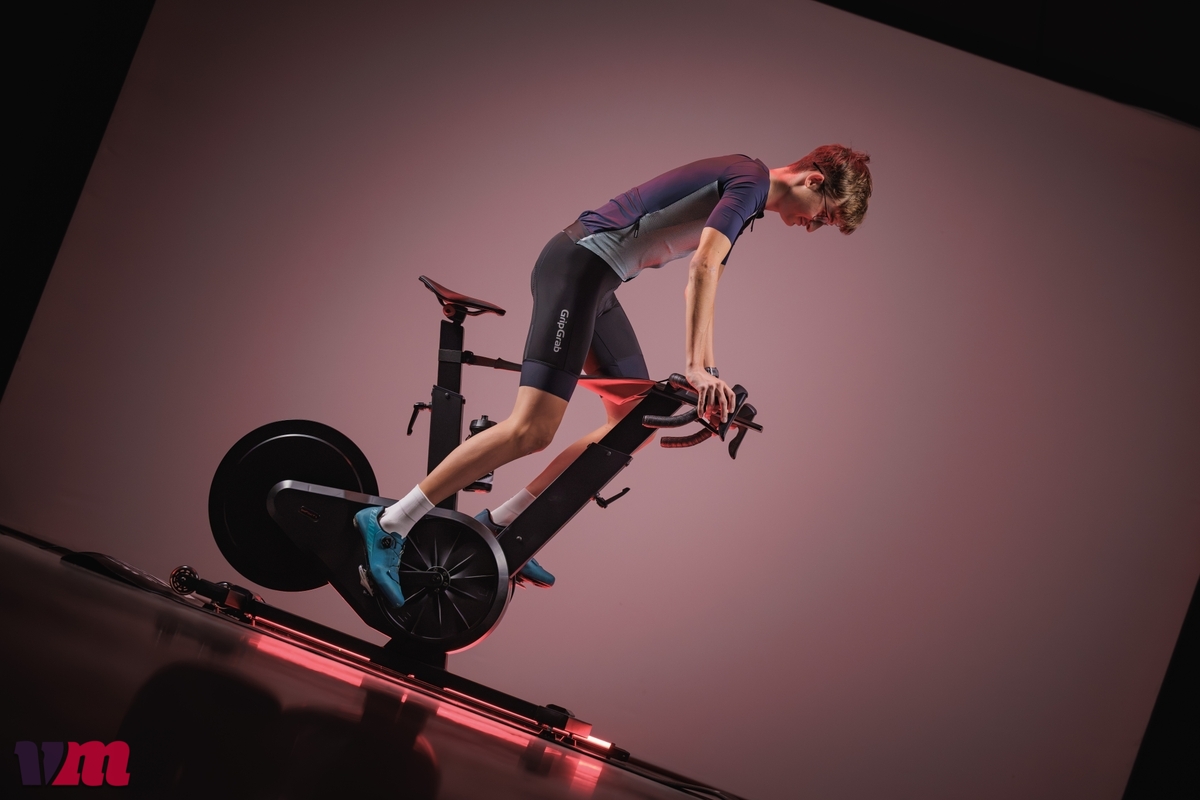
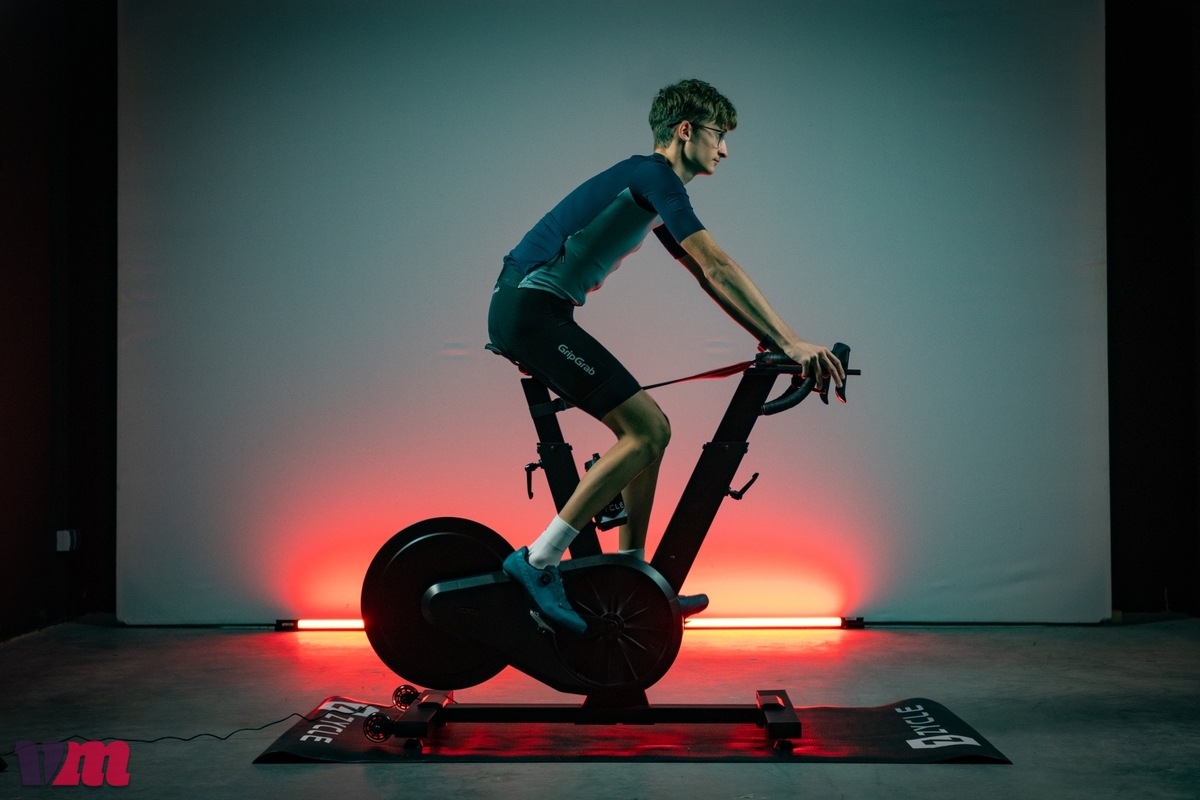
For our practical test, the ZBike Infinity was paired with an athlete for whom endurance training is part of his daily routine. 18-year-old Timo is an ambitious cross-country skier competing in the German Cup and, in addition to training on skis and roller skis, spends a lot of time on his road bike. Indoor sessions are an important supplement to his training regimen. He primarily uses the MyWhoosh platform, which also played a central role in our test. At 1,79 meters tall and with a standard crank length of 172,5 millimeters, he also brings a concrete point of comparison from his road bike.
The ZBike wasn't exclusively available to him, however. His father and two younger siblings also do cross-country skiing and use the training device. This provided an opportunity to assess not only its athletic performance but also its everyday usability with different users. After all, a standalone smart bike needs to offer more in this regard than a road bike on a trainer.
Design and workmanship of the ZBike Infinity: Solid construction without any major surprises
The ZBike Infinity makes a high-quality impression right from the moment you unpack it. The packaging is functional and adequately protects the individual components. However, given the training device's weight of around 40 kilograms, it's advisable to have a second person assist with unpacking and assembly. The actual assembly is straightforward. All necessary tools are included, the instructions are clear, and the individual steps are self-explanatory. After about an hour, the ZBike was ready for use.
It's a bit of a shame that Zycle doesn't include pedals. For a sports-oriented training device, this is understandable, since many buyers will likely want to mount their familiar clipless pedals anyway. However, a set of simple platform pedals for the initial test ride or occasional use by family members would be a useful addition.
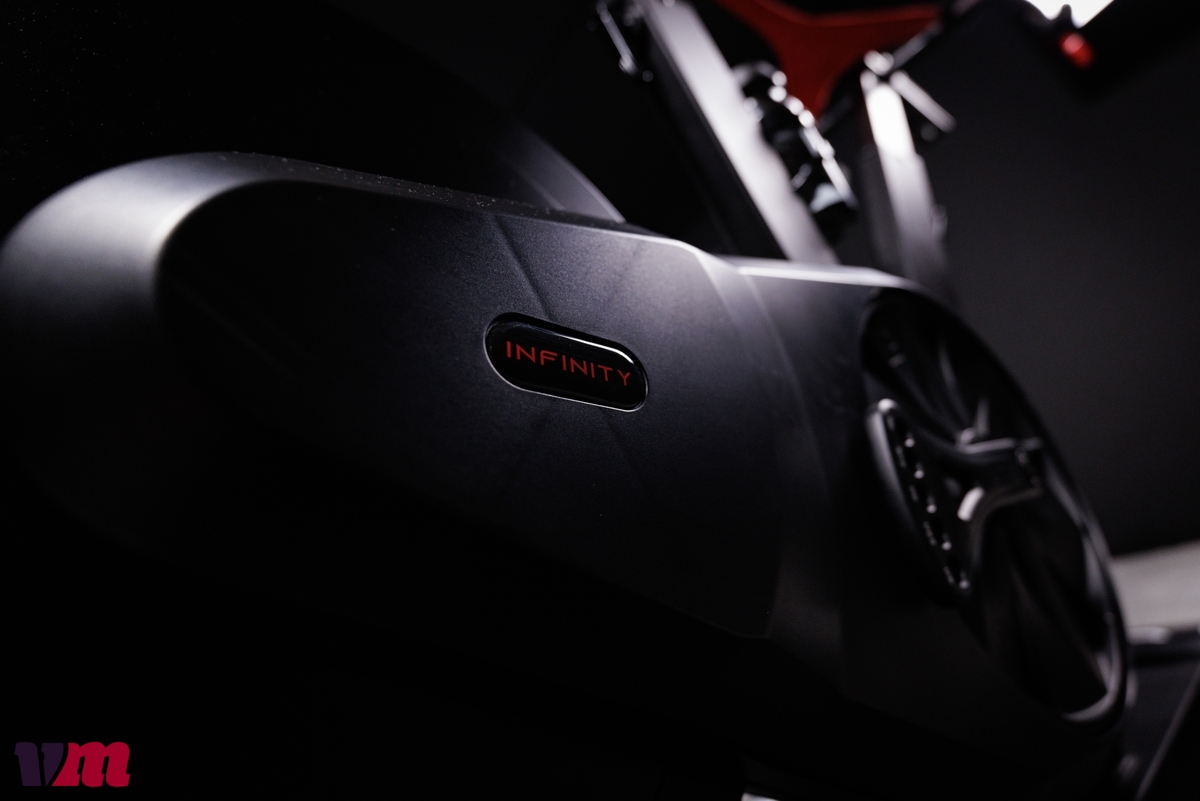
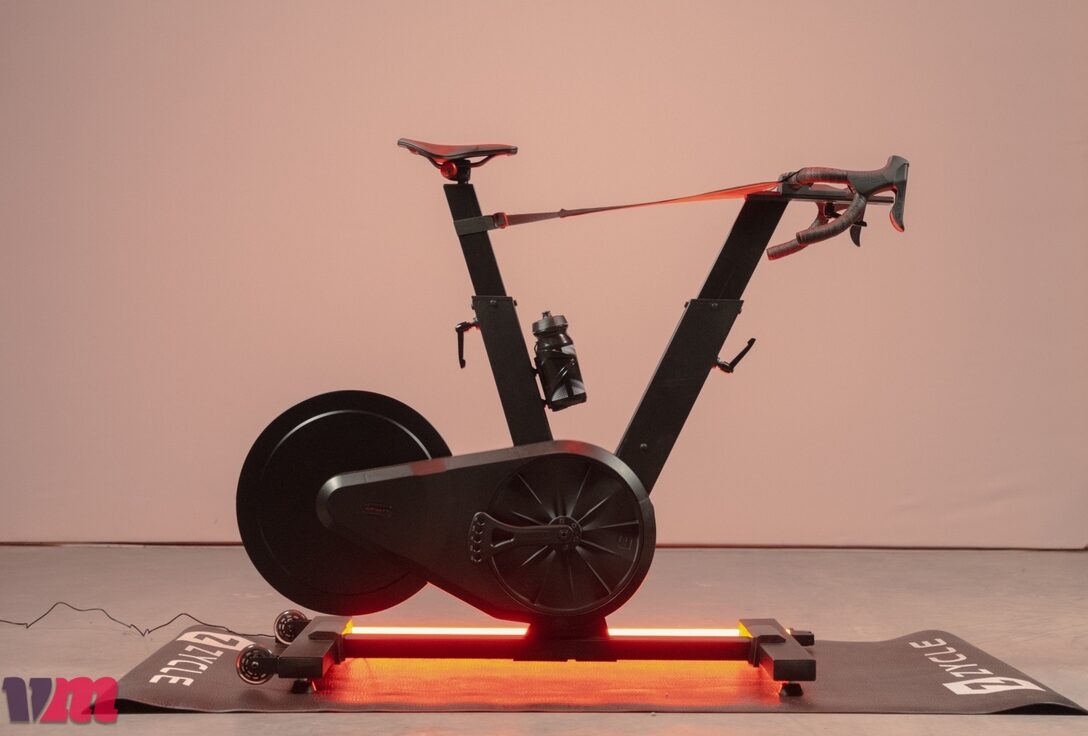
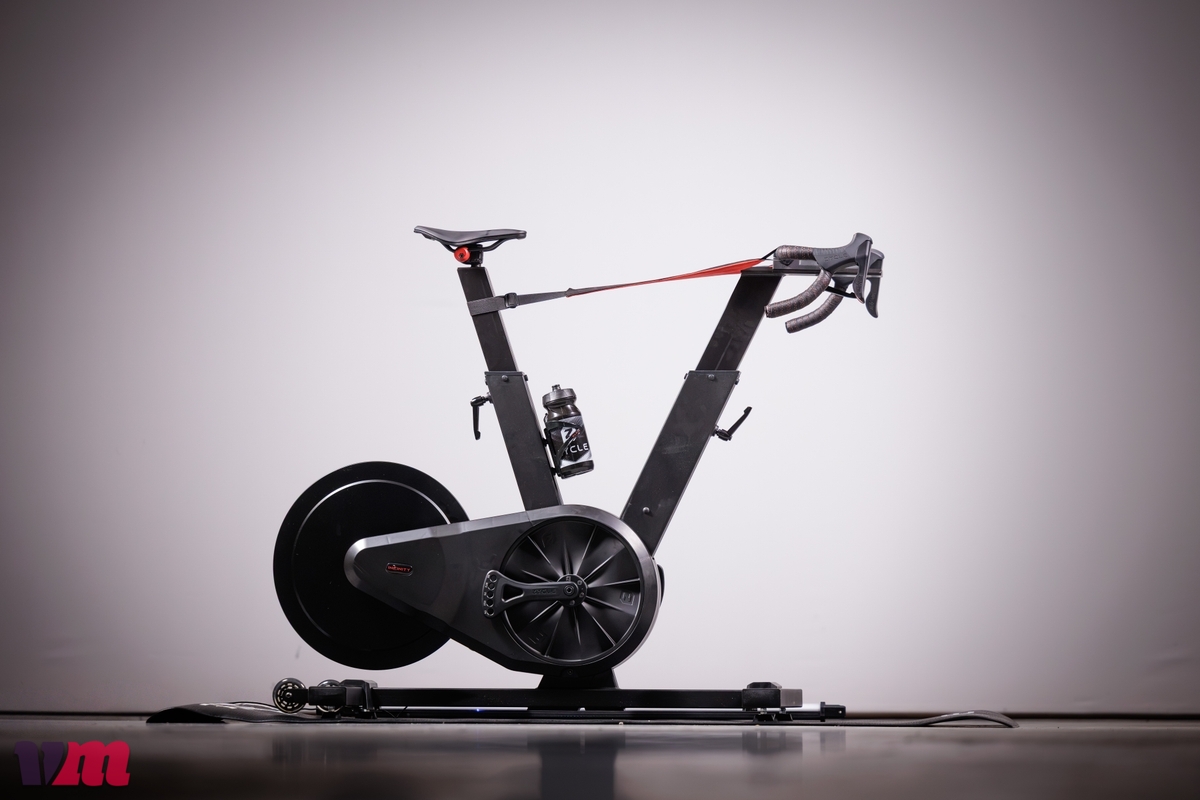
There's little to criticize about the workmanship at first glance. The construction appears solid and cleanly executed; nothing rattles or creaks. The ZBike is also visually appealing. The modern, relatively uncluttered design is much more reminiscent of a sports device for serious cyclists than a classic exercise bike. This means it would look quite good in a living room or office.
Ergonomics: Almost like on your own racing bike
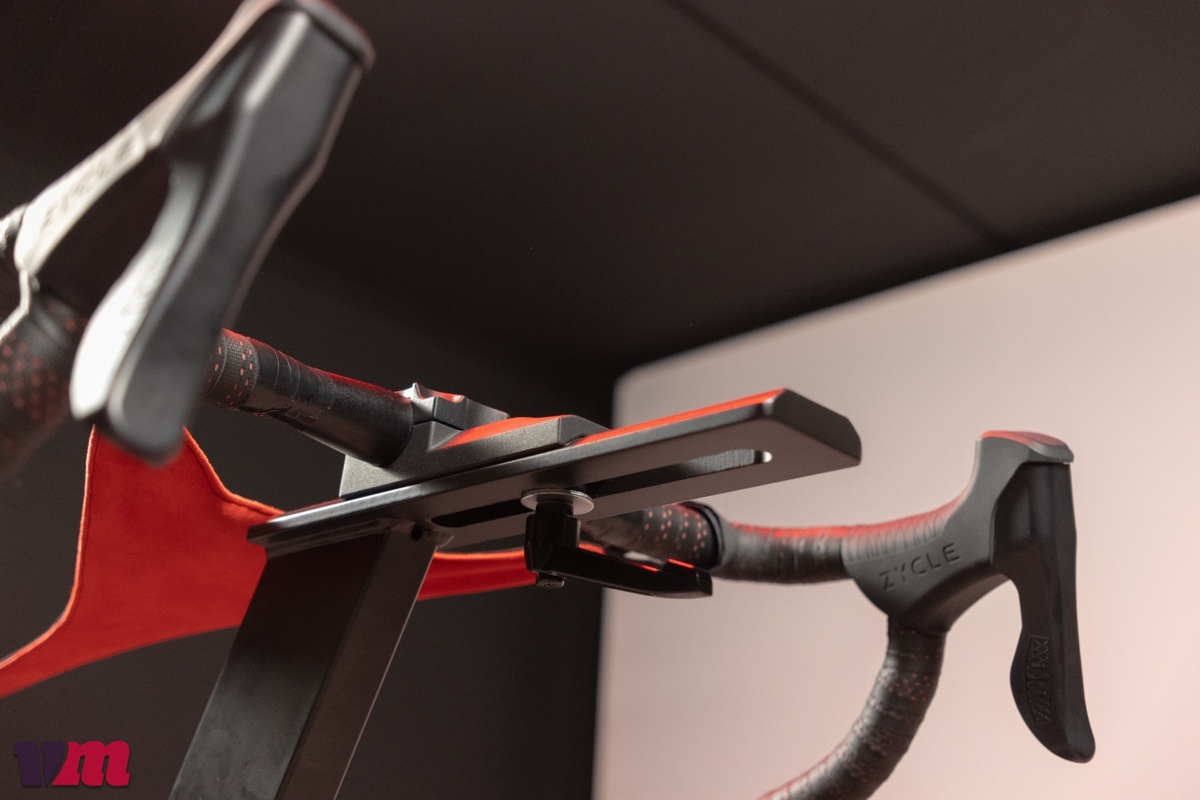
One of the ZBike Infinity's greatest strengths is its extensive adjustability. The saddle and handlebars are height-adjustable, and the handlebars are also adjustable in reach, allowing for a realistic road bike riding position. Our test rider found it remarkably close to his usual riding position. The Q-factor of 152 millimeters also contributes to the feeling of riding more like a road bike than a fitness machine.
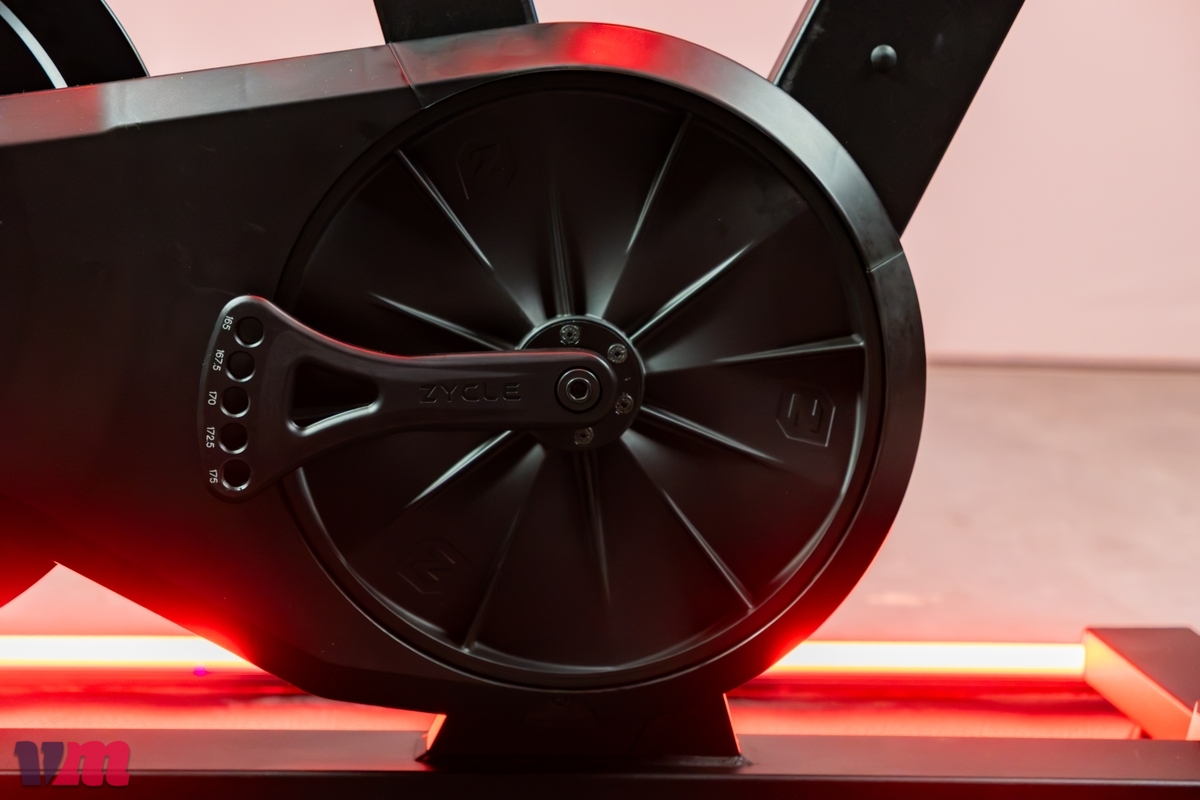
The five possible crank lengths are particularly interesting. Increments of 2,5 millimeters are available between 165 and 175 millimeters. This allows the ZBike to be adjusted much more individually than many indoor bikes with a fixed crank length.
However, adjusting the crank length isn't quite as convenient as the other adjustments. To change the crank length, a cover must first be opened, and then a long Allen key used. This isn't a problem for a one-time initial setup. However, if the bike is to be used regularly by family members of different heights, this process quickly becomes tedious.
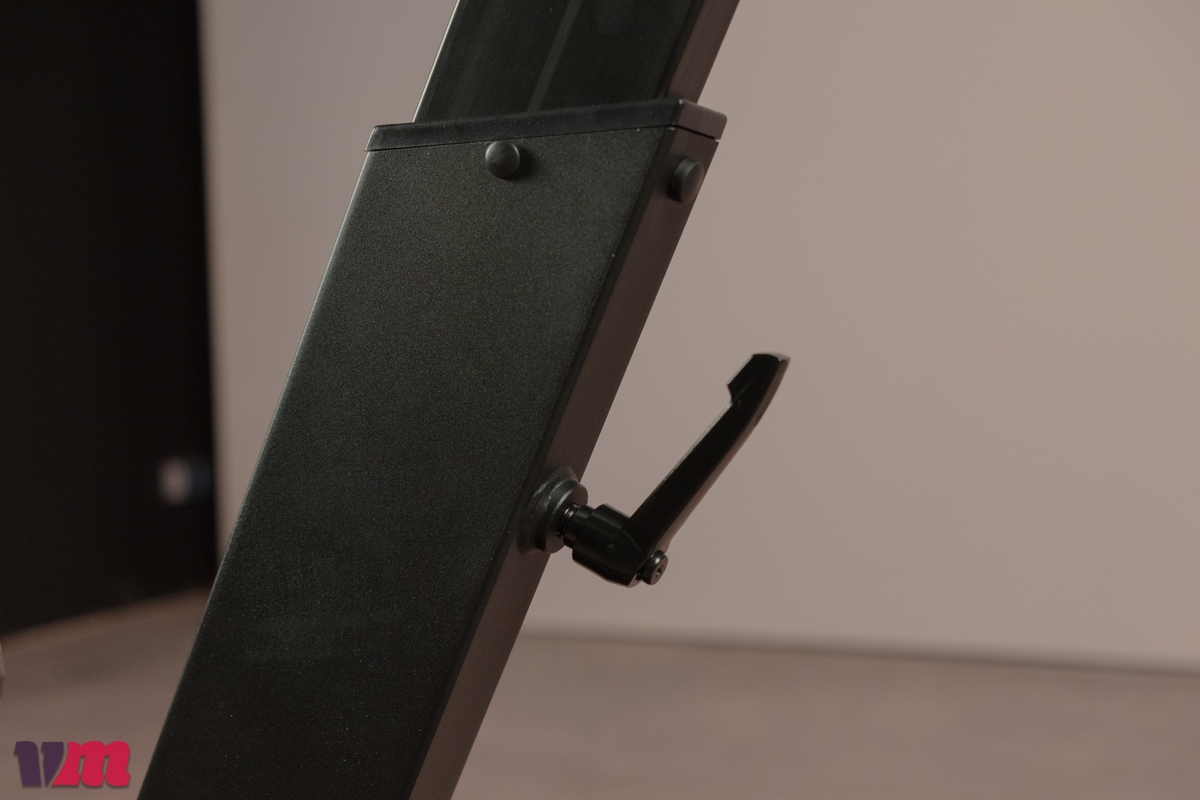
Quickly adjustable, but with scales that are difficult to read.
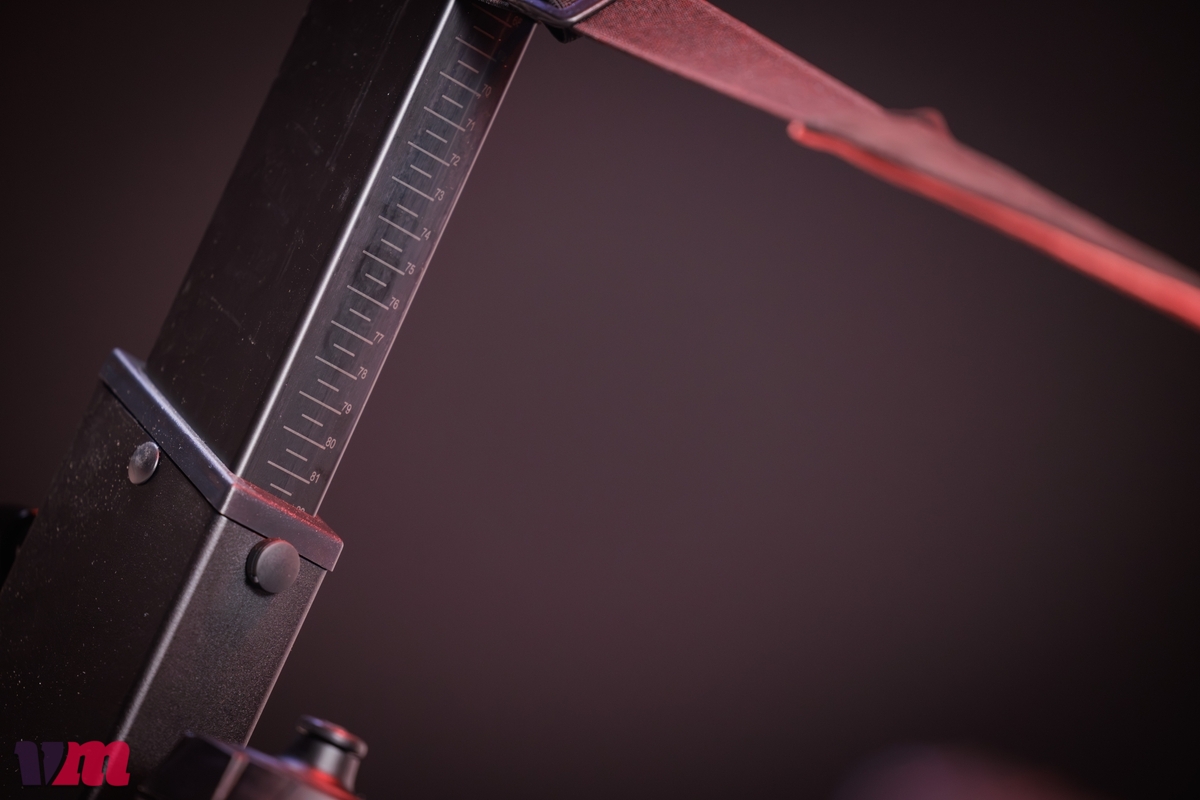
Adjusting the saddle and handlebars, on the other hand, is quick and tool-free. This is a major advantage, especially for families. Each user can easily adjust the bike to their height in just a few steps. Unfortunately, Zycle skimped on one important detail: the markings on the adjustment scales are extremely difficult to read. In poor lighting conditions, a flashlight was even necessary during testing.
This might sound like a minor issue, but it's quite annoying in everyday use. Anyone who wants to regularly replicate their riding position should be able to see the relevant settings at a glance. Furthermore, the clamps need to be tightened firmly. Otherwise, the adjusted components can shift under load. However, if they are properly secured, the bike remains quiet and free of creaking noises. For particularly short riders, the longitudinal adjustment range could also be a bit larger.
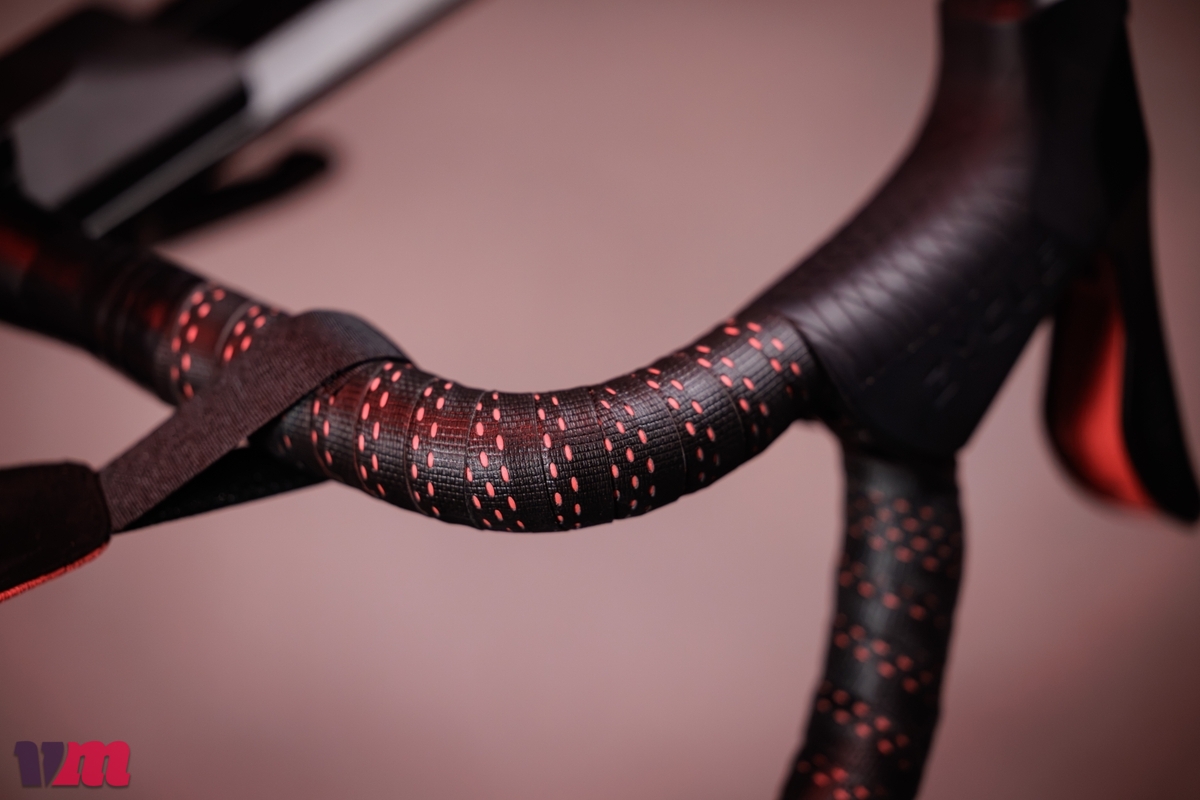
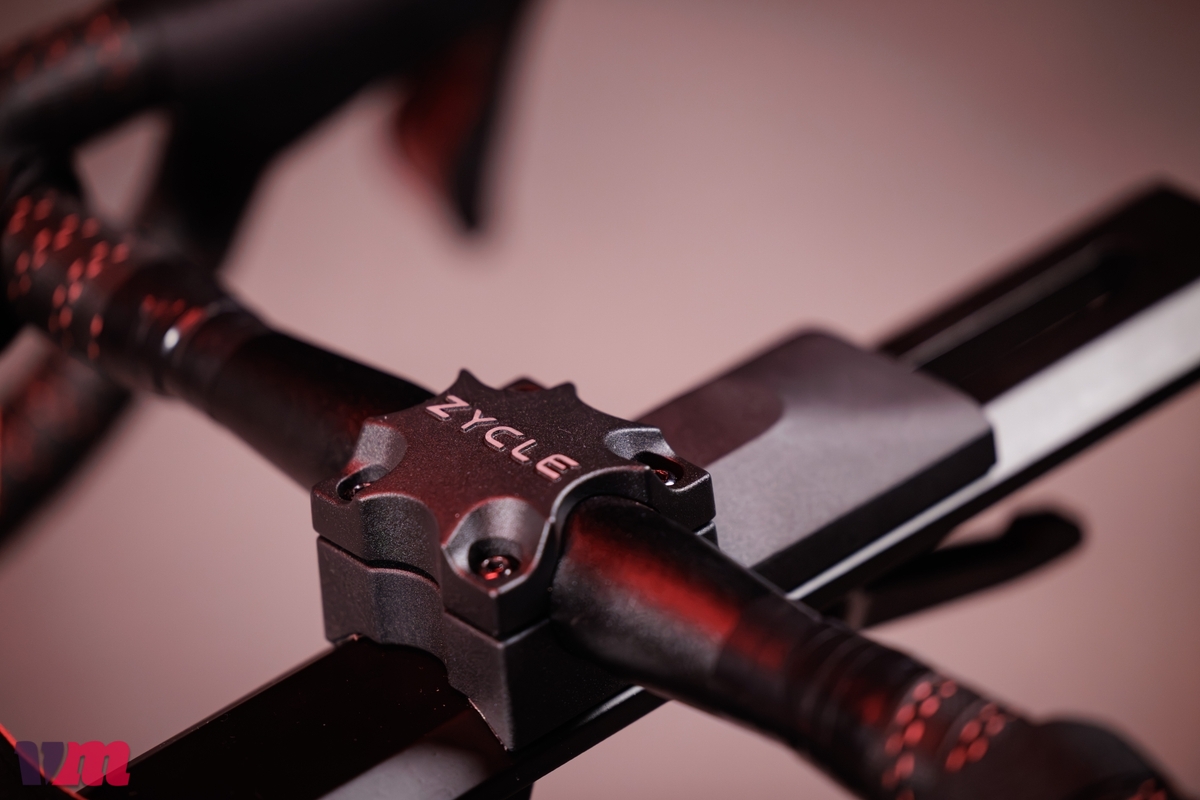
The standard handlebar made a generally decent impression, but could be a bit narrower and more ergonomic for sporty road cyclists. The rather thin shape and the angular grip areas, in particular, weren't entirely to everyone's liking. On the plus side, Zycle uses a classic 31,8 mm diameter handlebar clamp. This makes swapping it for a different road bike handlebar possible in principle; however, we didn't test whether the electronic shifters could be easily converted.
Virtual circuit: Many possibilities, but too little feedback
The electronic shifting is one of the most interesting features of the ZBike Infinity – and also one of the points our test rider criticized most. Zycle uses wireless shift levers that are visually and ergonomically reminiscent of the shifters on modern road bikes. The Zycle app allows you to configure the shifting functions and select different operating concepts. Our test rider opted for a Shimano-like shifting logic with two virtual chainrings. Setup was straightforward and easy to understand even without extensive experience with the software.
The ability to customize the gear ratios is particularly compelling. Up to 24 virtual gears are available, and the combination of chainrings and sprockets can be configured. This allows you to closely replicate the gearing of your own road bike. This is more than just a technical gimmick. Anyone who trains regularly both indoors and outdoors will benefit from a familiar gear ratio and comparable shifting behavior across the selected gears.
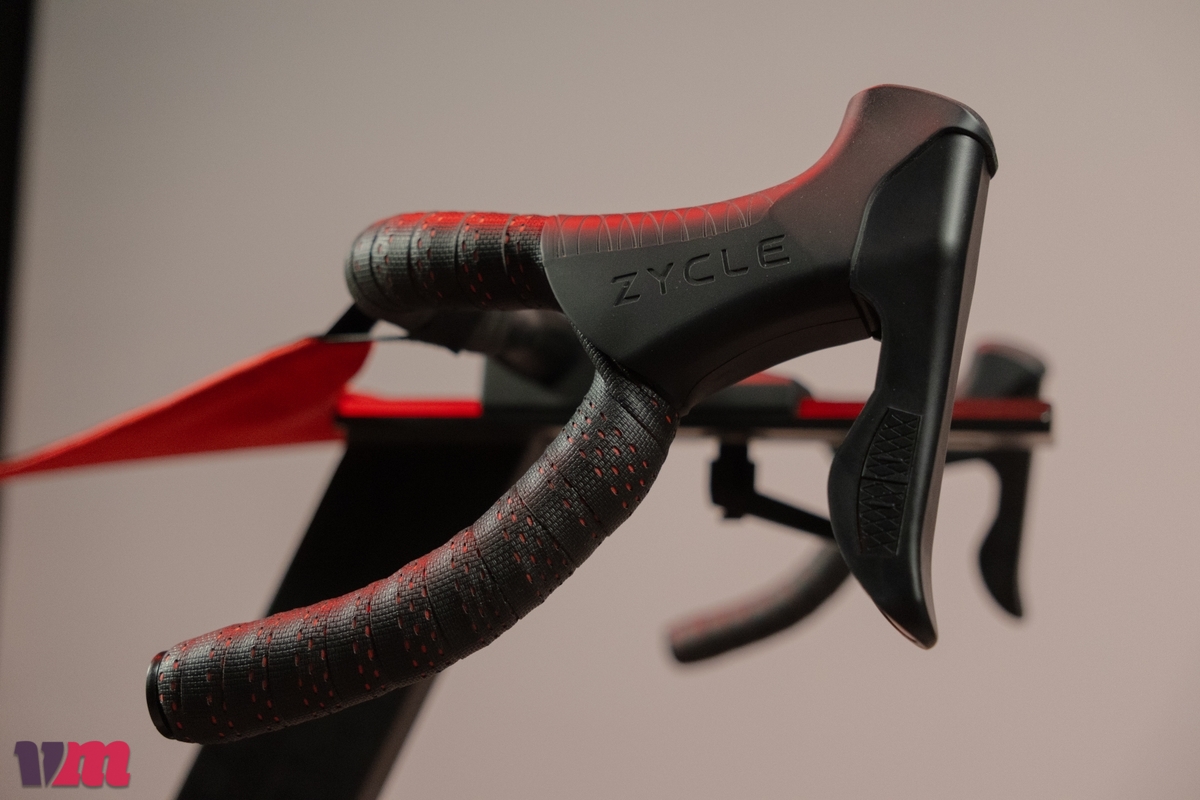
Delayed gear changes are a nuisance when driving sportily.
Less convincing, however, is the actual operation. While the shifters are easily accessible, they offer hardly any perceptible mechanical feedback. A distinct pressure point or shifting feel, as one would expect from high-quality road bike groupsets, is missing. Even more significant is the delayed response to shift commands. Especially when several gears need to be changed in succession during a sprint or a sudden increase in pace, the process takes far too long.
While standing and pedaling, the controls generally worked well. Nevertheless, our test rider preferred shift paddles with clear feedback to simple buttons. Another point of criticism concerns the gear indicator. While the virtual shift position can be read in the Zycle app, a clearer visualization would be helpful during training. A display that immediately shows which chainring and sprocket you are currently on would round out the user interface. This highlights the fact that a real road bike drivetrain still has advantages, despite all the possibilities of virtual simulation.
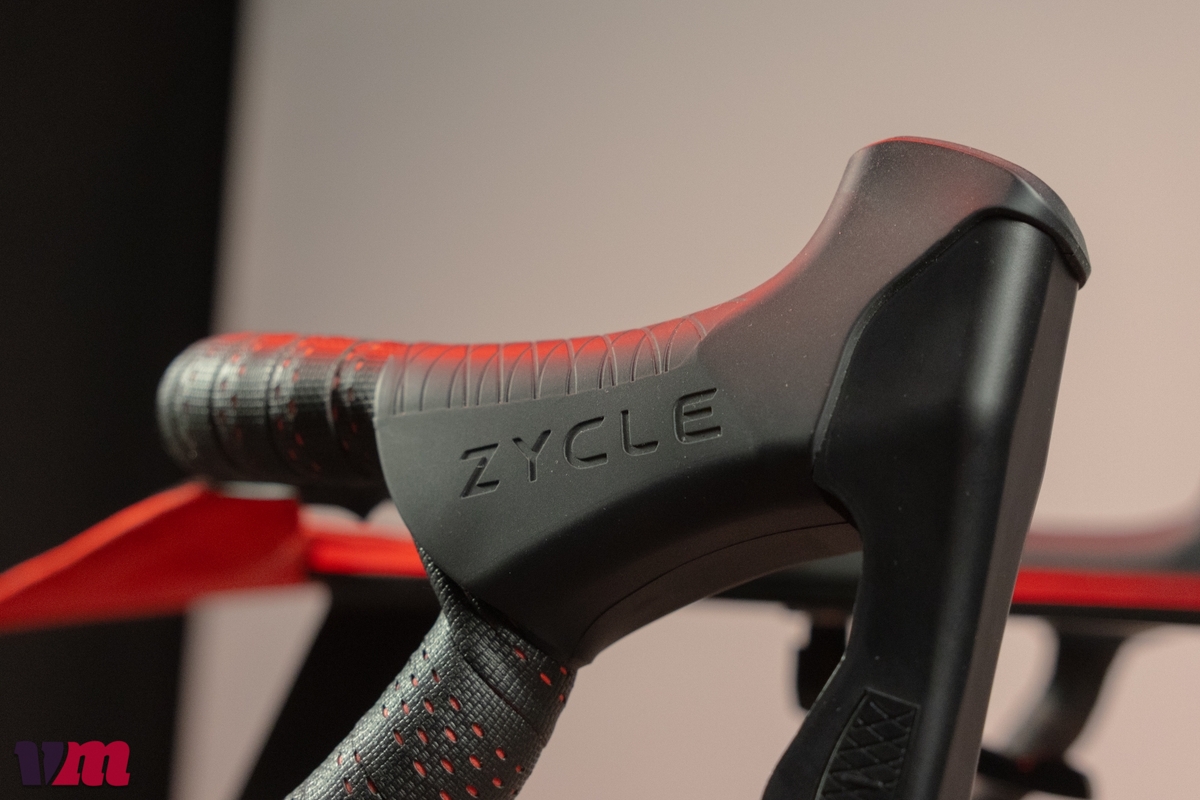
Zycle ZBike Infinity test ride: Amazingly natural riding feel
The crucial question with any smart bike is, of course: How does it ride? Here, the ZBike Infinity initially impressed. The flywheel provides a pleasant, largely natural feel during acceleration. On flat virtual courses, the handling comes remarkably close to that of a real racing bike. The precise control of the power output and its behavior at low cadence and high load were also pleasing in the test. Changes in resistance are generally implemented quickly, and longer climbs can be tackled with the expected high pedaling effort.
When standing and pedaling, the bike feels quite rigid. Those accustomed to the lateral movement of their road bike during acceleration will miss this dynamic feel. Our test rider described the riding experience as a mix of roughly 70 percent road bike and 30 percent fitness machine. A subjective assessment, of course, but one that accurately reflects the ZBike's character: it delivers a sporty and compelling riding experience, but it can't replicate the natural feel of a true road bike in every situation.
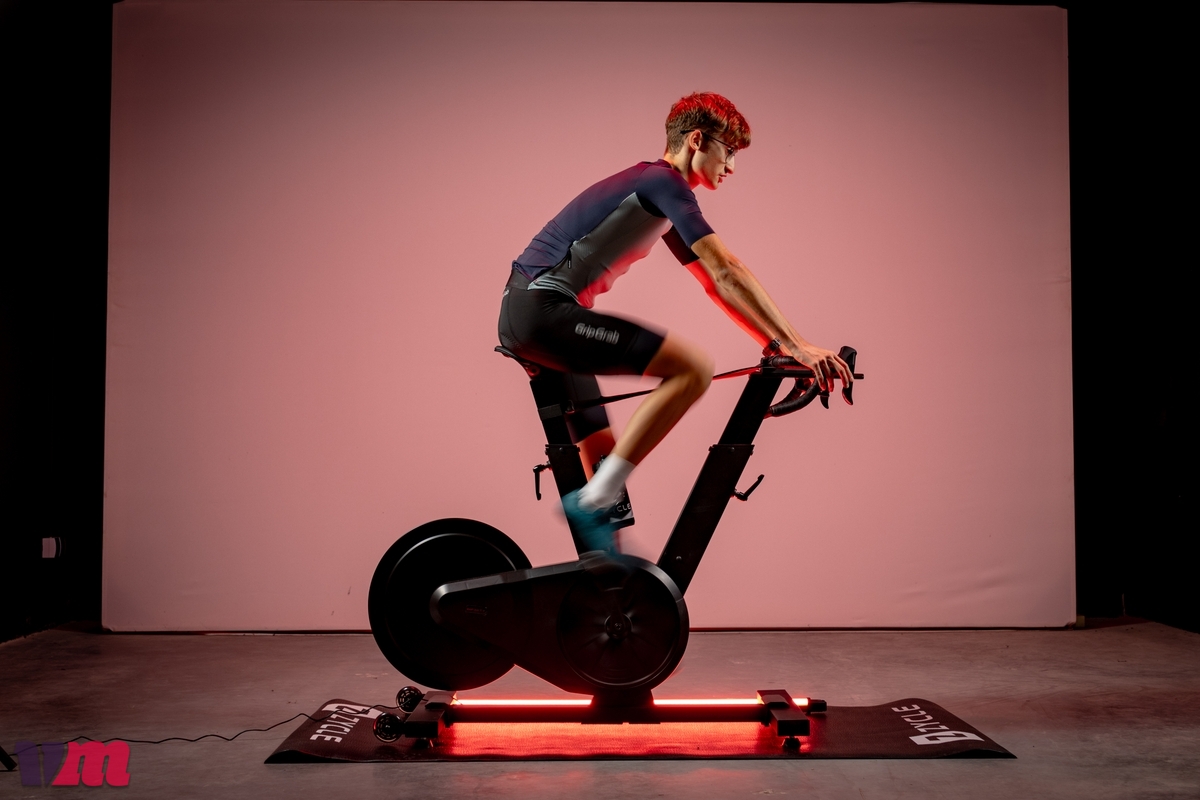
The freewheel: Technically interesting, but practically no decisive advantage.
A special feature of the ZBike Infinity is its freewheel system. Zycle promotes it as a significant contribution to a more realistic riding experience. Indeed, the legs can be kept still while riding without the cranks being driven by the flywheel. When pedaling again, the drive engages smoothly and without any jarring impact. This worked well in the test and generally felt natural.
However, the hoped-for increase in realism remains limited. Especially during virtual descents, our test rider felt the system didn't spin long enough to provide a convincing feeling of freewheeling. Furthermore, the freewheel operates almost silently. While this might initially seem positive for a quiet training experience, it detracts from the authenticity of the ride. The familiar freewheel sound of a road bike is completely absent. Therefore, the freewheel wasn't a decisive factor for our test rider. It functions as intended, but its impact on the training experience is less pronounced than its prominent placement in the product description would suggest.
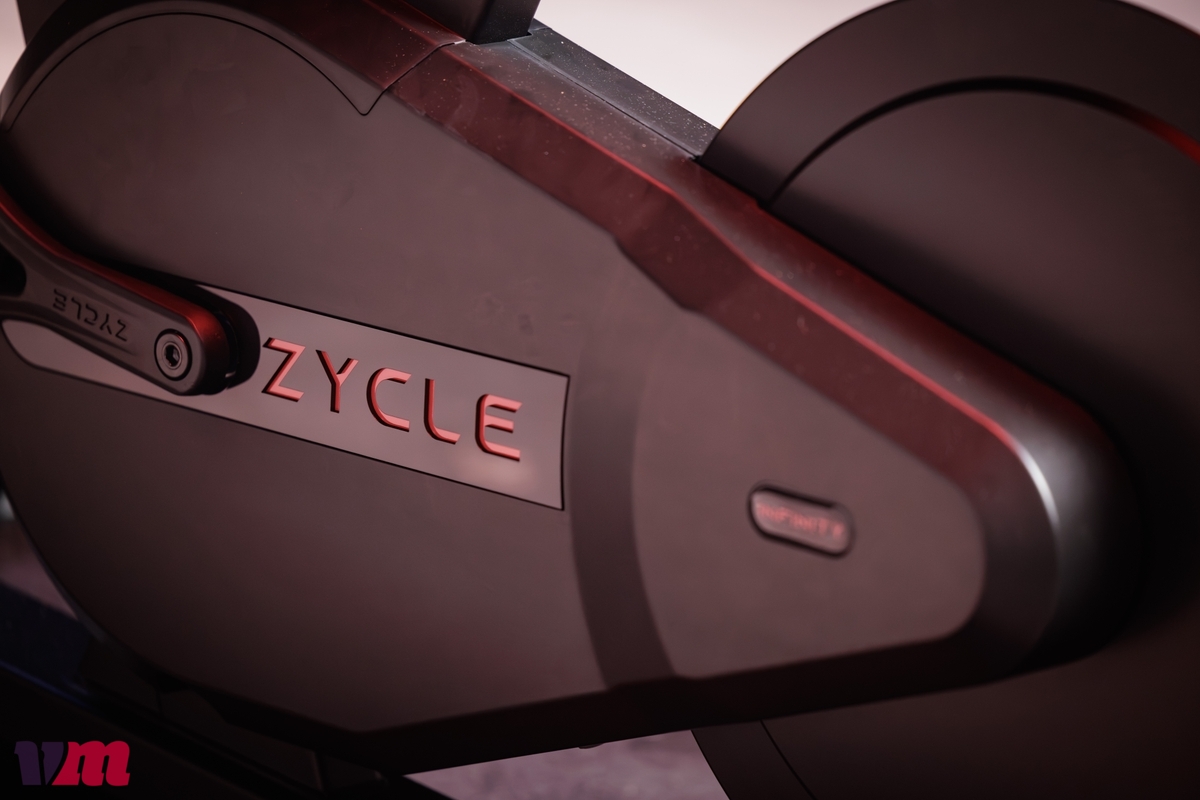
ERG mode and interval training: Good, but not always consistent
For ambitious endurance athletes, the quality of the resistance control is at least as important as the riding feel. In ERG mode, the smart bike takes over the resistance control and is designed to deliver a predetermined power output regardless of the selected cadence. This is a key feature, especially for structured training sessions with fixed wattage targets. In our test, the ZBike Infinity reacted relatively quickly to an increase in the required power output. However, the system took longer to reduce the resistance.
Occasionally, there was a brief spike in resistance. However, significant fluctuations in power output were avoided under consistent load. During testing, the displayed power output remained within approximately ten watts of the target value. A smooth pedal stroke was generally possible during intense intervals.
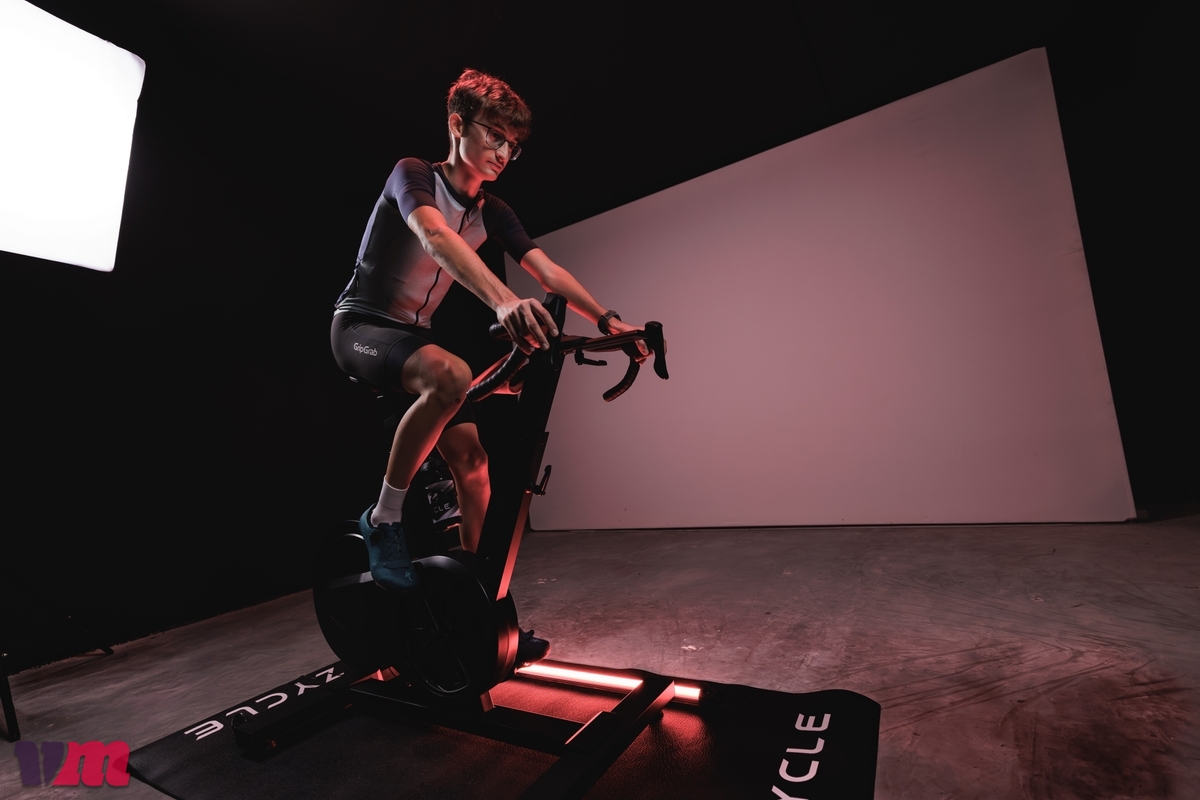
Anomalies in MyWhoosh and hard sprints
The performance with MyWhoosh was less convincing in some situations. Our test rider found the resistance on virtual descents to be too low and on climbs too high. The behavior was particularly noticeable during longer sprints. After about five to ten seconds of maximum effort, the resistance sometimes became so high that continuing to pedal was almost impossible. This behavior occurred with a virtual shift position in the area of the second chainring and the higher sprocket positions.
Whether the cause lies in the ZBike's resistance control, in the communication with MyWhoosh, or in the interaction with the virtual shifting system could not be definitively determined during testing. Nevertheless, this is a relevant point of criticism for ambitious athletes who regularly complete intensive intervals and sprints.
Performance measurement: The ZBike delivers plausible values.
Zycle promises a measurement accuracy of less than one percent for the ZBike Infinity. That would be an exceptionally good value, comparable to high-end power meters used in road cycling. In practical testing, the power measurement initially made a plausible impression. Both cadence and wattage values behaved predictably under consistent load. No unrealistic jumps or noticeable spikes occurred during normal training.
During hard sprints, the display took approximately two seconds to react to the changing workload. Short-term fluctuations were also observed during extreme accelerations. We were unable to conduct an independent comparison measurement with a reference power meter during testing. Therefore, our test neither confirmed nor refuted the manufacturer's stated accuracy of less than one percent. More importantly for practical training, the ZBike initially demonstrated that it provided comprehensible and readily usable power values under consistent load.
Sprint and stability: Even at 1.000 Watt sovereign
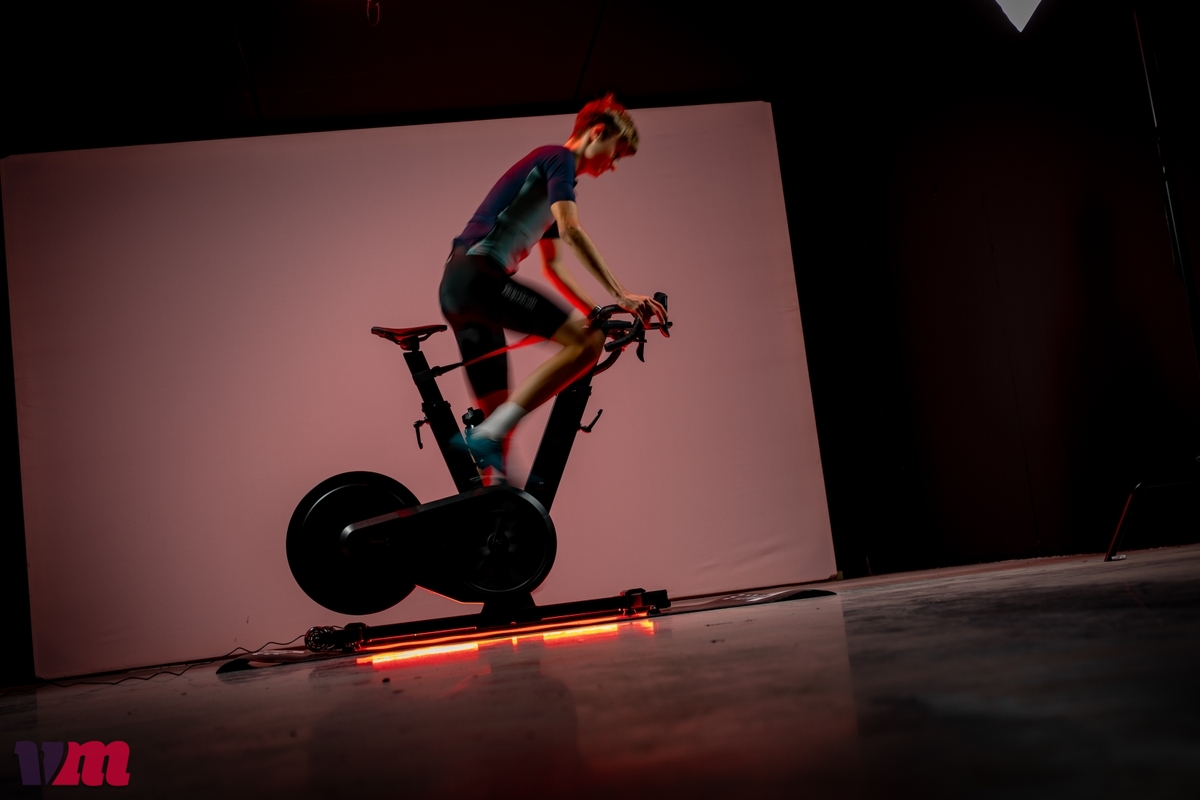
While the resistance control has some room for improvement, the ZBike Infinity impressed with its mechanical stability. Our test rider achieved top performances in his sprints, reaching speeds of... 1.000 Watts. The roughly 40-kilogram bike remained securely in place. Neither the feet nor the frame exhibited any disturbing movements, and there were no creaking noises. Even when pushing hard on the handlebars during a sprint and using your entire body weight, the ZBike conveys a high degree of stability.
The frame exhibited behavior that our test rider compared to a stiff aluminum racing bike. Zycle specifies a maximum power output of 2.000 watts. We did not push this limit to its limits. The approximately... 1.000 Watt, however, handled the construction mechanically with complete mastery.
Noise level: One of the greatest strengths of the ZBike Infinity
Anyone who trains in an apartment or wants to set up their smart bike in a shared space will appreciate the low noise level. The ZBike Infinity operates exceptionally quietly. During steady riding, you'll primarily hear a subtle whirring or running noise from the flywheel. Even under heavier loads, the volume increases only minimally. At a high cadence, the noise becomes slightly more noticeable, but overall remains very subdued.
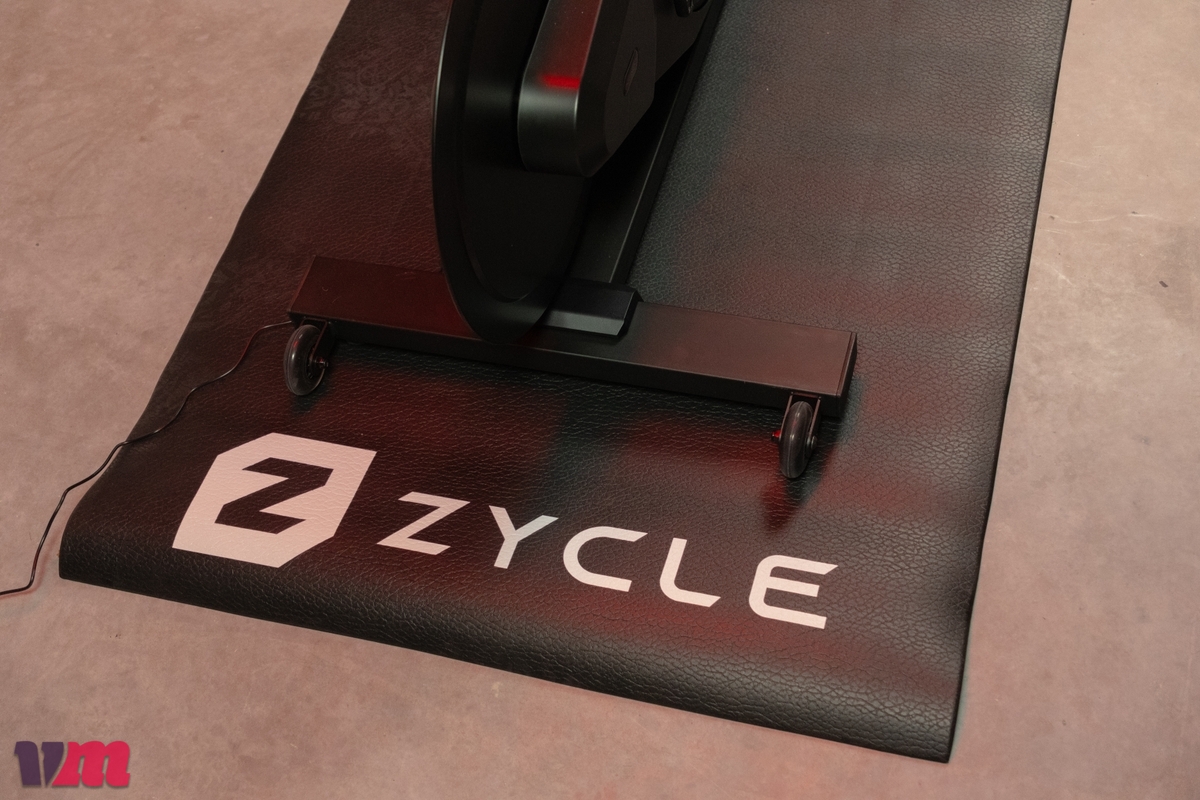
We didn't notice any disturbing clicking, creaking, or pronounced resonances. Perceptible vibrations transmitted through the floor were also not an issue. The device's quiet operation became apparent in everyday family life: while Timo trained, his younger brother could sleep undisturbed in the next room. Therefore, a special training mat isn't strictly necessary for acoustic reasons. However, it's still a good idea to protect the floor from sweat.
Cycle app: Easy to use with interesting training analysis
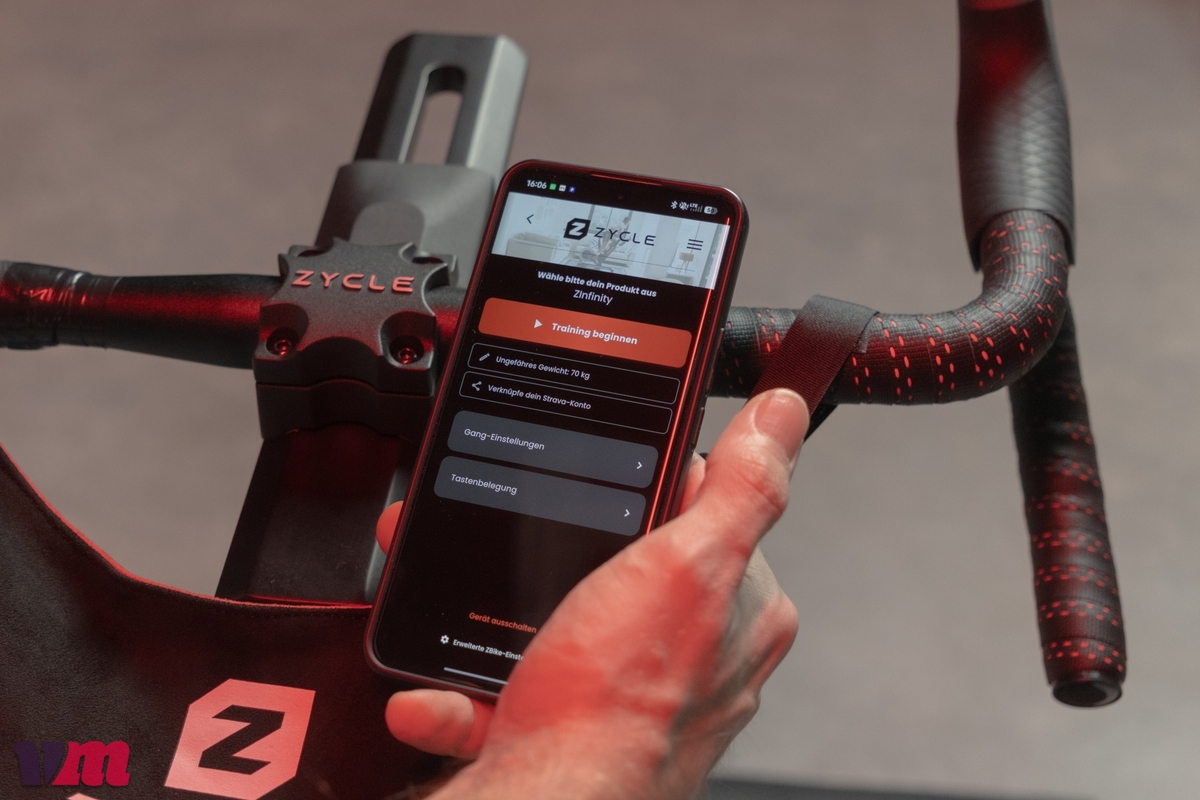
The proprietary Cycle app made a very positive impression. The user interface is clear and logically structured. Important functions can be found without a lengthy search, and setting up the virtual shifting is also straightforward. Firmware updates can also be performed via the app. The display of power distribution across the crank revolution is particularly interesting. A corresponding diagram shows in which phases of the pedaling cycle a particularly high or low amount of power is applied.
This allows you to clearly understand your own pedaling technique. For ambitious athletes, this can be an interesting addition to the usual power and cadence data. However, the storage of training data is less comprehensive. We would have liked more options for detailed analysis directly within the app. The connection to Strava worked flawlessly in our test.
Connection with MyWhoosh: Not everything went smoothly
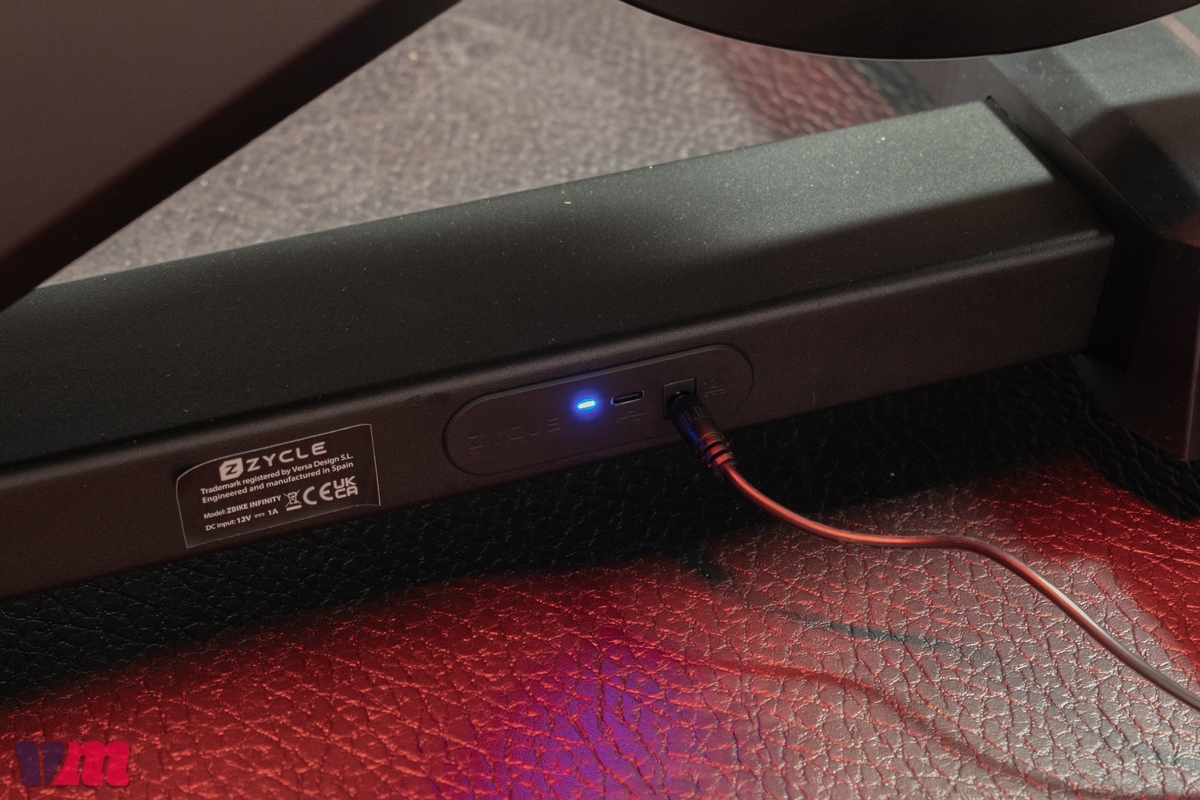
Pairing with MyWhoosh was initially quick and easy. Power output, cadence, and resistance settings were recognized, as was the virtual shifting system. However, occasional connection drops occurred during use. The simultaneous use of MyWhoosh and the Zycle app proved particularly problematic: in this configuration, the connection dropped immediately during testing. According to Zycle, using their own app and a training platform simultaneously should generally be possible. However, our experience with MyWhoosh showed that this doesn't always work smoothly. In addition to Bluetooth and ANT+, the manufacturer also advertises a wired connection via USB. This could provide additional connection reliability, especially during intensive training sessions and virtual races.
Long-distance comfort and everyday use are convincing
The ZBike Infinity also impressed during longer training sessions. The riding position remained comfortable, and no major comfort issues arose. Only the somewhat angular shifters and the relatively thin handlebars might become bothersome during extended use. The ability to quickly adjust the saddle and handlebars is also practical during training. However, the corresponding clamps must be carefully tightened. A minor drawback: there's room for improvement in the range of accessories.
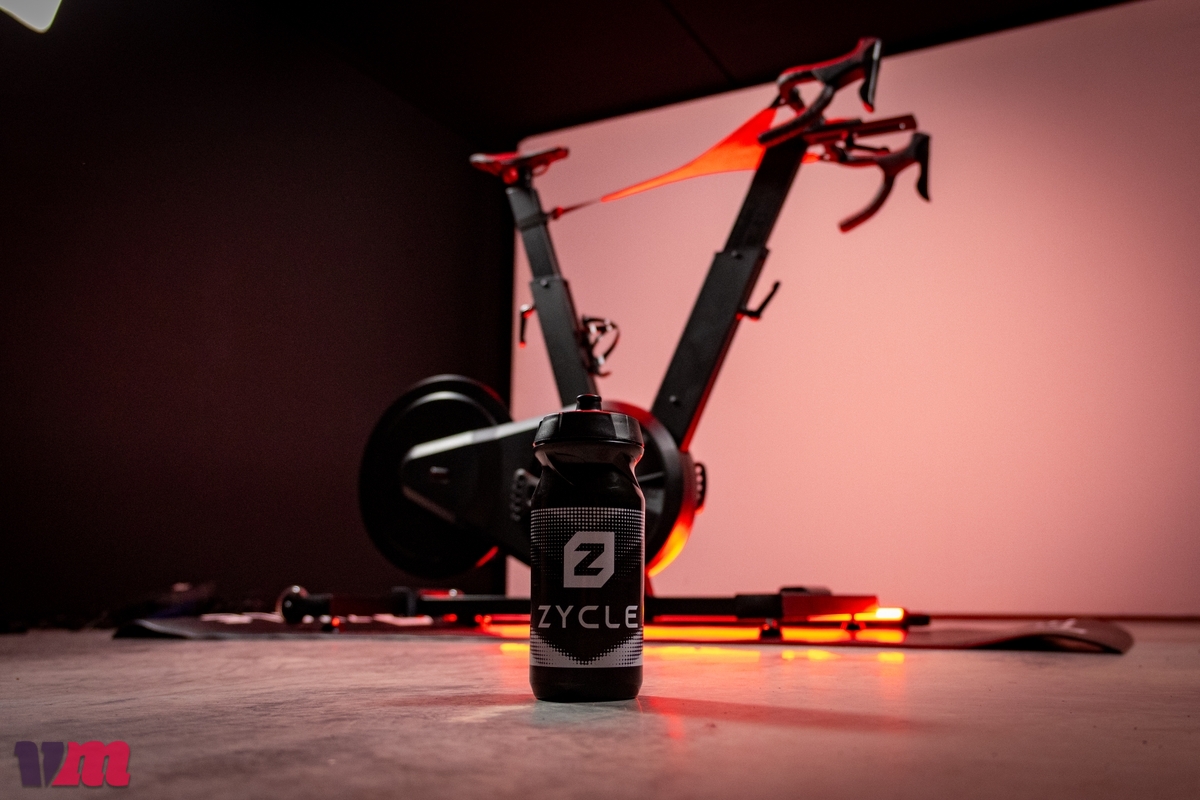
A bottle holder is included, but a practical storage solution for a smartphone, tablet, or smaller training equipment is missing. Those who use different training platforms often need a tablet or smartphone within easy reach. An adjustable holder suitable for both portrait and landscape orientation would be a sensible solution. A small shelf for accessories like a power bank would also improve its everyday usability. On the plus side, thanks to two transport wheels, the bike can be moved relatively easily within a room despite its weight.
Even after several intensive sessions, the construction showed no signs of deterioration. No tightening was necessary, and no disturbing noises developed. The largely enclosed belt drive also promises low maintenance. However, a long-term assessment of durability is not yet possible after our test period.
Conclusion: A convincing smart bike with room for improvement in the details.
The Zycle ZBike Infinity left a generally positive impression in our practical test. Its stable construction, very low noise level, and extensive ergonomic adjustment options make it an interesting training device for ambitious cyclists.
We particularly like how easily the bike integrates into everyday training. It's quick to set up, offers a sporty riding position, and can be adjusted to different riders with minimal effort. This is a real advantage, especially if several people in the household train regularly. The riding experience is also impressive over long distances. The natural acceleration, the precise power output, and the high stability make the ZBike feel much more like a road bike than a traditional exercise bike.
The concept isn't without its flaws, however. The virtual shifting system reacts a bit too slowly and provides insufficient feedback. Furthermore, the adjustment scales are difficult to read, and there are no mounts for smartphones or tablets. While the much-touted freewheel works adequately, it didn't prove to be the decisive advantage during training.
At around €2.200, the ZBike Infinity is a significant investment. For casual riders, it's unlikely to be worthwhile. However, those who train regularly and intensively indoors will get a high-quality, versatile piece of exercise equipment that combines many of the strengths of a good smart trainer setup with the comfort of a standalone bike. Our test rider, Timo, would certainly trade his current indoor setup for the ZBike Infinity. He was particularly impressed by its quick setup, the easy adjustments for different users, and its high stability. His conclusion can be summed up simply: The ZBike Infinity makes intensive indoor training pleasantly uncomplicated.
Strengths and weaknesses
We like this:
- Very stable and high-quality-looking construction
- Extremely quiet operation, even under high load
- Sporty driving feel and good ergonomics
- Quick adaptation to different users
- Individually configurable virtual translation
- User-friendly Cycle app with interesting pedaling analysis
We like this less:
- Delayed gear changes without clear feedback
- Poorly legible setting scales
- Changing crank lengths is comparatively cumbersome.
- No standard smartphone or tablet holder
Web: zycle.eu
Support Velomotion if you're thinking of buying a smart bike!
If you want to buy a ZBike Infinity from Zycle – or any other smart bike – online, please use this link.
By doing so, you support Velomotion and we remain free to read.
This will not put you at a disadvantage.