


Test / E-Bike: At first glance, the Trek Inbound+ looks like a perfectly ordinary city bike. However, it represents a new generation of affordable everyday e-bikes, which are also available from specialist retailers. The new Bosch Hub Line hub motor plays a key role. We rode the top model with a 600 Wh battery and a 10-speed derailleur.
Trek Inbound+: Concept and application
Frame, seating position and frame sizes
Bosch Hub Line: Hub motor without torque sensor
Batteries, range extender and operation
trim levels
Standard equipment: luggage rack, lights and mudguards
Price and variants of the Trek Inbound+
Bosch Hub Line in practical testing
Trek Inbound+ review: How does it ride?
Who is the Trek Inbound+ suitable for?
All information at a glance
- City bike with aluminum frame as a step-through or with diamond frame
- Bosch Hub Line hub motor with 45 Nm and 400 W
- Batteries with 360, 540 or 600 Wh, optional range extender
- derailleur gears or belt drive
- Powered SP-Connect interface
- Prices from 1.999 Euro to 2.499 Euro
Trek Inbound+: Concept and application
The Trek Inbound+ is a city bike in the truest sense. It has no suspension fork and no fancy features, but it's fully equipped for everyday use. It's designed for commuting to work, shopping, or transporting a child seat and trailer. Trek offers the bike in two frame styles: a step-through and a diamond frame, which has a horizontal top tube.
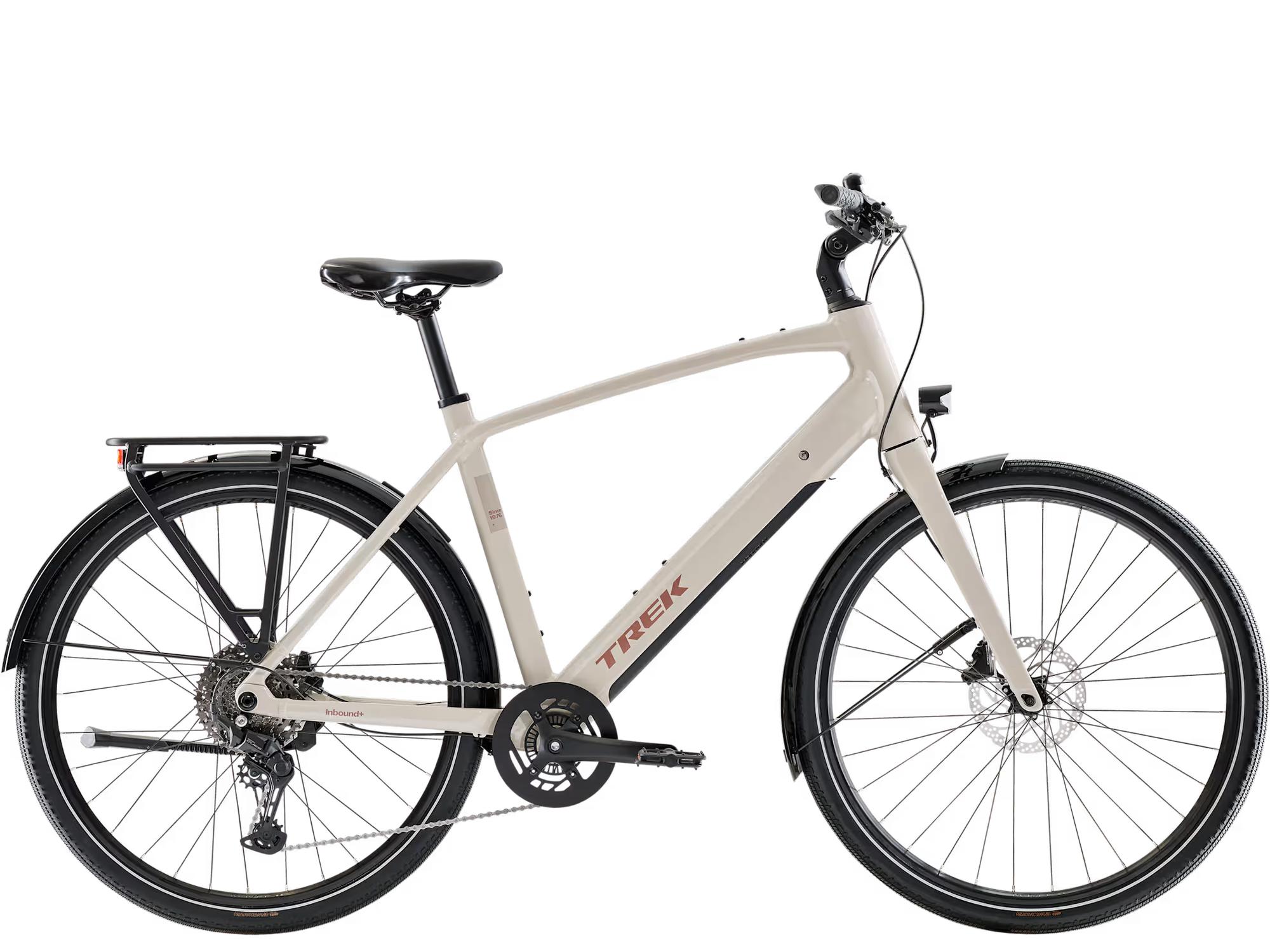
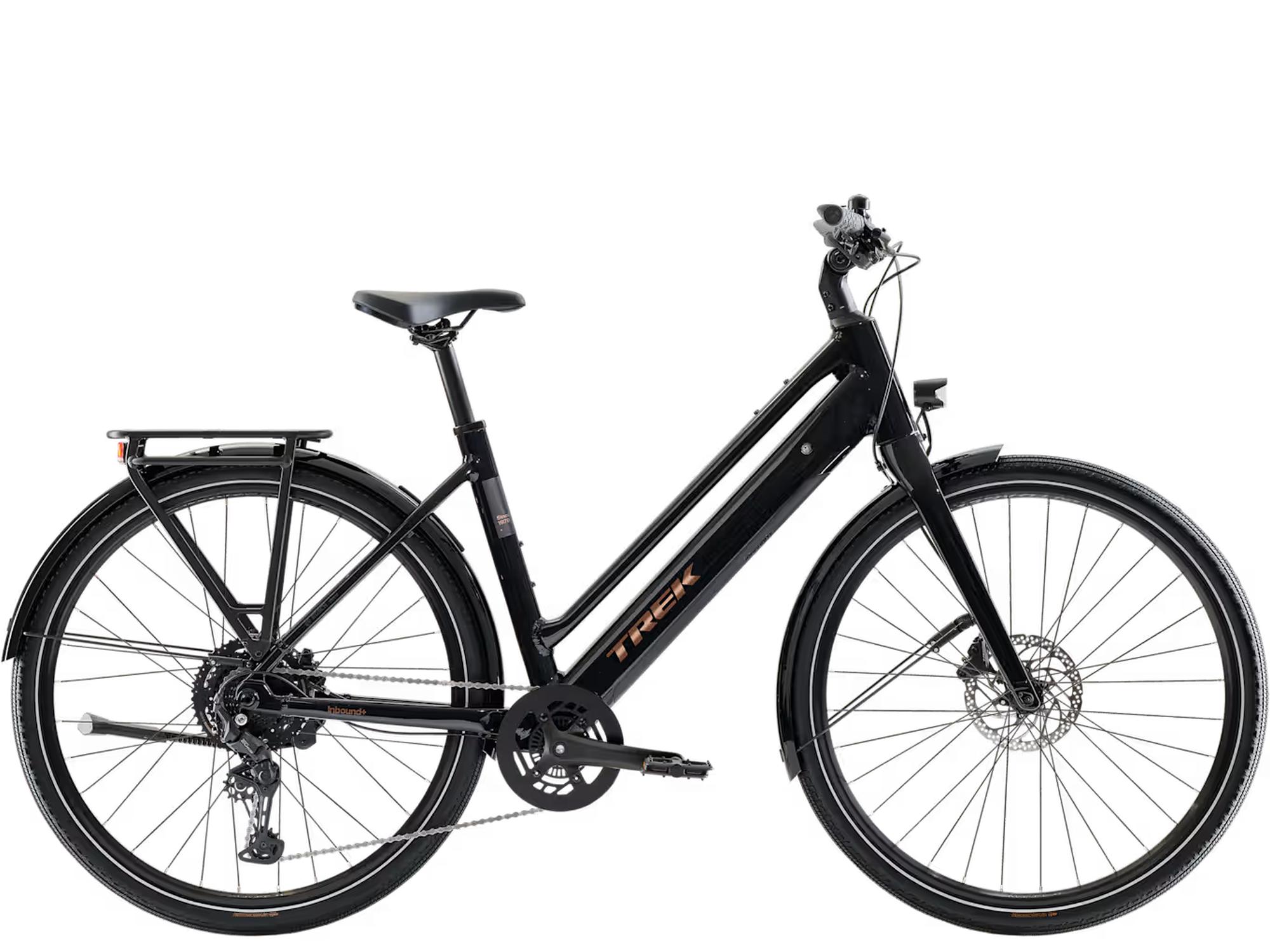
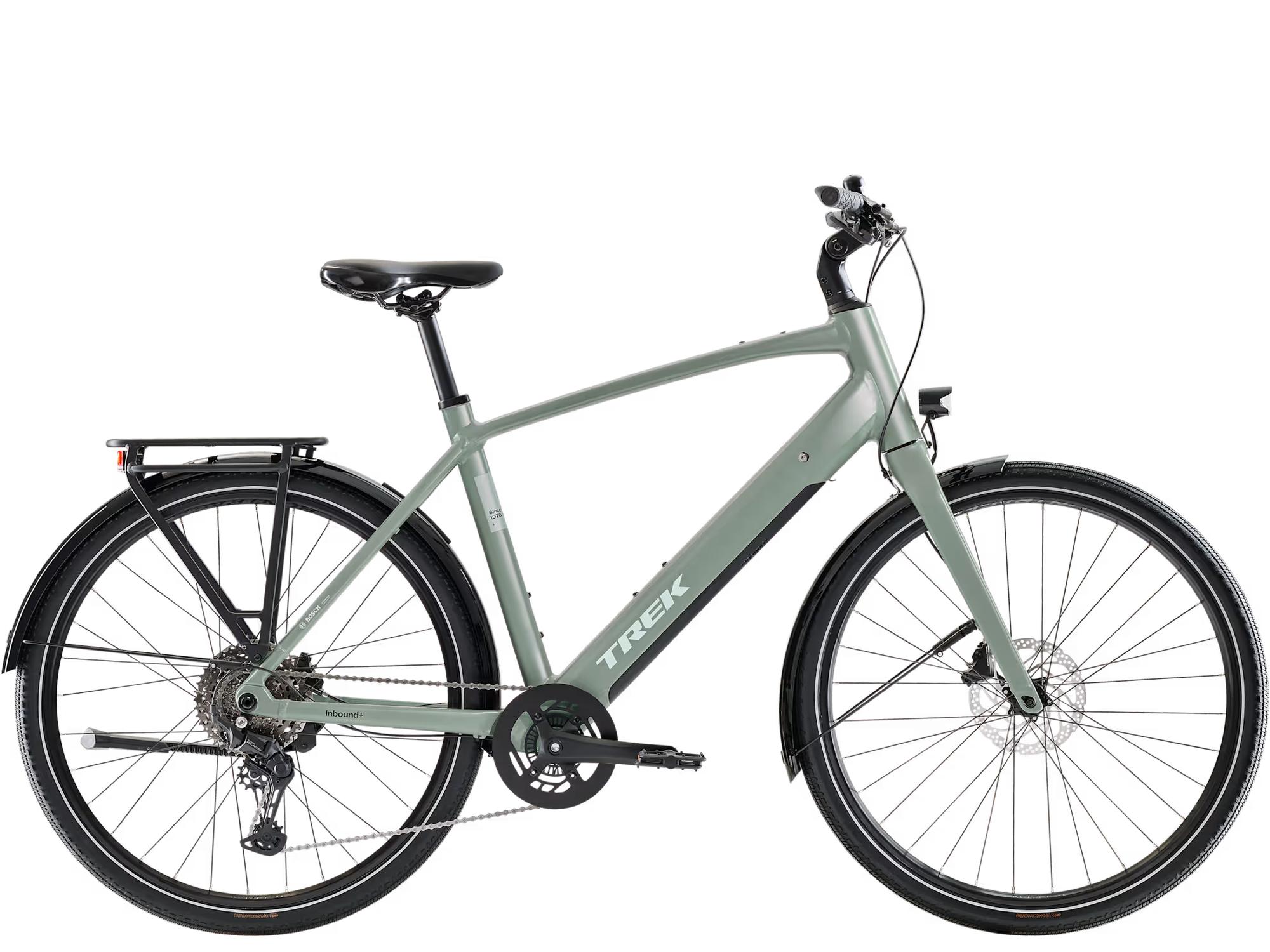
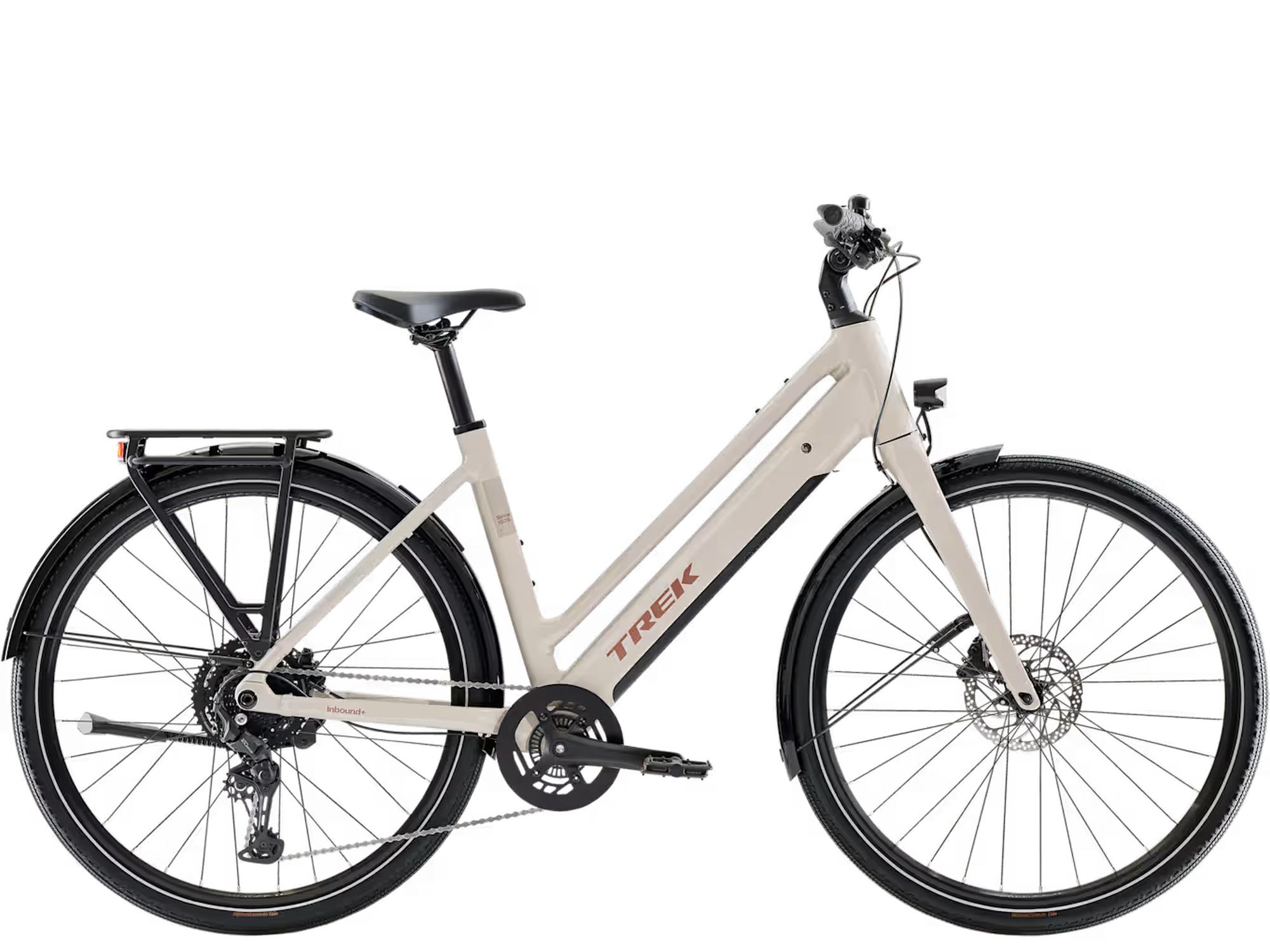
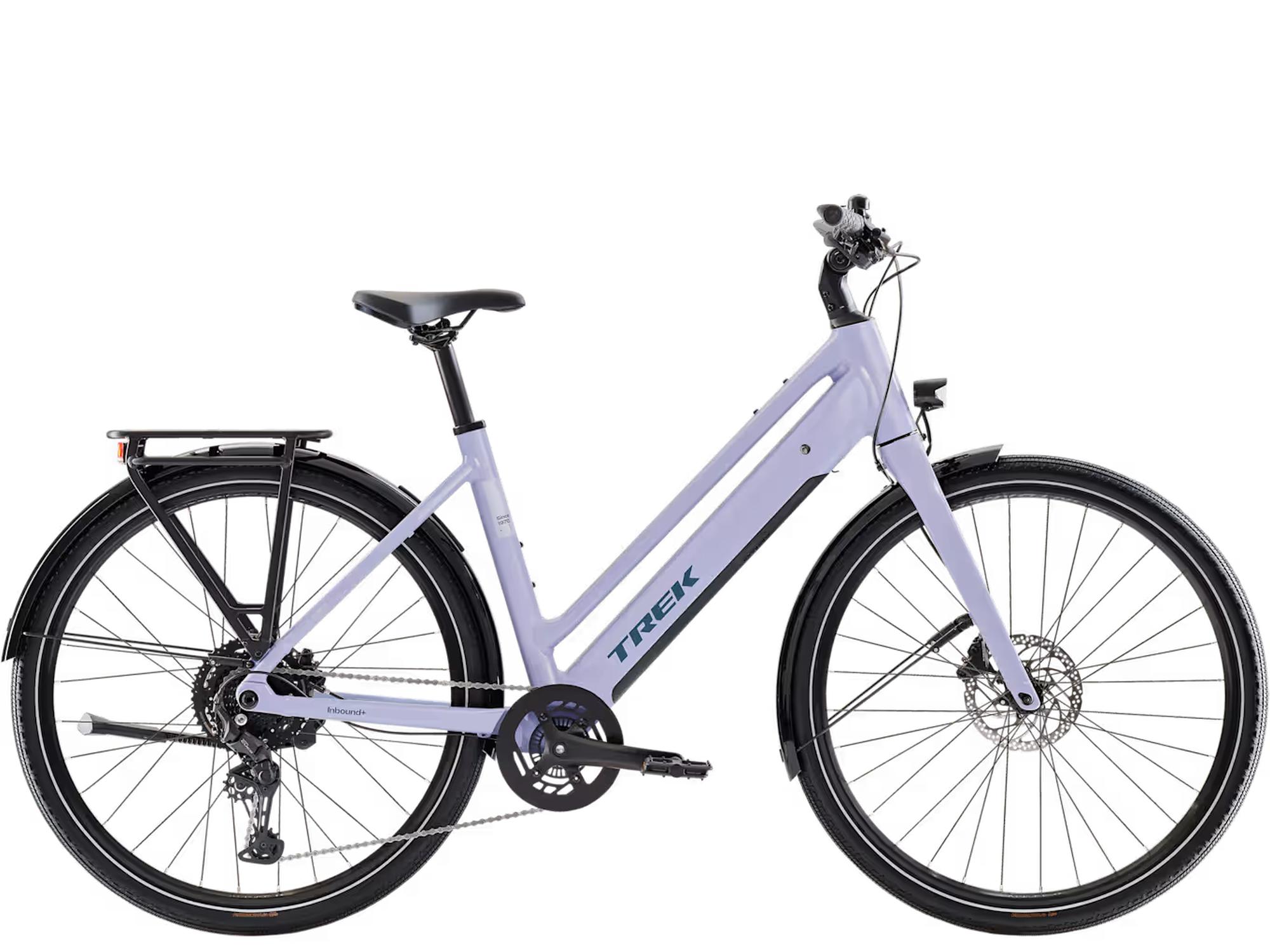
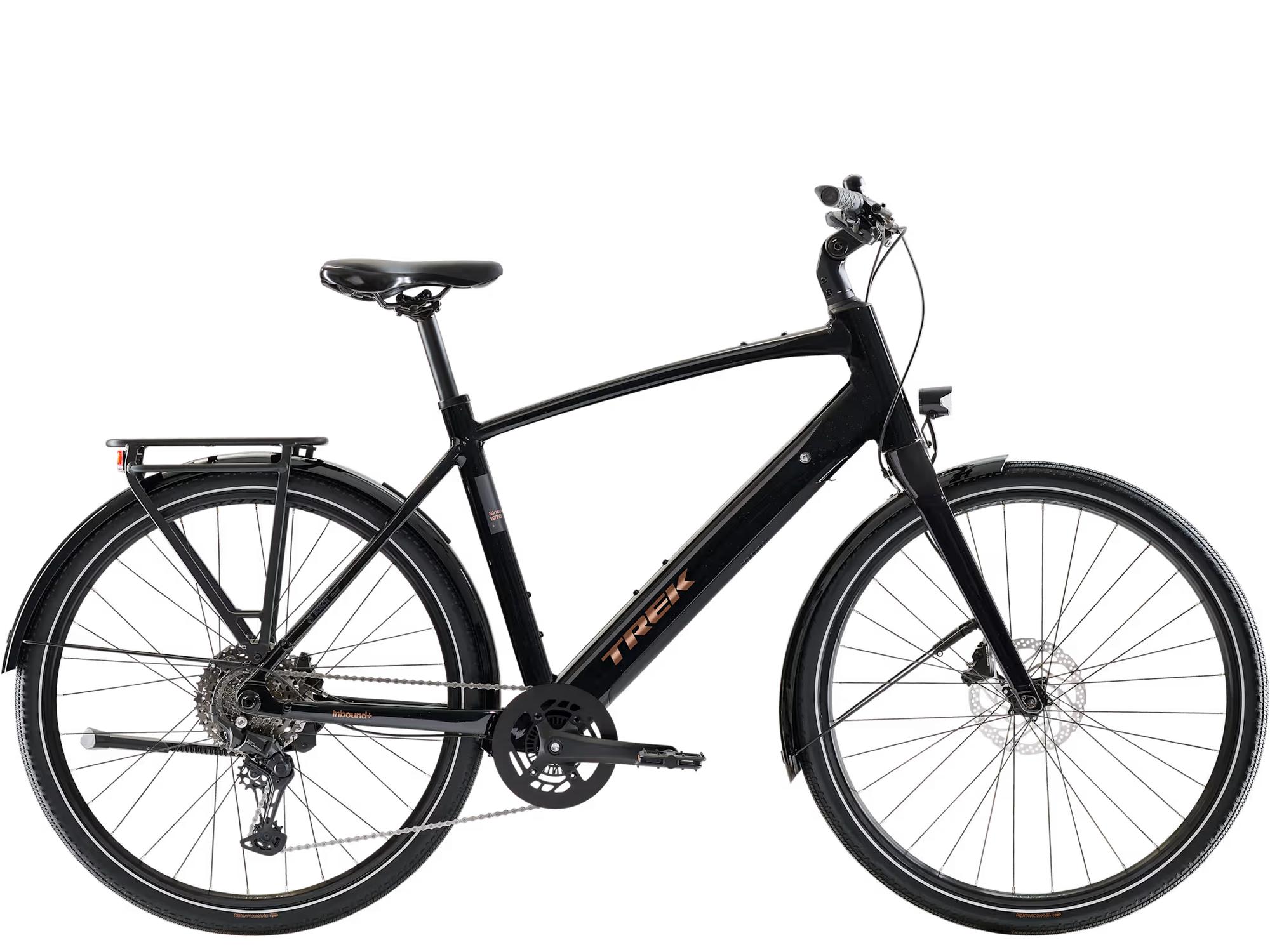
What makes the concept particularly exciting is the drive system. The Bosch Hub Line is a hub motor integrated into the rear wheel. This is what makes the bike possible in this price range. Until recently, a brand-name e-bike with a Bosch system offered in specialist shops for around €2.000 was almost unthinkable. This price segment was long dominated almost entirely by direct sellers, discount retailers, and bikes sold in DIY stores.
Frame, seating position and frame sizes
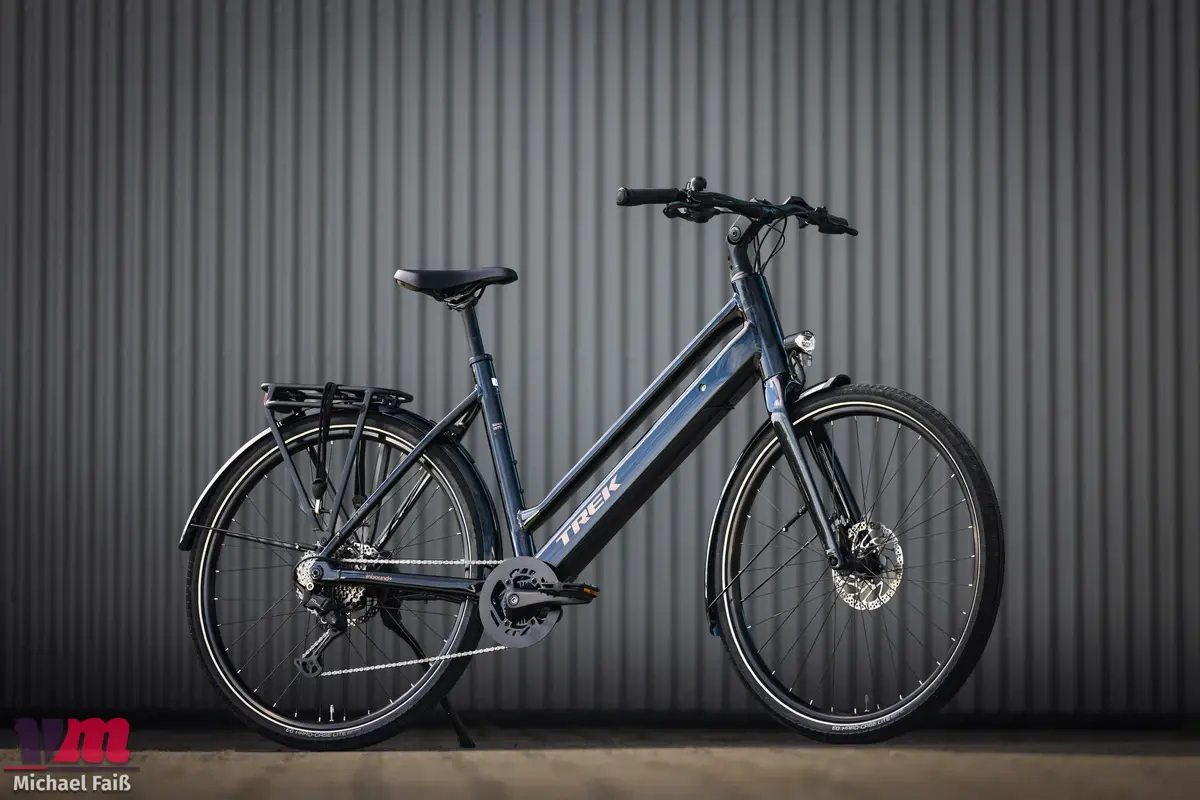
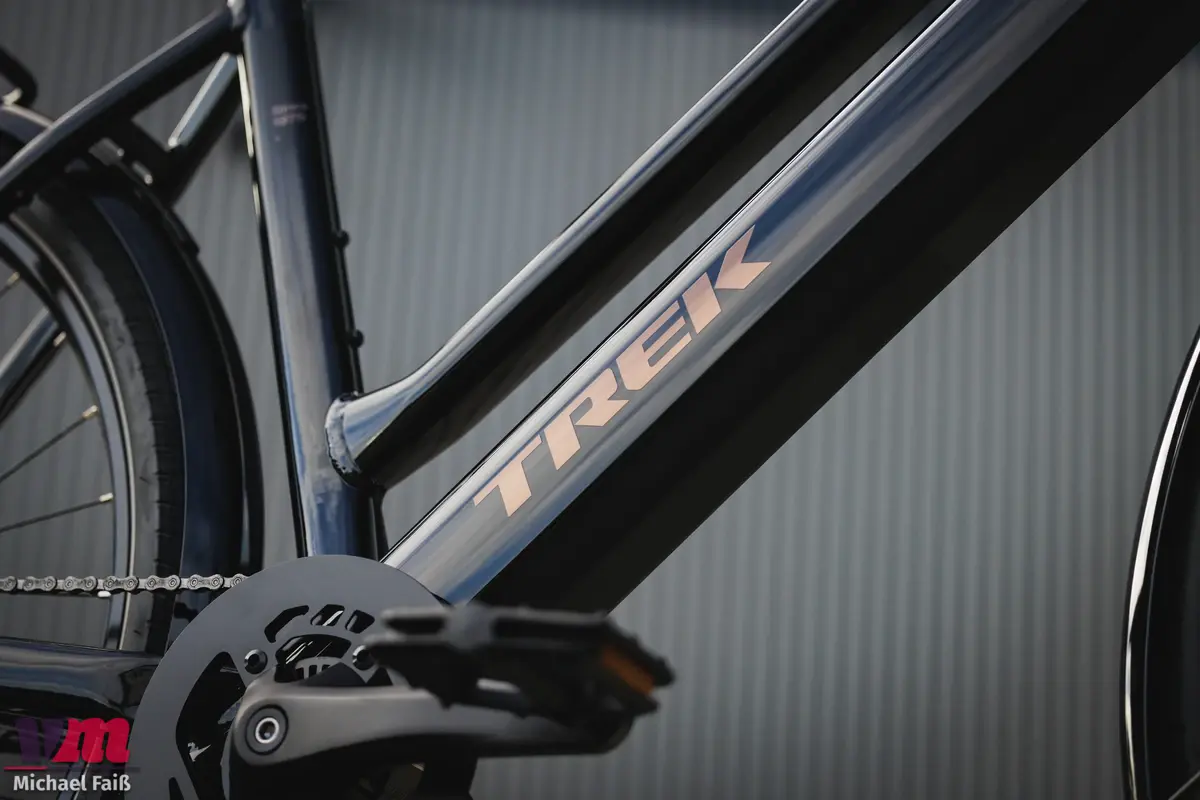
The Trek Inbound+ is based on an aluminum frame. The step-through model features a striking double downtube. While this slightly reduces the step-through height, it offers aesthetic advantages and is designed to increase stiffness. Regardless of the build options, the frame itself remains the same. The only difference lies in the battery capacity of the downtube – since all batteries are the same length, it accommodates 360, 540, and 600 Wh capacities.
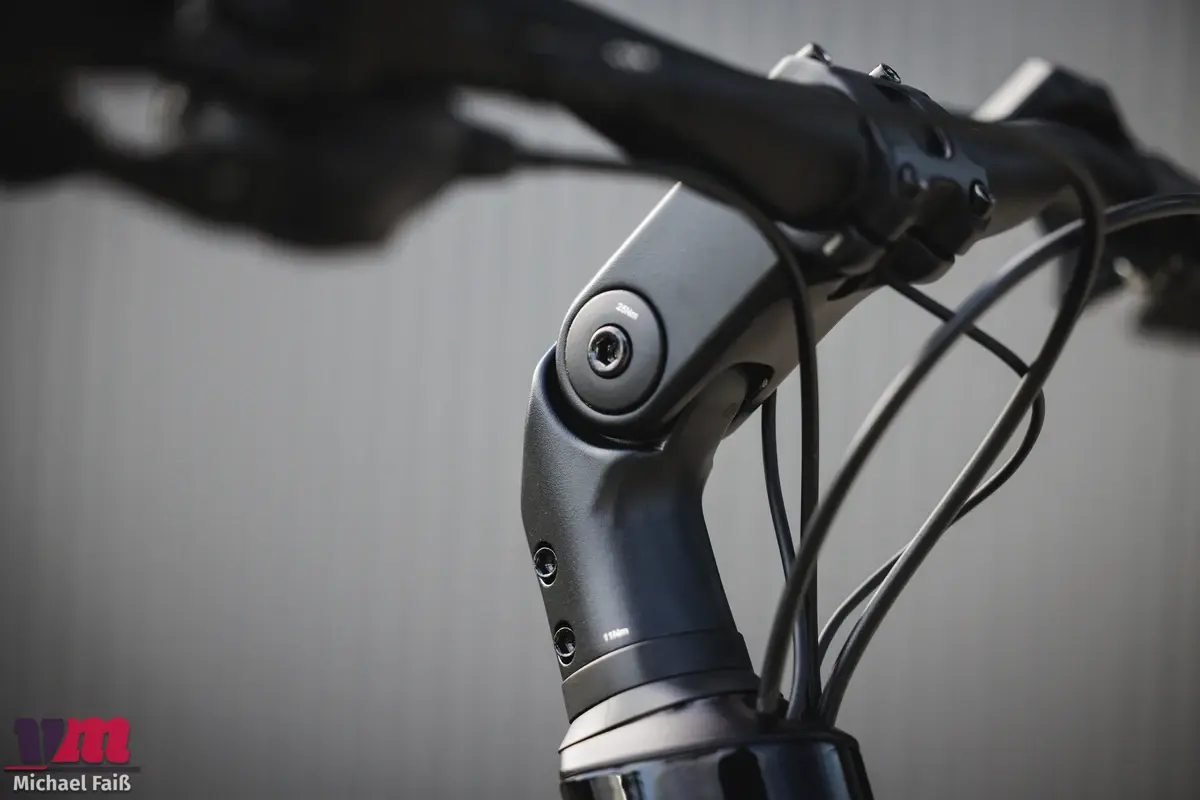
A rigid aluminum fork handles the front suspension. The front wheel uses a classic threaded axle, meaning neither a thru-axle nor a quick-release skewer. The stem is angle-adjustable, allowing for a very upright riding position if desired. One detail will be particularly appealing to taller riders: the step-through frame is available up to size XL. Our test bike in size L fit our 1,87 m (6'2") tall rider well. 50 mm (11") wide tires, which replace a suspension fork, are also intended to provide comfort.
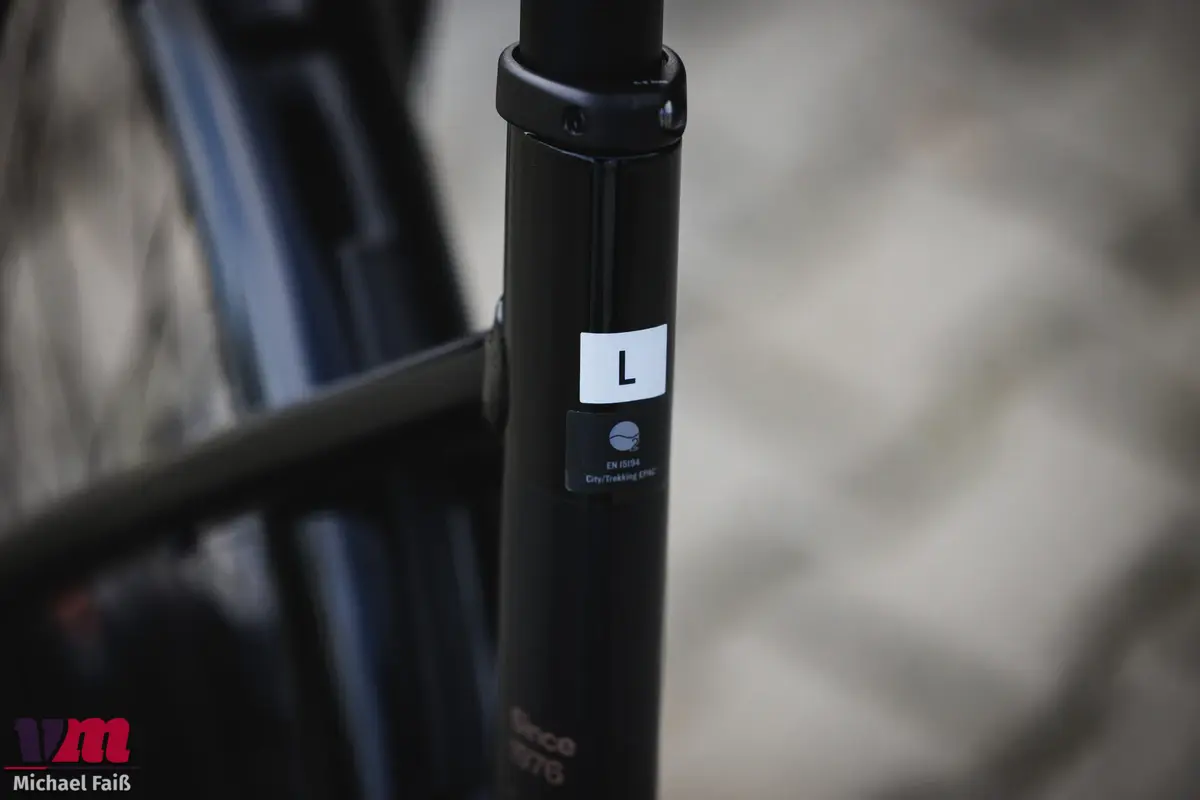
The maximum permissible weight is 136 kg for all versions. Depending on the equipment, this leaves approximately 110 to 115 kg of payload for the rider and luggage. That's sufficient for many, but not exactly generous. Those who regularly use a child seat or a trailer may find this limiting.
Bosch Hub Line: Hub motor without torque sensor
According to Bosch, the Bosch Hub Line has a maximum torque of 45 Nm and a maximum power output of 400 W. The motor weighs 2,3 kg. That's relatively heavy for a hub motor in this performance class.
In general, an e-bike with a hub motor is cheaper to construct than one with a mid-drive motor. The area around the bottom bracket is significantly simpler because a large motor mount isn't necessary. Compared directly to Bosch mid-drive motors, the motor itself is also less expensive. Bosch deliberately cut costs with the Hub Line so that bicycle manufacturers could purchase it as cheaply as possible.
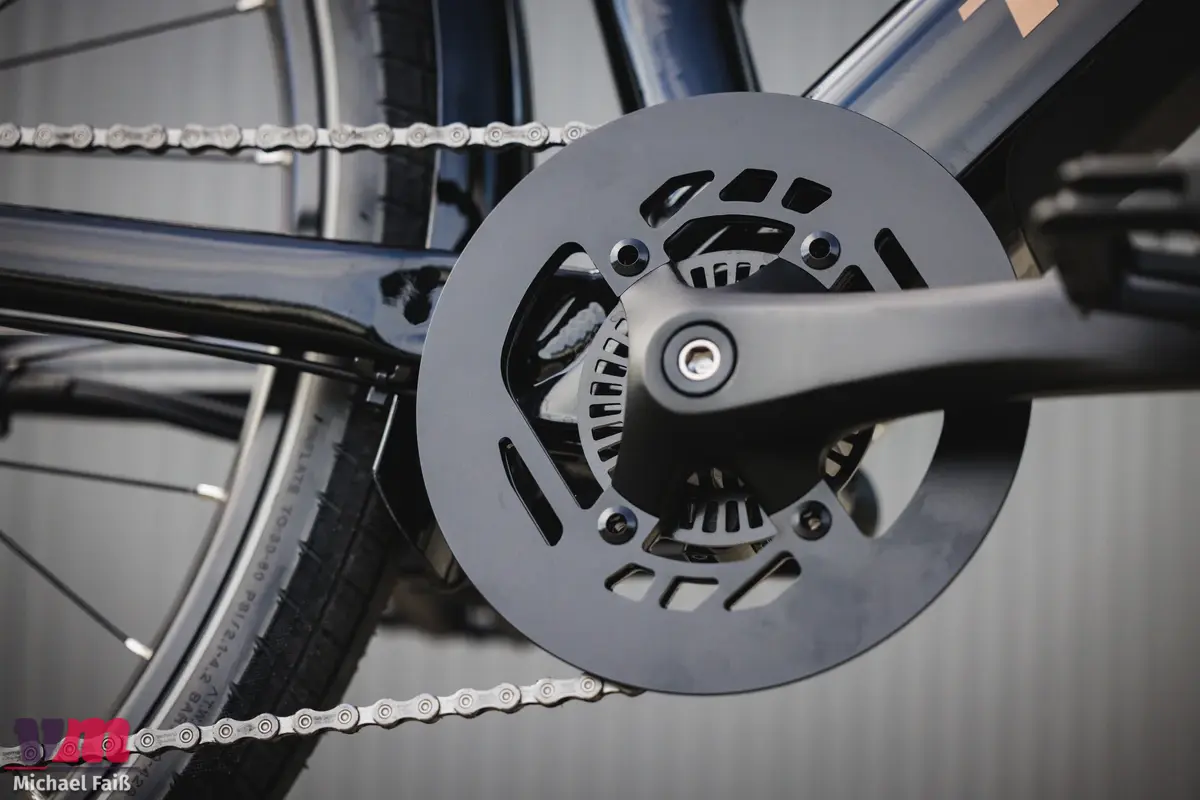
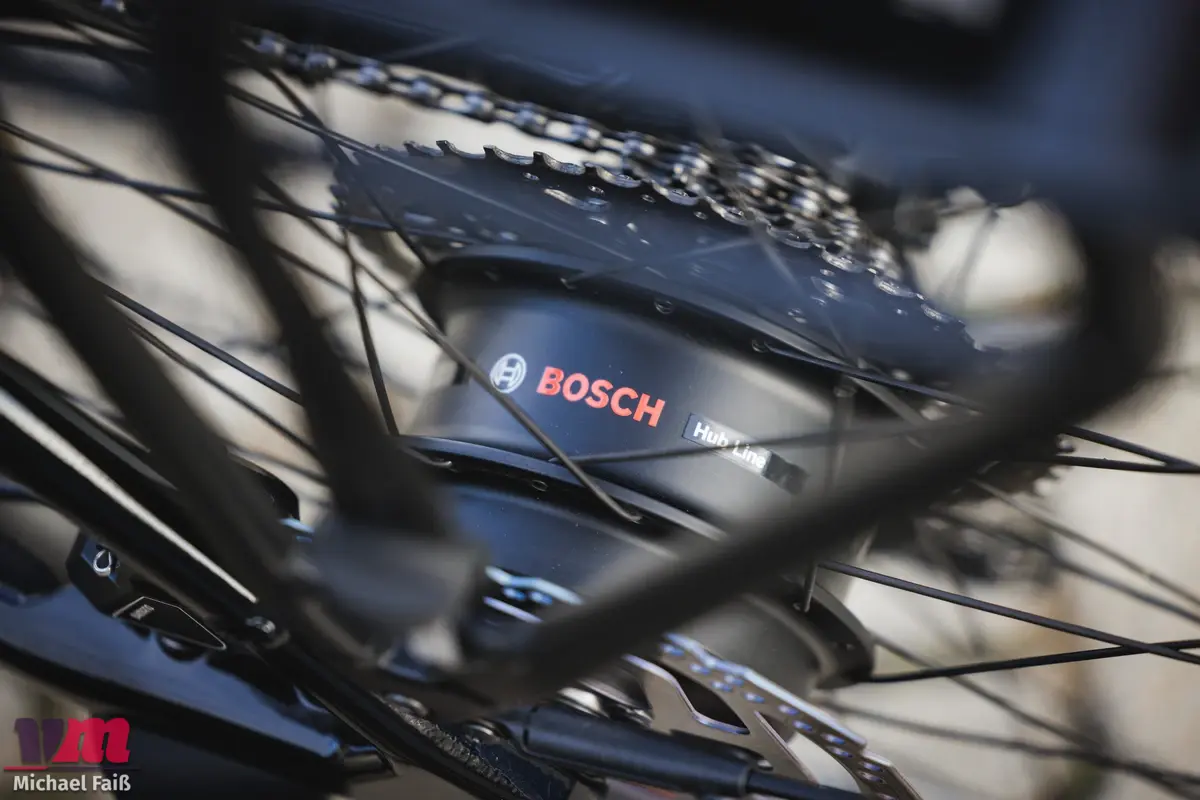
The most noticeable cost-saving measure is the lack of a torque sensor. Instead, a sensor disc at the bottom bracket measures the rotation of the crank. Software algorithms then calculate how much assistance is required. We'll examine how well this works in practice in the practical test below.
Batteries, range extender and operation
Depending on the equipment variant, three battery sizes are available: 360, 540, or 600 Wh. Our top-of-the-line model features the 600 Wh battery. All batteries are removable and located in the downtube behind a plastic cover, and are additionally secured with a lock. Furthermore, a Bosch PowerMore 250 range extender can be mounted on both frame styles.
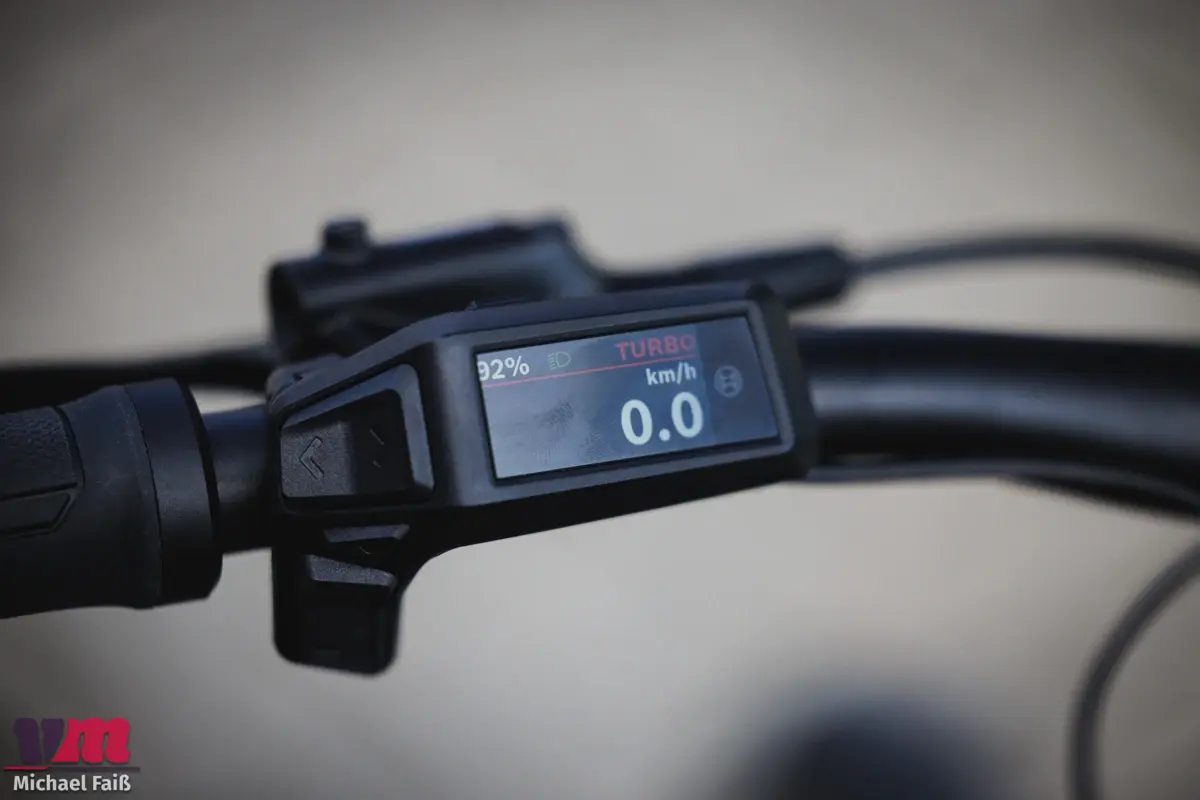
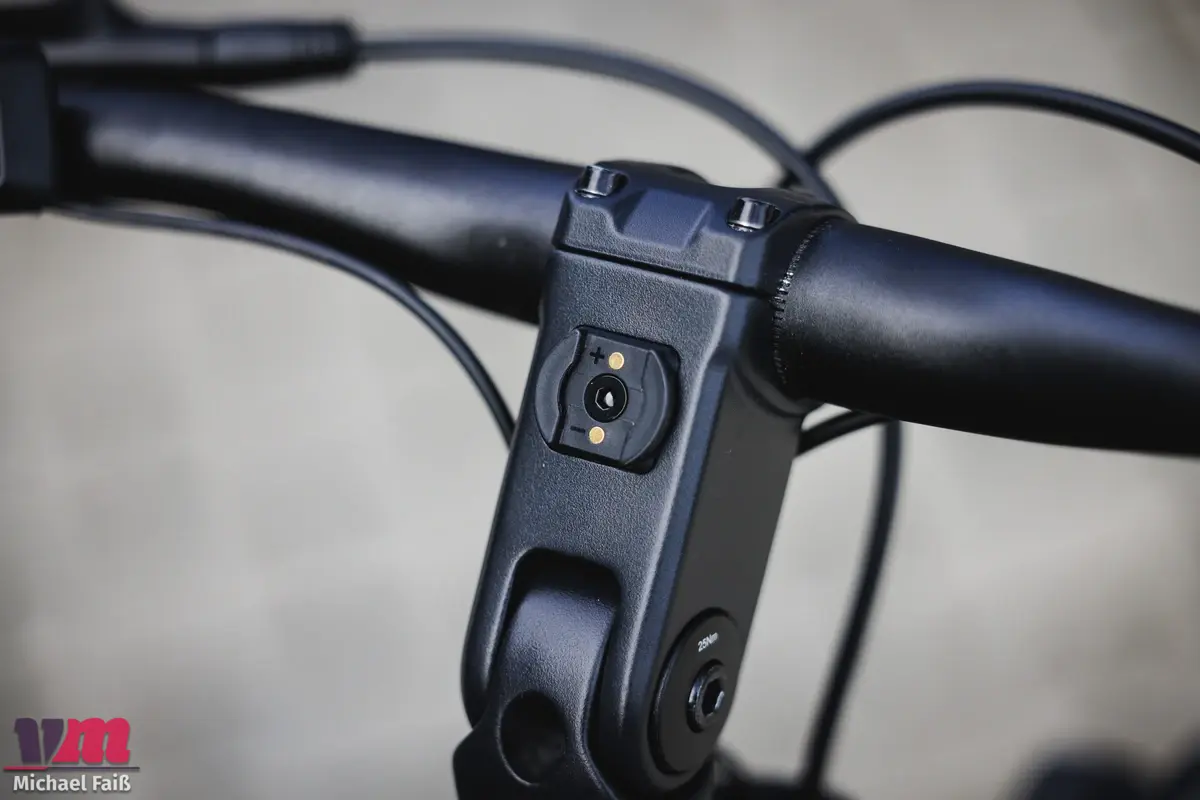
For operation, Trek uses the Bosch Purion 200 on all models. The control unit and small display are combined in a single unit. Further information is provided by the smartphone. An SP Connect interface, powered by the drive unit, is located on the stem. Two contacts connect it to the system. With the appropriate official SP Connect mount, a smartphone with wireless charging capability can be charged directly inductively. The mount is available for SP Connect cases and as a universal mount. Using the Bosch eBike Flow app, the smartphone then serves as a display replacement without draining its battery.
trim levels
The model range appears somewhat confusing on the Trek website. Essentially, the variants differ only in two aspects: the drive system and the battery size. The options include a Shimano 8-speed derailleur system and the Shimano Cues 10-speed system with a low-wear Linkglide cassette. The Cues system is fitted to the top-of-the-line model. There are also singlespeed models with a belt drive, which is low-maintenance and clean.
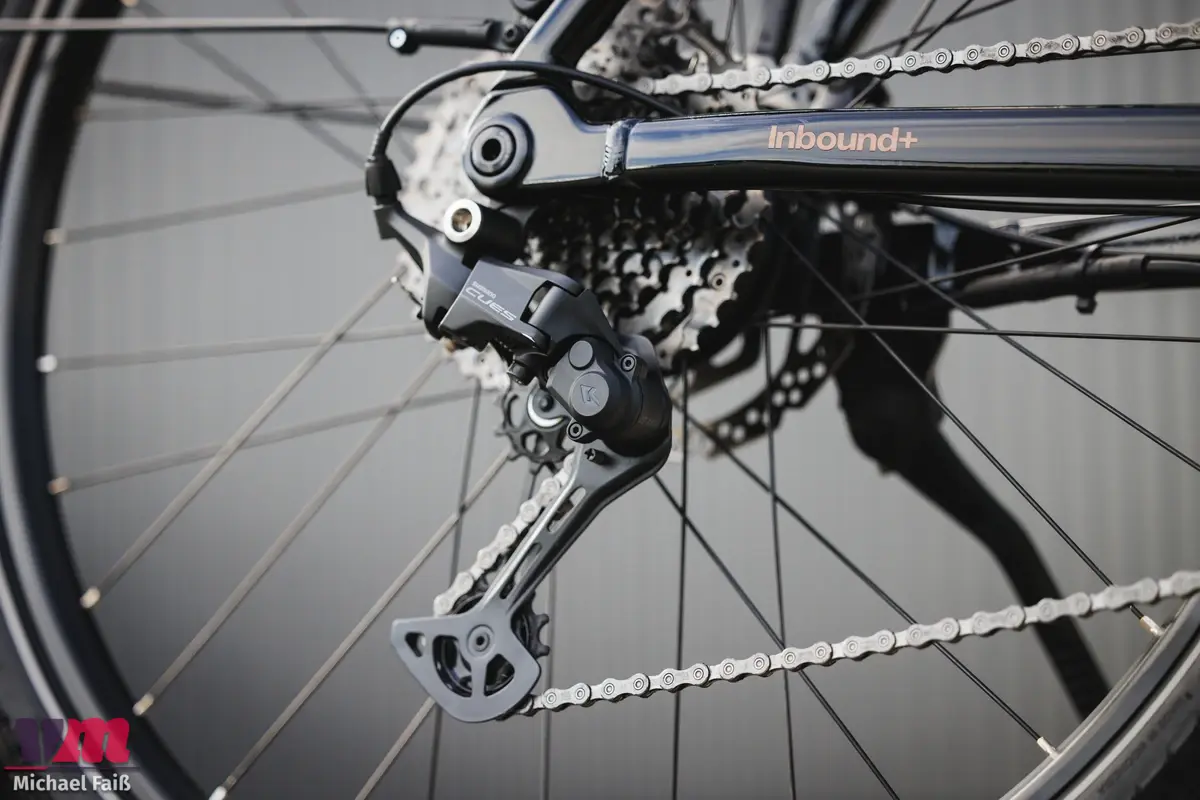
However, the drivetrain and battery cannot be freely combined. For example, those wanting the 10-speed drivetrain with the smaller 360 Wh battery will not find this option in the product range. Many configurations are expensive for manufacturers to stock, which explains this limitation.
The weight depends on the battery and drive system. The lightest version weighs approximately 20,5 kg. The top model with a large battery and derailleur gears weighs around 22,5 kg.
Standard equipment: luggage rack, lights and mudguards
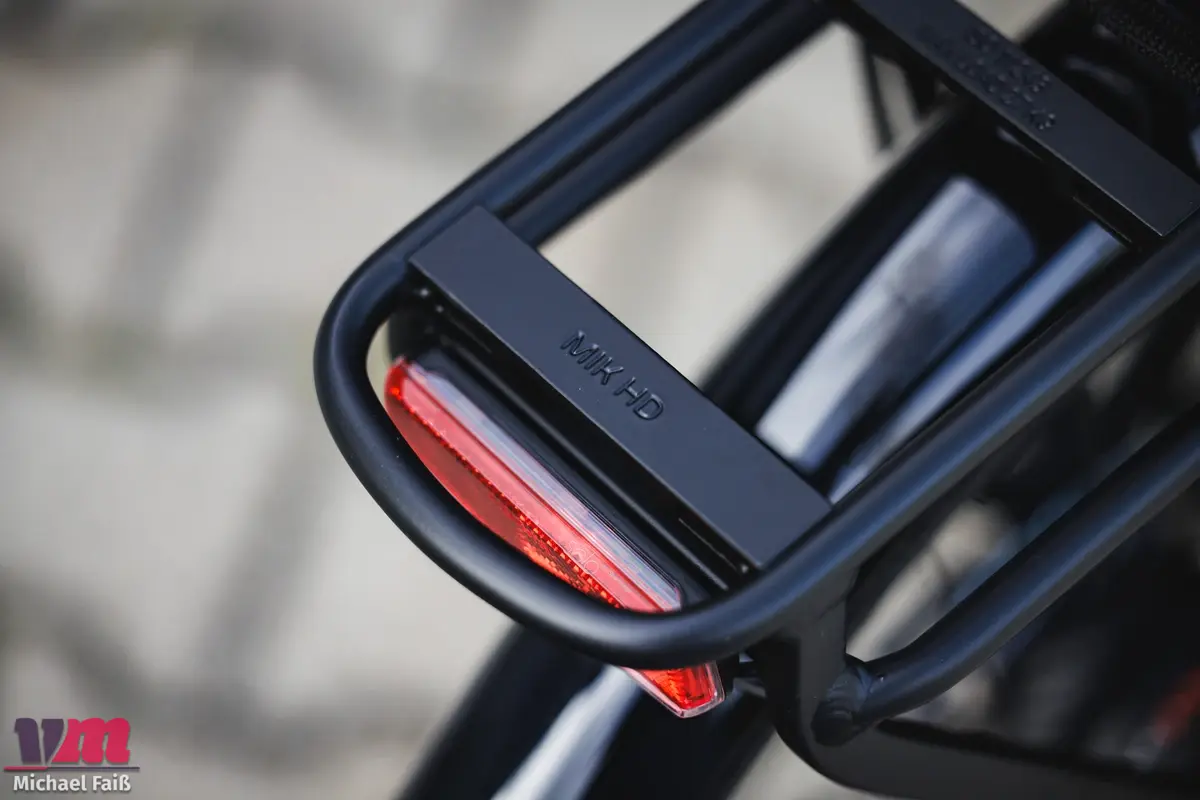
The accessories are identical across all models. The rear rack is MIK-HD compatible and can carry up to 27 kg, making it suitable for a child seat. There's no spring-loaded flap. However, Trek includes bungee cords, allowing for quick and easy transport even without panniers. The lights are functional but lack a high beam. The fenders are from SKS and are made of plastic. This is where Trek most clearly cut corners to keep the price down. A soft, wide saddle and wing grips complete the package.
Price and variants of the Trek Inbound+
The Trek Inbound+ starts at 1.999 Euro. The top model we tested costs 2.499 euros.
Trek Inbound+ (model family)
- Frame Aluminum, step-through or diamond frame
- Motor Bosch Hub Line hub motor
- Torque (manufacturer) 45 Nm
- Maximum power (manufacturer) 400 W
- Motorgewicht 2,3 kg
- Battery 360, 540 or 600 Wh, removable
- range Extender Bosch PowerMore 250 (optional)
- Service Bosch Purion 200, powered SP-Connect interface
- Drive Shimano 8-speed, Shimano Cues 10-speed or singlespeed with belt
- Fork Aluminum, rigid
- tire width 50 mm
- Rack MIK-HD compatible, max. 27 kg
- Weight Approximately 20,5 to 22,5 kg depending on the variant
- Max. permissible total weight 136 kg
- www.trekbikes.com
- Price (RRP) 1.999 up to 2.499 euros
Trek Inbound+ top model (test bike)
- Frame Aluminum, low-entry
- Frame size test bike L
- Battery 600 Wh
- Circuit Shimano Cues 10-speed with Linkglide cassette
- Weight Approx. 22,5 kg
- www.trekbikes.com
- Price (RRP) EUR 2.499
Bosch Hub Line in practical testing
On paper, the Bosch Hub Line, with 45 Nm and 400 W, is significantly less powerful than the weakest Bosch mid-drive motor, the Active Line Plus. In practice, however, we hardly notice this difference. As with many hub motors, the direct power transmission to the rear wheel feels stronger than the figures suggest. In terms of riding feel, we would rate the assistance at least on par with the Active Line Plus.
The motor reaches its limits on steep climbs when a high gear is engaged. It noticeably runs out of steam. Those living in hilly areas should therefore opt for a derailleur system. Even with the 8-speed drivetrain, a low gear is always available. We were able to climb even steeper inclines without any problems using this system. We recommend the singlespeed model more for flatter regions.
For a hub motor, the Hub Line is quite audible and emits a noticeable hum. Overall, however, it remains quieter than most mid-drive motors. This shouldn't be an issue for most riders.
What interested us most, however, was the riding experience, as we were initially very skeptical due to the lack of a torque sensor. We know that inexpensive hub motors without a torque sensor have three main weaknesses. They continue to provide assistance even after you stop pedaling, which can be dangerous in everyday use, especially for inexperienced riders. They take a long time to engage when starting off. And when pedaling, they often feel choppy and jerky.
The Bosch Hub Line is different. Pushing off is no problem, nor is starting off. Both work almost eerily well, considering there's no torque sensor. The sensor disc obviously does an excellent job. The motor engages very quickly when starting and doesn't continue pushing at all after stopping. Bosch has done an outstanding job here.
One peculiarity remains, however, and we don't know if it's due to technical limitations or intentional. When rolling along a flat street, simply turning the crank is enough. Without a torque sensor, the motor can't know how hard you're pedaling, only that the crank is moving. In an easy gear, it therefore maintains a constant speed, even if you're barely exerting any effort. This doesn't feel very natural. Of course, you can always select a suitable gear and ride normally, but you don't have to. This is precisely what many in the target group will likely appreciate: those who want to can glide through the city relaxed and effortlessly. A blessing or a curse? That's for everyone to decide for themselves.
Trek Inbound+ review: How does it ride?
Aside from the motor, the Trek Inbound+ is refreshingly unassuming: just hop on and ride. We didn't notice a single detail that we'd say was bothersome or could be significantly improved. It lacks a wow factor, but that's never what this bike was meant to deliver. It's designed to be a reliable everyday bike, and that's exactly what it does.
We were pleasantly surprised by the step-through frame in size L. On many step-through bikes, even in larger frames, the riding position tends to be cramped. This wasn't an issue for someone of our height (1,87 m). The riding position is comfortable and upright, even more so with the stem raised. This suits the bike's character well. The soft, wide saddle and wing grips further enhance the comfort. The Inbound+ certainly doesn't feel like a budget bike.
The necessity of a suspension fork on a bike like this is debatable. It would increase maintenance, price, and weight. In our opinion, the 50 mm wide tires are the better solution in most cases, provided the tire pressure is correct. We rode with about 2,5 to 2,6 bar; we would only recommend more pressure for very heavy loads. At this pressure, the tires provide sufficient cushioning. Of course, you still feel potholes, but that's also true with a suspension fork in this price range. A carbon fork would have made the bike a bit lighter and probably even more comfortable at the front. The threaded axle also shows that Trek had to cut costs. However, this shouldn't matter to most riders. In our view, Trek made the right cuts.
The frame of this step-through bike is surprisingly stiff. Even with a pannier loaded on one side and a bit of instability at the handlebars, the bike only starts to wobble very late. This happens eventually with any step-through bike, but we've definitely experienced much worse. This makes the maximum permissible weight of only 136 kg all the more surprising. Based on the ride feel, we would expect more from this bike. We've ridden bikes with higher weight limits that felt significantly softer.
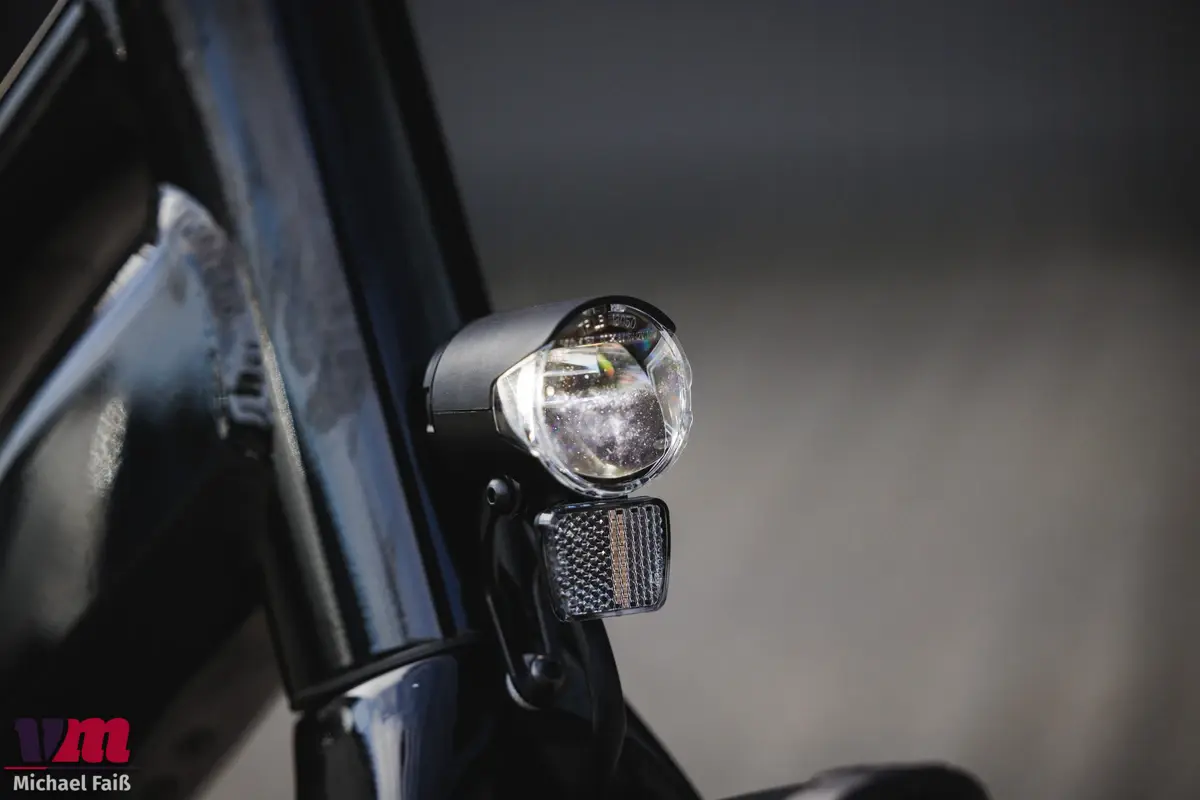
The mudguards fit well and are long enough at the front for bad weather. The SKS plastic version is even a bit quieter when stones hit it. Aluminum mudguards would at least look more premium, but we don't find this a major drawback. The lights are sufficient for city riding: you're easily visible, and even poorly lit bike paths aren't a problem. However, for riding in complete darkness over longer distances, you should consider upgrading the front light.
There is one real point of criticism, however: the battery cover. While it's easy to remove, it fits too loosely and rattles while driving. This detracts from the otherwise high-quality impression.
Who is the Trek Inbound+ suitable for?
The Inbound+ is aimed at anyone looking for a reliable everyday e-bike from a specialist dealer and who doesn't need a high-end model. Restraint is advised when choosing the battery. Depending on where you live and your riding style, the 360 Wh battery is sufficient for most typical commutes. We consider the optional range extender a niche product for an everyday bike. We find it unfortunate that the battery and drivetrain are linked. Our preferred combination of a Cues 10-speed drivetrain and a smaller battery isn't available.
The small Purion 200 can't compete with a large display, but the powered smartphone holder compensates for this. Whether you want to navigate or charge your phone on your way to work, the holder significantly increases its everyday usability. Those who live in flat areas and prefer low maintenance will find the singlespeed model with a belt drive a good alternative. Those who ride in hilly terrain should opt for the derailleur gears.

